 Safekipedia
Analytic philosophy
Adapted from Wikipedia · Adventurer experience
Analytic philosophy is a way of thinking in modern Western philosophy, especially in English-speaking countries. It focuses on careful analysis, clear writing, strong arguments, and logic. It also pays special attention to language and what words mean.
This style of philosophy is often different from continental philosophy, which comes from Europe. Analytic philosophy is usually more academic, while continental philosophy can be more literary.
Analytic philosophy became popular around the start of the 1900s. Key thinkers include Gottlob Frege, Bertrand Russell, G. E. Moore, and Ludwig Wittgenstein. Later, philosophers like Wilfrid Sellars, W. V. O. Quine, Saul Kripke, and David Lewis helped bring back ideas about the nature of reality. Analytic philosophy has created new areas of study, such as the philosophy of language.
Austrian realism
Analytic philosophy was greatly shaped by ideas from Austria-Hungary, a country that no longer exists. Some thinkers even say it should be called Anglo-Austrian instead of Anglo-American.
One important philosopher, Franz Brentano from the University of Vienna, talked about how our thoughts are always about something. He called this "intentionality." For example, when you think about a tree, your thought is about a tree. This idea was very important for later philosophers.
Brentano had many students, including Edmund Husserl and Alexius Meinong. Meinong had ideas about things we can imagine but that don’t actually exist, like flying pigs. He believed these imagined things still have a kind of reality in our minds. Another student, Kazimierz Twardowski from Poland, focused on studying small, specific problems in philosophy.
Frege
Gottlob Frege was a German professor of geometry. He was also a logician and a philosopher. Frege is known as the founder of analytic philosophy.
Frege believed that arithmetic could be reduced to pure logic. He created modern mathematical logic in his book Concept-script from 1879. He combined two old types of logic so more sentences could be understood logically. Frege argued that math and logic deal with public objects, not private thoughts. He also suggested that we should look at words only in the context of whole sentences.
Revolt against idealism
British philosophy in the nineteenth century focused more on logic. Richard Whately was important because he stood against ideas that ignored logic. George Boole, a mathematician, was also a key person. Others who helped include William Hamilton, Augustus De Morgan, William Stanley Jevons, John Venn, Lewis Carroll, Hugh MacColl, and Charles Sanders Peirce.
Later, British philosophy was mostly about British idealism, based on the ideas of neo-Hegelian thinkers like F. H. Bradley and T. H. Green. Bradley’s book Appearance and Reality (1893) showed this way of thinking.
Analytic philosophy began in the twentieth century when Cambridge thinkers like Bertrand Russell and G. E. Moore moved away from these complex ideas. They believed that common sense ideas were important and real. Russell said that Moore started this change, and he followed. They thought things like grass being green and the sun and stars existing even when no one sees them are true.
Russell and Moore also studied how we see the world, using a theory called naïve realism and sense-data. In America, the New Realists also moved against these old ideas.
Logical atomism
Older British thinking often used logical holism, the idea that we can only understand parts of the world by understanding the whole world. This was linked to the idea of internal relations, where relationships between things are important parts of those things. In response, Russell and Moore suggested logical atomism, the idea that the world is made of separate facts.
Russell
In 1901, Russell discovered a big problem in some math rules. This changed how people thought about logic. He believed that by thinking clearly and carefully, we could answer big questions. One of his famous ideas was about how we talk about things that might not exist, like saying "the present King of France" even though there isn’t one. He showed that the names we use are really short ways to describe things.
Russell worked with another thinker named Whitehead on a big book called Principia Mathematica. They tried to use symbols and math to make logic very clear and avoid mistakes. They wanted to create a perfect way of talking that would help solve tricky problems by making everything simple and exact.
Early Wittgenstein
Ludwig Wittgenstein, a student of Russell, shared big ideas about how language works in his book Tractatus Logico-Philosophicus from 1921. He thought this book answered all the big questions about thinking and language.
Wittgenstein said the world is everything that happens. He believed we can use special sentences to describe what happens, almost like drawing a picture with words. His book talked about important ideas like truth conditions and ways to know if something is true or false. He also said some things can’t be spoken about, only shown, and that we must stay quiet about them.
Logical positivism
In the late 1920s to 1940s, two groups of philosophers called the Vienna Circle and the Berlin Circle created a belief system called "logical positivism." The Vienna Circle was led by Moritz Schlick and included Rudolf Carnap and Otto Neurath. The Berlin Circle was led by Hans Reichenbach and had members like Carl Hempel and mathematician David Hilbert.
Logical positivists used careful thinking and logic to study how we learn. They believed that every important idea must come from experience or be about language. They thought ideas about religion, right and wrong, and beauty were not important to study. They also believed that philosophy's job was to help make ideas clearer.
Ordinary language
After World War II, a type of thinking called analytic philosophy began. It focused on ordinary language. Instead of making up perfect languages, these thinkers studied how everyday language works.
There were two main ways this happened. One was linked to a philosopher named Wittgenstein. Later in his life, Wittgenstein changed his ideas. He thought that meaning comes from how we use words in real life. He used simple examples, like games, to show how words can have many meanings.
The other way was called Oxford philosophy. These thinkers, including Gilbert Ryle, Peter Strawson, and John L. Austin, believed that ordinary language holds many hidden ideas. They studied how we use words to describe things and actions. They showed that words can do more than tell facts — they can make promises or express feelings too.
Spread to other countries
Australia and New Zealand
Samuel Alexander inspired Australian philosophy. The Australian realism school began when John Anderson taught at the University of Sydney in 1927. American thinker David Lewis visited Australia for over 30 years. In New Zealand, J. N. Findlay, who studied under Ernst Mally, taught at the University of Otago. Karl Popper also gave talks at the Canterbury University College in Christchurch.
Sweden and Finland
In Sweden, Axel Hägerström started a new way of thinking called the Uppsala School. In Finland, Eino Kaila began what is called Finnish analytic philosophy. One of his students, Georg Henrik von Wright, took over from a famous thinker at a university in England in 1948.
China
Zhang Shenfu brought ideas from a British thinker to China and later translated an important book. In 1920, that same British thinker visited China. This began analytic philosophy there. Later, another person shared new thinking with books. During a difficult time, focus on these ideas slowed down. But after changes in the 1970s, interest in analytic philosophy in China grew again and is still growing today.
Metaphysics
During the second half of the twentieth century, analytic philosophy brought back big questions about reality.
Wilfrid Sellars, a scholar of Kant, changed how philosophy was done in the United States. He argued against old ideas about knowledge and showed how everyday ideas and science fit together.
W. V. O. Quine, a philosopher from Harvard, had a big effect on later philosophy. He thought philosophy was very connected to science. Quine questioned common ideas about meaning and suggested that words only make sense when we think about all our knowledge together. In his famous book Word and Object, Quine used a story about learning a new language to show how hard it is to know what words mean.
Saul Kripke brought back important ideas about what things are and what they could be. He showed that names mean the same thing no matter what, and that some facts are always true, like that water is made of H2O.
David Lewis supported ideas about many possible worlds and how things might have been different. He believed that what we call “real” is just the world we are in, and that other possibilities are just as real.
Different thinkers have also talked about what makes something true, and about how we know things, with some saying that truth just means the words match the facts. Others have looked at what things share in common.
Philosophers have also wondered about who we are over time, with some saying it is our memories that make us who we are, and others saying it is our bodies.
Epistemology
Because of a paper by Edmund Gettier in 1963, many people started studying knowledge again in analytic philosophy. Gettier showed that just having a true belief that is justified isn't always enough to count as knowledge. Philosophers have tried to fix this idea or make new theories to explain knowledge better.
Some philosophers, like Roderick Chisholm, believe that some basic beliefs are enough to support others. Others, like Ernest Sosa, think knowledge comes from good thinking abilities. There are debates about whether we need to know about ourselves to know things, or if outside facts are enough. These ideas help us understand how we can really know anything.
In 1955, Nelson Goodman talked about a tricky problem about how we guess what will happen next. He used made-up words to show how our guesses can sometimes go wrong, making us think more carefully about how we use evidence.
Ethics
Early thinkers in analytic philosophy thought ethics was too unclear to study. Later, they began to look more closely at moral ideas. Today, analytic philosophers talk about ethics in three main ways.
- Meta-ethics, which looks at what words like "good" or "bad" really mean;
- Normative ethics, which tries to decide what is right or wrong;
- Applied ethics, which uses these ideas to solve real-world problems.
Meta-ethics has two big ideas. One comes from a book called Principia Ethica. The other idea says that when people talk about values, they are just showing their feelings.
Normative ethics looks at three main views. One is about making the most good overall. Another is about following rules. The third is about being the best person you can be.
Applied ethics uses these ideas to answer tough questions. Topics include schools, the environment, animals, and medical issues.
Political philosophy
One of the most important thinkers in the philosophy of law was H. L. A. Hart. He helped create legal positivism with his book The Concept of Law in 1961. Other writers like Ronald Dworkin and Matthew Kramer also added to these ideas.
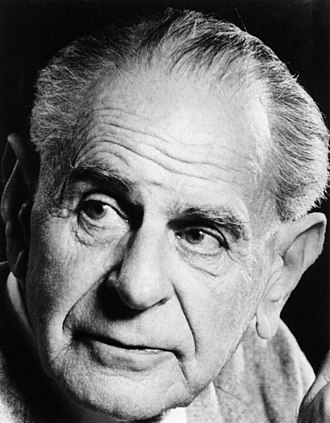
Karl Popper wrote about the idea of an open society during World War II in his book The Open Society and its Enemies. Isaiah Berlin talked about two kinds of freedom. One kind means you are not stopped by others. The other kind means you can control your own life.
John Rawls wrote a famous book called A Theory of Justice in 1971. He talked about fairness and how society should treat everyone equally. He used a thought experiment called the veil of ignorance to explain his ideas. Robert Nozick wrote Anarchy, State, and Utopia in 1974. He talked about free-market ideas and how property works.
Aesthetics
Aesthetics is the study of beauty and art. For a long time, it wasn't a big part of analytic philosophy. But in the 1950s and 1960s, philosophers like Susanne Langer, Frank Sibley, Morris Weitz, and Nelson Goodman started to explore it.
Some philosophers, like Sibley, Weitz, and Goodman, thought there are no fixed rules to define what art is because the idea of art can change over time. Other philosophers, like Arthur Danto and George Dickie, believed that art is defined by the art world and its institutions. Others, like Jerrold Levinson, looked at how art has been viewed throughout history. Philosophers have also studied ideas about beauty and how people feel about fictional stories.
Philosophy of language
Philosophy of language studies how words and meanings work. Many important thinkers have helped us learn about this.
Some philosophers, like Kripke and Ruth Barcan Marcus, asked questions about old ideas. They suggested new ways to think about how names point to things. Others, like Hilary Putnam and Donald Davidson, used clever ideas to show that the meaning of words depends on more than just our thoughts.
The study of pragmatics looks at how we use language in real life. Paul Grice and others showed how we understand hidden meanings and the situation when we talk.
Philosophy of mind
Analytic philosophy is very interested in the philosophy of mind. Two important ideas are intentionality and qualia, a term first used by C. I. Lewis.
Different thinkers have different views about how the mind relates to the body. Some believe that mental experiences come from complex physical processes. Others think that mental states are the same as specific brain states. Functionalism, which sees the mind as working like a computer, is currently the most popular view.
Some philosophers argue that mental experiences cannot be fully explained by physical processes alone. Others suggest that consciousness is a basic part of the world. Recent studies have focused on understanding consciousness and how we experience things through our senses.
Philosophy of mathematics
Kurt Gödel showed that even very careful math cannot capture everything about numbers. Ernst Zermelo and Abraham Fraenkel created a system called Zermelo Fraenkel Set Theory that is important in modern math.
Physicist Eugene Wigner wrote a famous paper titled "The Unreasonable Effectiveness of Mathematics in the Natural Sciences" in 1960. He wondered why math, which seems abstract, works so well to describe the real world.
The philosophy of mathematics has many different views. Some people think math exists on its own, while others think we create it with our minds. There are also ideas about whether math can handle concepts like infinity, and how we can know math truths.
Philosophy of religion
Analytic philosophy has many different ideas. Some of these ideas help us think about religion.
At first, analytic philosophy did not study religion much. But later, philosophers began to ask big questions. They asked if God exists, if believing in God makes sense, what miracles are, and why bad things happen.
Some Christian philosophers, like Alvin Plantinga, used analytic philosophy to support their beliefs. Plantinga wrote books saying that belief in God is natural. Other philosophers also used analytic ideas to talk about faith and God's commands.
There are also Catholic philosophers who mix analytic ideas with the teachings of Thomas Aquinas. This is called Analytic Thomism. Richard Swinburne, who believed in God, wrote books explaining why he thought God exists.
Some philosophers also looked at the ideas of Ludwig Wittgenstein and Søren Kierkegaard when thinking about religion.
Philosophy of science
Philosophy of science looks at how science and evidence help us understand the world. Many thinkers believe in scientific realism and naturalism. They think science can show us how the real world works. Science plays a big role in analytic philosophy. It influences ideas about time because of special relativity and talks about free will because of quantum physics.
Philosophers have different views on how science works. Some, like Karl Popper, say science is about testing ideas to see if they can be proven wrong. Others, like Thomas Kuhn, say big changes in science happen when old ideas are replaced by new ones. Today, philosophers also study science in areas like physics, chemistry, and biology, especially how living things change over time.
Images
Related articles



This article is a child-friendly adaptation of the Wikipedia article on Analytic philosophy, available under CC BY-SA 4.0.
Images from Wikimedia Commons. Tap any image to view credits and license.