 Safekipedia
Anne Frank
Adapted from Wikipedia · Adventurer experience
Annelies Marie Frank, known as Anne Frank, was a German-born Jewish girl who lived from 1929 until around 1945. She became famous for writing a diary about her life while hiding from the Nazis during World War II. Anne was born in Frankfurt, Germany, but moved to Amsterdam with her family in 1934 when the Nazi Party, led by Adolf Hitler, came to power in Germany.
In 1942, Anne and her family hid in an attic in Amsterdam to stay safe from harm. They stayed there for two years until they were arrested in 1944. Sadly, Anne and her sister Margot died a few months later. Only Anne's father, Otto Frank, survived.
After the war, Otto Frank found Anne’s diary. He decided to share it with the world. Titled The Diary of a Young Girl, it became a famous book. It has been translated into many languages and helps people learn about the difficult times Jewish families faced during the Holocaust.
Early life
Anne Frank was born Annelies Marie Frank on June 12, 1929, in Frankfurt, Germany. Her parents were Edith and Otto Heinrich Frank. She had an older sister named Margot. Their family was Jewish but did not follow all Jewish customs strictly. They lived in a neighborhood with people from many different backgrounds.
In 1933, when Adolf Hitler and his Nazi Party came to power, the Frank family moved to Amsterdam in the Netherlands. There, Anne and Margot went to school. Anne joined the 6th Montessori School in 1934, where she made friends and felt happy. Her father started businesses selling fruit extracts and spices. In 1940, Germany invaded the Netherlands, and the Jewish community faced increasing restrictions. Anne and her sister were eventually required to attend a special Jewish school.
Period chronicled in Anne's diary
For her thirteenth birthday on 12 June 1942, Anne got a special diary she called "Kitty." She started writing in it right away. She wrote about the restrictions Jewish people faced in the Netherlands.
In July 1942, the Frank family went into hiding to stay safe from the Nazis. They stayed in a secret place above Otto Frank's office, with help from trusted friends. More people joined them later. Anne wrote about her family, her friends, and her dreams. She wanted to be a journalist and used her diary to share her thoughts and feelings. She wrote until August 1944.
Arrest
On 4 August 1944, German police came to the Secret Annex where Anne Frank and her family were hiding. They were taken to a prison and then to a camp. They were treated as criminals because they were found while hiding.
There are different ideas about how the hiding place was found. Some think it may have been because of an investigation into ration-card fraud. Others have suggested various people might have told about the hiding place, but no clear answer has been found.
Deportation and life in captivity
On September 3, 1944, Anne Frank and her family were taken from their hiding place and sent to a camp called Auschwitz. There, they were separated. Anne, who had just turned 15, was allowed to stay because she could work. Many younger children were taken away right away. Anne had to work hard, moving heavy rocks and living in crowded, dirty places. She and her sister got very sick but tried to stay strong.
Later, Anne and her sister were moved to another camp called Bergen-Belsen. There, Anne saw old friends and shared her hope of writing a book based on her diary after the war. She was very thin and weak, but she still showed courage and talked about her dreams for the future.
Death
Anne Frank died at the Bergen-Belsen concentration camp in early 1945. We do not know exactly why she died, but it may have been because of an illness that spread in the camp.
After the war, Anne’s father, Otto Frank, went back to Amsterdam and found out that both his daughters had died. Many other people also did not survive during this hard time.
The Diary of a Young Girl
Main article: The Diary of a Young Girl
Anne Frank’s diary is famous because it tells us about her life while she and her family hid during World War II. She wrote in her diary every day about her thoughts, her family, and what it was like to live in secret. She called her diary “Kitty,” a pretend friend, and wrote as if she was talking to her.
After the war, Anne’s father, Otto Frank, found her diary and decided to share it with the world. He edited some parts and had it published. The diary became very popular and has been read by millions of people. It helps us understand what life was like for families during the war and why it is important to treat everyone with kindness.
Legacy
In 1957, some Dutch people, including Otto Frank, started the Anne Frank Foundation (Anne Frank Stichting). They wanted to save the Prinsengracht building and let people visit it. The Anne Frank House opened in 1960. Visitors can see the rooms where Anne Frank and her family hid during World War II.
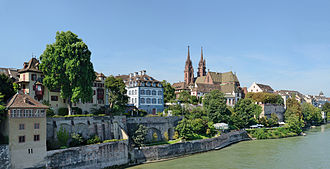
The Anne Frank Foundation also made the Anne Frank Fonds in Basel, Switzerland. This group works to protect Anne Frank’s diary and teach people about kindness and respect. Many schools around the world are named after Anne Frank. Her diary is important to UNESCO. There are memorials for Anne Frank in many countries, such as Guatemala and Buenos Aires. In 2022, Google made a special picture to celebrate the 75th anniversary of her diary being published.
Images
Related articles



This article is a child-friendly adaptation of the Wikipedia article on Anne Frank, available under CC BY-SA 4.0.
Images from Wikimedia Commons. Tap any image to view credits and license.