 Safekipedia
Battle of the Hydaspes
Adapted from Wikipedia · Adventurer experience
Battle of the Hydaspes
The Battle of the Hydaspes was fought in May 326 BC between the Macedonian Empire led by Alexander the Great and the Pauravas led by Porus. It happened along the Hydaspes River, now called the Jhelum River, in what is today the Punjab province of Pakistan. This battle was part of Alexander’s campaign in India. The Macedonian army won, capturing Porus and taking control of large parts of Punjab. Alexander showed mercy by sparing Porus and letting him rule the area.
Alexander’s plan to cross the monsoon-swollen Hydaspes River surprised Porus, catching his forces off guard. This battle was important because it brought Greek political and cultural influences to the Indian subcontinent, affecting both Greeks and Indians for many years. After this victory, Alexander wanted to continue east across the Ganges River but stopped at the Hyphasis (now the Beas River) when his troops were too tired after nearly eight years of marching. This was the farthest point Alexander reached in India.
Background
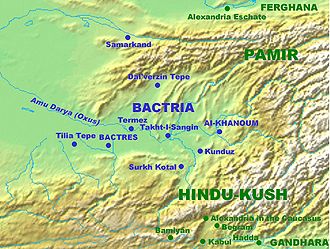
After defeating the last forces of the Achaemenid Empire in 328 BC, Alexander the Great began a new campaign to expand his empire into India in 327 BC. He strengthened his position in Bactria before moving through the Khyber Pass to invade India. Alexander’s army was large, with around 40,000 foot soldiers and 5,000 horse soldiers.
Alexander’s main army took the Khyber Pass, but he led a smaller group through a northern route. They captured a strong fortress called Aornos, which was very important to Greek stories. The local clans there fought hard, but Alexander won anyway.
In spring of the next year, Alexander made an agreement with Taxiles, the ruler of Taxila. Together, they prepared to face Taxiles’ neighbor, Porus the Elder, the King of Hydaspes. Porus had refused to follow Alexander’s orders and was getting ready for war. Alexander needed to defeat Porus to continue moving east. Even though Porus lost the battle, he fought very well and became one of Alexander’s strongest opponents.
Pre-battle manoeuvres
Alexander set up his camp north of the Jhelum River, called the Hydaspes at the time. Porus, his opponent, waited on the south side to stop any crossing. The river was too deep and fast for a safe crossing, so Alexander looked for another way across.
He found a good spot about 27 km upstream from his camp. There was an island covered in trees that split the river. Alexander led his troops across here, using a clever plan to attack from both sides. He left one of his generals, Craterus, with most of the army to keep Porus from discovering his plan. Alexander crossed the river with a strong group of soldiers and horses under cover of darkness, using special floating skins filled with hay and small boats. Craterus made many fake moves to keep Porus guessing.
When Alexander landed on the island and then crossed to the other side, Porus sent his son with some cavalry and chariots to stop him. However, a storm that night hid the sounds of Alexander’s crossing. Alexander’s horse archers and heavy cavalry quickly defeated Porus’s son’s smaller force. When Porus learned what had happened, he quickly gathered his main army to face Alexander.
Battle
The two armies stood against each other on the battlefield. The Indian soldiers had war elephants with soldiers on top, along with cavalry and infantry.
Alexander the Great attacked the weaker sides with his cavalry first. His foot soldiers waited until the Indian cavalry was weakened. Alexander sent his horse archers to attack one side and his armored cavalry to attack the other side. The Indian cavalry tried to help but became confused, allowing Alexander’s cavalry to defeat them.
When the war elephants charged at Alexander’s cavalry, his foot soldiers fought back. They threw spears to stop the elephants. After a tough fight, the elephants were driven back. The Macedonian soldiers then surrounded the Indian army, and many began to run away. Alexander admired King Porus’s bravery. After some time, Porus agreed to meet Alexander and became a leader under the Macedonian rule.
Aftermath and legacy
After the battle, Alexander asked Porus how he should be treated, and Porus said, "Treat me as a king would treat another king." Alexander respected this and let Porus keep his lands. Alexander then founded two cities called Boukephala and Nikaia. Nikaia was named to remember his victory, and Boukephala honored his loyal horse Bucephalus, who passed away around that time.
In 326 BC, Alexander’s army reached the edge of the Nanda Empire. They were tired from many battles and did not want to face another huge Indian army, so they asked to go back west. This happened at the Hyphasis (modern Beas). Alexander understood and led his army south along the Indus River instead, marking the borders of his empire.
Porus lost because Alexander used smart tactics, and the Macedonians were more disciplined and had better technology. The Indian forces used chariots that were not as strong as the Greek cavalry. They did not have a well-organized army or good armor, and their weapons were not as strong as the Macedonians’ long spears called sarissa. Porus mostly reacted to Alexander’s moves. Greek writers said Porus fought bravely until the end.
Later, during the rule of the Maurya Empire, a wise leader named Kautilya used the Battle of the Hydaspes as a lesson to stress the importance of training soldiers. The first Mauryan emperor, Chandragupta, kept a strong, ready army. Chariots became less important in the Mauryan military.
Related articles





This article is a child-friendly adaptation of the Wikipedia article on Battle of the Hydaspes, available under CC BY-SA 4.0.
Images from Wikimedia Commons. Tap any image to view credits and license.