 Safekipedia
Broadcasting in the United States
Adapted from Wikipedia · Adventurer experience
Broadcasting in the United States
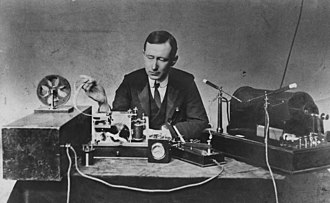
Broadcasting in the United States started with wireless experiments in the 1800s by radio hobbyists who loved this new technology. After improvements, radio became important for the military and businesses. Over time, broadcasting grew to matter a lot to everyone in the country.
As television grew, it showed many kinds of programs like stories, news, sports, and reality shows. Cable television added more channels, especially for fun and entertainment. By the late 1900s, radio also had many stations, each with its own kind of music, news, or sports.
History
In 1901, Reginald Aubrey Fessenden made a big step in broadcasting. He sent his first broadcast on December 24, 1906, from Brant Rock, MA. The program had music, a Bible reading, and Christmas greetings. Listeners from far away, including the West Indies, wrote to him about what they heard.
Many people kept testing new ways to send radio signals. Charles Herrold in San Jose, California, began broadcasting in 1909. When the United States joined World War I, the Navy used radio to send messages. After the war, more people had radio sets at home. Companies formed to support broadcasting, and the first official commercial broadcast happened in Pittsburgh in 1920, reporting election results. Over time, networks like NBC and ABC grew, and television joined radio to share news and entertainment. Color TV started in the 1950s, adding a new way to enjoy entertainment at home.
Related articles


This article is a child-friendly adaptation of the Wikipedia article on Broadcasting in the United States, available under CC BY-SA 4.0.
Images from Wikimedia Commons. Tap any image to view credits and license.