 Safekipedia
Covalent bond
Adapted from Wikipedia · Adventurer experience
A covalent bond is a chemical bond where atoms share electrons to form pairs. This sharing helps atoms become more stable. When atoms share electrons, they can each get a full outer layer, which makes them more balanced.
Covalent bonding is common in organic chemistry. In this type of bonding, atoms share electrons to form molecules.
One simple example of a covalent bond is in a molecule of hydrogen, H2. The two hydrogen atoms share their electrons. Covalent bonds work best when the atoms have similar abilities to attract electrons, making the sharing fair.
History
The idea of covalent bonding began with a scientist named Gilbert N. Lewis in 1916. He showed how atoms share pairs of electrons to stay together. He used dots around symbols to show these electrons.
Later, in 1919, Irving Langmuir used the word covalence to explain how many pairs of electrons an atom shares with others.
In 1927, Walter Heitler and Fritz London used science to explain how these bonds work in simple molecules.
Types of covalent bonds
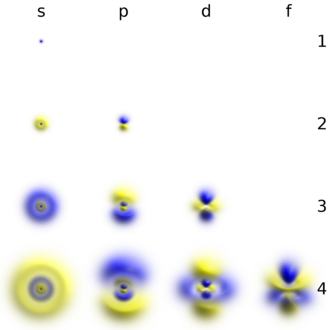
Atoms can form connections called covalent bonds by sharing tiny particles called electrons. The strongest type is a sigma (σ) bond. This happens when electron areas overlap straight on. Most single bonds between two atoms are sigma bonds. Another type is a pi (π) bond. This is weaker and happens when electron areas overlap sideways. Double bonds have one sigma and one pi bond. Triple bonds have one sigma and two pi bonds.
The way atoms share electrons can change based on how much each atom wants the electrons. If two atoms want electrons the same, they form a nonpolar bond, like in hydrogen gas (H–H). But if one atom wants the electrons more, it creates a polar bond, like in hydrogen chloride (H−Cl). Whether a bond is polar also depends on the shape of the molecule.
Covalent structures
Covalent substances can form different kinds of structures. One type is individual molecules, where atoms are held together by strong bonds. The molecules themselves don’t stick to each other much. These are often gases, like HCl, SO2, CO2, and CH4.
Another type is molecular structures, where the molecules are held together by weaker forces. These are usually liquids with low boiling points, like ethanol, or solids with low melting points, like iodine and solid CO2.
Macromolecular structures have many atoms linked together in long chains by covalent bonds. Examples include synthetic materials like polyethylene and nylon, as well as natural materials like proteins and starch.
Finally, there are network covalent structures, where atoms are linked in sheets or 3-dimensional patterns. Examples are graphite, diamond, and quartz. These substances usually have high melting and boiling points and can be brittle.
One- and three-electron bonds
Bonds with one or three electrons are found in special atoms called radicals, which have an odd number of electrons. The simplest example of a 1-electron bond is in the dihydrogen cation, H+2. These bonds are often weaker than regular bonds but can sometimes be stronger, like in dilithium.
The simplest example of a three-electron bond is in the helium dimer cation, He+2. This bond is called a “half bond” because it shares only one electron. Another example is nitric oxide, NO, which has a three-electron bond along with two regular bonds. The oxygen molecule, O2, can also be thought of as having two three-electron bonds and one regular bond. This helps explain some of its special properties. Molecules with these unusual bonds are often very reactive.
Resonance
Main article: Resonance (chemistry)
Sometimes, one picture of how atoms are connected in a molecule isn’t enough. We need to think of a mix of different pictures. For example, in a molecule like nitrate, the bonds between nitrogen and oxygen can look different in each picture. The real molecule’s bonds are kind of in-between.
Aromaticity
Main article: Aromaticity
In organic chemistry, some ring-shaped molecules are extra stable when they follow a special rule. Benzene is a good example — it has a ring of six atoms that share electrons in a special way.
Hypervalence
Main article: Hypervalent molecule
Some molecules, like xenon difluoride and sulfur hexafluoride, have more bonds than we might expect. This happens because their electrons are shared in a more complex way.
Electron deficiency
Main article: Electron deficiency
Some molecules, like diborane, don’t have enough electrons to make the usual kinds of bonds. They share electrons in groups of three atoms, which helps them stay connected.
Quantum mechanical description
After quantum mechanics was created, two main ideas were suggested to explain how chemicals bond: valence bond (VB) theory and molecular orbital (MO) theory. Both help us understand how atoms connect by sharing tiny particles called electrons.
Valence bond theory looks at how atoms share electrons to make strong bonds. Molecular orbital theory studies how electron areas spread out over the whole molecule. Scientists use these ideas to learn about things like how much energy a bond has or how molecules change during reactions. Today, computers often use molecular orbital theory because it works well with calculations.
Analogous effect in nuclear systems
Scientists think something like covalent bonding might happen in very small parts of atoms called nuclei. Instead of sharing electrons, some tiny particles called quarks might share parts of themselves. This sharing of quarks helps hold nuclei together, especially when the particles share quarks.
Related articles



This article is a child-friendly adaptation of the Wikipedia article on Covalent bond, available under CC BY-SA 4.0.
Images from Wikimedia Commons. Tap any image to view credits and license.