 Safekipedia
Economics
Adapted from Wikipedia · Adventurer experience
Economics is a social science that studies how people make choices about producing, sharing, and using goods and services like food, toys, and technology. It looks at how individuals, businesses, and governments behave when they buy, sell, and use these things.
There are two main parts to economics. Microeconomics looks at small parts of the economy, like how families decide what to buy or how companies decide what to make. Macroeconomics looks at the whole picture, like how a country’s economy grows or shrinks over time.
Economics helps us understand many parts of daily life, from business decisions to government policies. It can even help explain topics like education and the environment by showing how people’s choices affect each other.
Definitions of economics
Main article: Definitions of economics
Economics used to be called "political economy," but today we call it "economics." This word comes from an old Greek word meaning "how to run a home." Over time, people have defined economics in different ways.
One famous definition comes from Adam Smith, who said economics is about understanding how nations become wealthy. Another definition by Jean-Baptiste Say says economics studies how things are made, shared, and used up.
Later, Lionel Robbins said economics looks at how people make choices when they don’t have enough of what they need. This means people must choose how to use their limited resources to get what they want.
History of economic thought
Main articles: History of economic thought and History of macroeconomic thought
From antiquity through the physiocrats
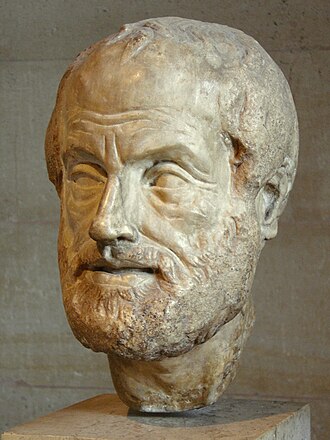
People have always wondered how to share resources. The poet Hesiod wrote about this long ago. The word oikos meant managing a home, including the family and workers. Xenophon wrote a book called Oeconomicus about running a home. Aristotle also wrote about these ideas.
Two groups shaped early economic ideas. Mercantilists thought a country's wealth came from gold and silver. They believed countries should sell goods and collect money. Physiocrats, from France, thought farming was the real source of wealth. They wanted less government control.
Adam Smith wrote about economics in the 1700s. He disagreed with mercantilists but thought physiocrats were close to right.
Classical political economy
Main article: Classical economics
Adam Smith wrote The Wealth of Nations in 1776. He said land, workers, and tools were important for creating wealth. Smith explained how splitting tasks can help workers do more.
Thomas Robert Malthus thought families might grow faster than food, causing problems. David Ricardo studied how money was shared among different groups. John Stuart Mill believed governments should help make income fairer.
Marxian economics
Main article: Marxian economics
Karl Marx wrote about unfair treatment of workers. He thought the value of things came from the work put into them. Other economists like Karl Kautsky, Rudolf Hilferding, Vladimir Lenin, and Rosa Luxemburg built on his ideas.
Neoclassical economics
Main article: Neoclassical economics
Later economists like Alfred Marshall studied how people choose when resources are limited. They looked at how prices affect decisions. Neoclassical economics became an important way to think about economics.
Keynesian economics
Main article: Keynesian economics
John Maynard Keynes wrote about why some places might have too few jobs even when prices change. His ideas helped manage economies, especially after big problems.
Post-WWII economics
After World War II, Keynesian economics was popular in the United States and its allies, while Marxian economics was popular in the Soviet Union and its allies.
Monetarism
Main article: Monetarism
Milton Friedman led ideas about controlling money to help economies. His views were popular in the 1970s and 1980s.
New classical economics
Main article: New classical macroeconomics
Economists like Robert Lucas said people make smart choices based on what they expect, changing how economists think about policies.
New Keynesians
Main article: New Keynesian economics
Economists like George Akerlof and Janet Yellen mixed Keynes’ ideas with others, studying why markets don’t always work well.
New neoclassical synthesis
Main article: New neoclassical synthesis
By the 2000s, economists combined different ideas into a new way of thinking. This helped make better policies for money.
After the 2008 financial crisis
After the 2008 financial crisis, economists studied how money problems can affect the whole economy. They also looked more at how people behave when making economic choices.
Other schools and approaches
Main article: Schools of economic thought
Other ways to think about economics include the Austrian School, which focuses on personal choice and free markets. Feminist economics studies how gender affects economies and aims to make research fair for everyone.
Methodology
Main articles: Microeconomics, Macroeconomics, and Mathematical economics
"Economic theory" redirects here. For the publication, see Economic Theory (journal).
Economic theory uses simple ideas to explain how money and resources are used. It looks at how people make choices and how markets work. Some theories study small parts of the economy, like buying and selling. Others look at the whole economy, like changes in jobs and prices.
Economic ideas are tested with real-world data and experiments. Scientists check if their ideas match what happens in the real world. Sometimes they use experiments to test theories. This makes economics similar to other sciences that use experiments.
Microeconomics
Main articles: Microeconomics and Market (economics)
Microeconomics looks at how people and businesses make choices and how they trade with each other. It studies how prices are set and how goods and services are bought and sold. This includes how individuals, companies, and the government interact in markets.
In a market, there are many different types of setups. Some markets have many sellers and buyers, where no single person can change the price. In other markets, one or a few sellers might control the price. These different setups can affect how goods are made, sold, and priced.
Microeconomics also looks at how resources are used to make products. It studies how much of each product is made and how that affects the prices and choices people make. For example, if there are limited resources, making more of one product might mean making less of another.
The study of microeconomics helps us understand how individuals and businesses make decisions, how they trade, and how prices are determined in different situations.
Macroeconomics
Main article: Macroeconomics
Macroeconomics is a part of economics that looks at the whole economy. It helps us understand big things like how much money a country makes, how many people have jobs, and why prices change. It also studies how much money the government spends and how banks control money.
Macroeconomics looks at how countries grow over time. This includes how new technology and more workers can help a country produce more goods. It also studies why some countries grow faster than others.
Growth
Main article: Economic growth
Growth economics studies why some countries get richer faster than others. It looks at things like how much money people save and invest, how many babies are born, and how technology improves. These factors help explain why some countries are richer than others.
Business cycle
Main article: Business cycle
See also: Circular flow of income, Aggregate supply, Aggregate demand, and Unemployment
During tough economic times, like the Great Depression in the 1930s, people noticed that sometimes there aren’t enough jobs. An economist named John Maynard Keynes wrote about this. He believed that sometimes the government needs to help create jobs and keep the economy strong.
Unemployment
Main article: Unemployment
Unemployment is when people want jobs but can’t find them. There are different reasons why this happens. Sometimes workers need new skills to find jobs. Other times, it’s because the economy isn’t growing fast enough.
Money and monetary policy
Main article: Monetary policy
See also: Monetary economics and History of money
Money makes trading easier. Instead of trading one item for another, people can use money. Banks and governments use monetary policy to control things like how much money there is and how fast prices change. They do this by changing interest rates and other tools.
Fiscal policy
Main articles: Fiscal policy, Government spending, and Tax
Governments can help the economy by spending money and changing taxes. For example, they might build new roads or cut taxes to give people more money to spend. This can help when the economy is having trouble.
Inequality
Main article: Economic inequality
Economic inequality looks at how money and wealth are shared among people. Some people have a lot, while others have very little. This can affect things like how stable a country is and how fast it grows. Governments use taxes and spending to try to make things more fair.
Other branches of economics
Public economics
Main article: Public economics
Public economics is a part of economics that looks at how the government works. It studies topics like who pays taxes and how government programs affect the economy.
International economics
Main article: International economics
International economics looks at how countries trade with each other. It studies why goods and services move between countries and how this trade helps everyone. It also looks at how changes in rules about trading can affect the economy. International finance studies how money moves between countries.
Labour economics
Main article: Labour economics
Labour economics studies how jobs and workers interact with employers. It looks at how many people want jobs and how many jobs are available.
Development economics
Main article: Development economics
Development economics studies how countries can grow and improve. It looks at how changes in the economy, like new jobs or better schools, can help make life better for everyone.
Related subjects
Main articles: Law and economics, Natural resource economics, Philosophy and economics, and Political economy
Economics is one of several social sciences. It connects with many other areas, such as economic geography, economic history, public choice, energy economics, cultural economics, family economics and institutional economics.
Law and economics looks at how laws work using ideas from economics. It helps us understand how laws affect people and businesses.
Political economy studies how politics, economics, and law all work together. It looks at how governments make decisions that affect the economy.
Energy economics is about how we get and use energy, like electricity and fuel. It helps us understand the balance between needing energy and keeping our planet healthy.
Economic sociology is the study of how money and work affect society and culture. It looks at how people’s beliefs and ways of living shape how economies work.
Profession
Main article: Economist
Economics has grown a lot since around 1900. Many universities and colleges now teach economics. You can study it if you like liberal arts, business, or just want to learn more. There are special degrees like a Bachelor of Economics or a Master of Economics.
Economists work in many places. Some help companies make good choices, especially in banking and finance. Others work for governments, like in the national treasury, central bank, or National Bureau of Statistics.
Each year, economists can win prizes for their work. The biggest is the Nobel Memorial Prize in Economic Sciences, though it is not a real Nobel Prize.
Economists often use math. They learn tools like calculus, linear algebra, statistics, game theory, and computer science to understand money and resources.
Women in economics
Some famous women have done important work in economics. Harriet Martineau helped explain economic ideas. Mary Paley Marshall was the first woman to teach economics at a British university. Joan Robinson worked in a special area of economics. Anna Schwartz wrote an important book about money in the United States with Milton Friedman.
Three women have won the Nobel Prize in Economics: Elinor Ostrom in 2009, Esther Duflo in 2019, and Claudia Goldin in 2023. Women are still not as common in economics as men, but more are joining every year.
Images
Related articles




This article is a child-friendly adaptation of the Wikipedia article on Economics, available under CC BY-SA 4.0.
Images from Wikimedia Commons. Tap any image to view credits and license.