 Safekipedia
Edward Brooke
Adapted from Wikipedia · Adventurer experience
Edward William Brooke III (October 26, 1919 – January 3, 2015) was an American lawyer and Republican Party politician. He served in the United States Senate from 1967 to 1979, representing Massachusetts.
Brooke was the first African American elected to the U.S. Senate by popular vote. This was a big step for fairness and representation. Before the Senate, he was the Attorney General of the Commonwealth of Massachusetts from 1963 to 1967, also the first African American to hold that position.
He was born into a middle-class black family in Washington, D.C. Brooke went to Howard University and later graduated from Boston University School of Law in 1948. He served in the U.S. Army during World War II. He started his political career in 1950 by running for the Massachusetts House of Representatives. He later became chairman of the Boston Finance Commission.
In the Senate, Brooke worked with the liberal faction in the Republican party. He helped write the Civil Rights Act of 1968, which aimed to stop unfair treatment in buying and renting homes. He spoke out against Republican President Richard Nixon during the Watergate scandal. Brooke tried for a third term but was not re-elected in 1978.
After leaving the Senate, Brooke kept working as a lawyer and with many organizations. He died in 2015 at the age of 95 in Coral Gables, Florida.
Early life and education
Edward William Brooke III was born on October 26, 1919, in Washington, D.C., into a middle-class African American family. His father was a lawyer who worked with the Department of Veterans Affairs, and his mother was Helen Brooke. Edward grew up in a racially segregated area but was protected from many difficulties. He went to Dunbar High School, a top school for African American students, and graduated in 1936.
He later attended Howard University, where he studied social studies and political science, graduating in 1941. After serving in the U.S. Army during World War II, he finished his studies at the Boston University School of Law in 1948. Edward once said he focused more on his work at Boston University than he did at Howard University.
Military service
Edward Brooke joined the United States Army in 1941 after the attack on Pearl Harbor. He became an officer and fought in Italy with a special unit called the 366th Infantry Regiment.
During his time there, he used his ability to speak Italian to help communicate with local resistance fighters.
By the time World War II ended, Brooke had risen to the rank of captain and had received important awards for his brave service. These included the Bronze Star Medal and a Distinguished Service Award. His experiences in the army showed him how unfair treatment based on skin color was wrong, changing his views on leadership and fairness.
Early career
Edward Brooke started his career as a lawyer after finishing school at Boston University. He decided to open his own law office in the Roxbury neighborhood of Boston, instead of joining big law companies.
He entered politics in 1950 by trying to get a job in the Massachusetts House of Representatives. He won the Republican nomination but lost the election. He tried again two years later but lost again. Later, he tried for Massachusetts Secretary of the Commonwealth and became the first Black person to be nominated for a statewide job in Massachusetts. He did not win that race, but people noticed his efforts. He then worked on the Boston Finance Commission, where he looked into money problems and found corruption. His work helped him win the job as Attorney General of Massachusetts, making him the first African American to hold that job in any state. As attorney general, he worked to stop organized crime and corruption.
U.S. Senate
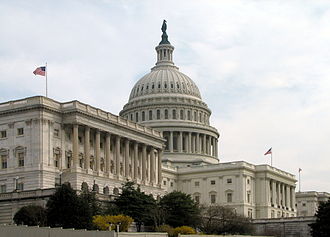
Edward Brooke served as a United States senator from Massachusetts from 1967 to 1979. In the 1966 Massachusetts Senate election, he defeated former Governor Endicott Peabody and became the first African American elected to the Senate by popular vote. Brooke worked on important issues like fair housing and equal rights.
During his time in the Senate, Brooke co-authored the 1968 Fair Housing Act with Walter Mondale. This law helped stop unfair treatment in housing. He also supported equal opportunities for women and girls, helping to keep Title IX. This ensures that girls and women have equal chances in education and sports. Brooke was known for standing up for what he believed was right, even when it was difficult.
Post-Senate life
After leaving the Senate, Edward Brooke worked as a lawyer in Washington, D.C., and later in Boston. He helped people find affordable homes and joined the boards of several important companies.
He became the first leader of a group connected to a large African-American fraternity, helping it grow its work on international issues. He stayed involved in these efforts for many years.
Political positions
Edward Brooke was known as a moderate or liberal Republican, often called a Rockefeller Republicans. He supported important ideas like civil rights, women's rights, and civil liberties, including rights for everyone regardless of who they loved. When it came to money and the economy, he believed in being careful with spending but also understood that sometimes the government needed to help people with things they couldn’t manage alone.
Later, during the 2008 presidential election, Brooke shared that he supported the Democratic candidate Barack Obama in an interview on WBUR-FM.
Awards and honors
Edward Brooke received many important awards for his work. He was given the Presidential Medal of Freedom and the Congressional Gold Medal in 2009. He also earned a Bronze Star Medal and the Adam Clayton Powell Award (Phoenix Award) in 1979. A courthouse in Boston was named after him, called the Edward W. Brooke Courthouse. In 2002, he was named one of the 100 Greatest African Americans.
Personal life and death
Edward Brooke faced some personal challenges during his time in office, like a divorce and questions about his finances. These issues drew public attention and affected his political career.
Later in life, Brooke worked to raise awareness about a disease that can affect men. He passed away at his home in Coral Gables, Florida in 2015 at the age of 95. He was honored with burial at Arlington National Cemetery.
Images
Related articles



This article is a child-friendly adaptation of the Wikipedia article on Edward Brooke, available under CC BY-SA 4.0.
Images from Wikimedia Commons. Tap any image to view credits and license.