 Safekipedia
Fourier series
Adapted from Wikipedia · Adventurer experience
A Fourier series is a way to break down a repeating pattern into a sum of simple wave-like shapes, such as sines and cosines. This makes many tough math problems easier because these wave shapes are easy to study. It was first used by Joseph Fourier to solve important equations about how heat moves.
Not all patterns can be perfectly described this way, but for smooth patterns, the Fourier series can come very close to matching the original. The amounts of each wave needed in the sum are found using special math tools.
Fourier series are closely linked to another math tool called the Fourier transform, which works for patterns that do not repeat. Together, these ideas form a big area of math known as Fourier analysis, which helps us understand patterns in many different ways.
History
See also: Fourier analysis § History
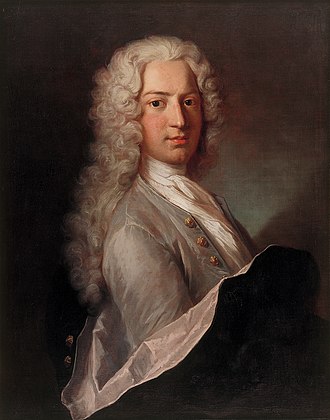
The Fourier series is named after Jean-Baptiste Joseph Fourier, who lived from 1768 to 1830. He studied trigonometric series. Other smart people like Leonhard Euler, Jean le Rond d'Alembert, and Daniel Bernoulli also looked at these ideas.
Fourier used these series to solve a big math problem called the heat equation. This helps us understand how heat moves, like in a metal plate. He first shared his ideas in 1807 and later wrote a book about it in 1822.
Fourier showed that almost any repeating pattern can be made from simple wave shapes, like sines and cosines. This made many math and science problems easier to solve. His work has been used in many fields, like electrical engineering, vibration analysis, and acoustics.
Beginnings
Fourier wrote a special math formula to describe waves. This formula helps us find the exact numbers needed to build the wave mix. His work was new and different, and it changed how we solve many math and science problems.
Fourier's motivation
Fourier created his series to solve the heat equation. For example, imagine a square metal plate with one side kept hot and the others cold. The heat pattern on the plate can be complex, but Fourier's method helps us understand it better.
Other applications
Fourier's ideas have been used in many other ways, like solving old math puzzles and understanding waves in different areas of science.
Definition
A Fourier series is a way to break down a repeating function into simple sine and cosine waves. This makes many math problems easier because sine and cosine waves are well understood.
The Fourier series shows how any repeating pattern can be made using these basic waves. This helps us study complicated patterns more simply.
Table of common Fourier series
Some common repeating patterns and their Fourier series pieces are shown in the table below.
s ( x )shows a repeating pattern that repeats everyP.a0, an, bnare the pieces of the Fourier series for the patterns ( x ).
| Time domain s ( x ) {\displaystyle s(x)} | Plot | Frequency domain (sine-cosine form) a 0 a n for n ≥ 1 b n for n ≥ 1 {\displaystyle {\begin{aligned}&a_{0}\\&a_{n}\quad {\text{for }}n\geq 1\\&b_{n}\quad {\text{for }}n\geq 1\end{aligned}}} | Remarks |
|---|---|---|---|
| s ( x ) = A | sin ( 2 π P x ) | for 0 ≤ x | a 0 = 2 A π a n = { − 4 A π 1 n 2 − 1 n even 0 n odd b n = 0 {\displaystyle {\begin{aligned}a_{0}=&{\frac {2A}{\pi }}\\a_{n}=&{\begin{cases}{\frac {-4A}{\pi }}{\frac {1}{n^{2}-1}}&\quad n{\text{ even}}\\0&\quad n{\text{ odd}}\end{cases}}\\b_{n}=&0\\\end{aligned}}} | Full-wave rectified sine | |
| s ( x ) = { A sin ( 2 π P x ) for 0 ≤ x | a 0 = A π a n = { − 2 A π 1 n 2 − 1 n even 0 n odd b n = { A 2 n = 1 0 n > 1 {\displaystyle {\begin{aligned}a_{0}=&{\frac {A}{\pi }}\\a_{n}=&{\begin{cases}{\frac {-2A}{\pi }}{\frac {1}{n^{2}-1}}&\quad n{\text{ even}}\\0&\quad n{\text{ odd}}\end{cases}}\\b_{n}=&{\begin{cases}{\frac {A}{2}}&\quad n=1\\0&\quad n>1\end{cases}}\\\end{aligned}}} | Half-wave rectified sine | |
| s ( x ) = { A for 0 ≤ x | a 0 = A D a n = A n π sin ( 2 π n D ) b n = 2 A n π ( sin ( π n D ) ) 2 {\displaystyle {\begin{aligned}a_{0}=&AD\\a_{n}=&{\frac {A}{n\pi }}\sin \left(2\pi nD\right)\\b_{n}=&{\frac {2A}{n\pi }}\left(\sin \left(\pi nD\right)\right)^{2}\\\end{aligned}}} | 0 ≤ D ≤ 1 {\displaystyle 0\leq D\leq 1} | |
| s ( x ) = A x P for 0 ≤ x | a 0 = A 2 a n = 0 b n = − A n π {\displaystyle {\begin{aligned}a_{0}=&{\frac {A}{2}}\\a_{n}=&0\\b_{n}=&{\frac {-A}{n\pi }}\\\end{aligned}}} | ||
| s ( x ) = A − A x P for 0 ≤ x | a 0 = A 2 a n = 0 b n = A n π {\displaystyle {\begin{aligned}a_{0}=&{\frac {A}{2}}\\a_{n}=&0\\b_{n}=&{\frac {A}{n\pi }}\\\end{aligned}}} | ||
| s ( x ) = 4 A P 2 ( x − P 2 ) 2 for 0 ≤ x | a 0 = A 3 a n = 4 A π 2 n 2 b n = 0 {\displaystyle {\begin{aligned}a_{0}=&{\frac {A}{3}}\\a_{n}=&{\frac {4A}{\pi ^{2}n^{2}}}\\b_{n}=&0\\\end{aligned}}} |
Table of basic transformation rules
See also: Fourier transform § Basic properties
This table shows how some math operations in one place change things in the Fourier series. It uses special signs:
- Complex conjugation is shown with an asterisk.
- Special math symbols stand for repeating patterns or parts of patterns.
| Property | Time domain | Frequency domain (exponential form) | Remarks |
|---|---|---|---|
| Linearity | a ⋅ s ( x ) + b ⋅ r ( x ) {\displaystyle a\cdot s(x)+b\cdot r(x)} | a ⋅ S [ n ] + b ⋅ R [ n ] {\displaystyle a\cdot S[n]+b\cdot R[n]} | a , b ∈ C {\displaystyle a,b\in \mathbb {C} } |
| Time reversal / Frequency reversal | s ( − x ) {\displaystyle s(-x)} | S [ − n ] {\displaystyle S[-n]} | |
| Time conjugation | s ∗ ( x ) {\displaystyle s^{*}(x)} | S ∗ [ − n ] {\displaystyle S^{*}[-n]} | |
| Time reversal & conjugation | s ∗ ( − x ) {\displaystyle s^{*}(-x)} | S ∗ [ n ] {\displaystyle S^{*}[n]} | |
| Real part in time | Re ( s ( x ) ) {\displaystyle \operatorname {Re} {(s(x))}} | 1 2 ( S [ n ] + S ∗ [ − n ] ) {\displaystyle {\frac {1}{2}}(S[n]+S^{*}[-n])} | |
| Imaginary part in time | Im ( s ( x ) ) {\displaystyle \operatorname {Im} {(s(x))}} | 1 2 i ( S [ n ] − S ∗ [ − n ] ) {\displaystyle {\frac {1}{2i}}(S[n]-S^{*}[-n])} | |
| Real part in frequency | 1 2 ( s ( x ) + s ∗ ( − x ) ) {\displaystyle {\frac {1}{2}}(s(x)+s^{*}(-x))} | Re ( S [ n ] ) {\displaystyle \operatorname {Re} {(S[n])}} | |
| Imaginary part in frequency | 1 2 i ( s ( x ) − s ∗ ( − x ) ) {\displaystyle {\frac {1}{2i}}(s(x)-s^{*}(-x))} | Im ( S [ n ] ) {\displaystyle \operatorname {Im} {(S[n])}} | |
| Shift in time / Modulation in frequency | s ( x − x 0 ) {\displaystyle s(x-x_{0})} | S [ n ] ⋅ e − i 2 π x 0 P n {\displaystyle S[n]\cdot e^{-i2\pi {\tfrac {x_{0}}{P}}n}} | x 0 ∈ R {\displaystyle x_{0}\in \mathbb {R} } |
| Shift in frequency / Modulation in time | s ( x ) ⋅ e i 2 π n 0 P x {\displaystyle s(x)\cdot e^{i2\pi {\frac {n_{0}}{P}}x}} | S [ n − n 0 ] {\displaystyle S[n-n_{0}]\!} | n 0 ∈ Z {\displaystyle n_{0}\in \mathbb {Z} } |
Properties
When we break down a complex function into parts, we can see how its different pieces fit together. This helps us understand the function better and solve problems more easily.
The Fourier series uses special shapes called sines and cosines to build up any repeating function. By looking at these pieces, we can study many kinds of patterns and waves, from sound to light to heat. This makes the Fourier series a useful tool in science and engineering.
Extensions
The Fourier series can be used with more complex functions and situations. One expansion is called the Fourier-Stieltjes series. It helps with functions that change over intervals in special ways.
Fourier series can also work with functions of two variables, like those on a square grid. This is useful in things like image compression, where methods such as the JPEG standard use these ideas.
Fourier series are also used for functions that repeat in three dimensions, such as in the study of crystals and solid-state physics. These series help explain patterns in materials that repeat.
Fourier theorem proving convergence of Fourier series
Main article: Convergence of Fourier series
In engineering, the Fourier series is usually thought to work well, except at places where the function changes suddenly. This is because the functions used in engineering are often simpler.
If a function is smooth and does not change too quickly, then its Fourier series will match the function very closely. For functions that are not too complicated, the Fourier series will come very close to the original function almost everywhere.
There are some special cases where the Fourier series might not match perfectly, but these are less common in everyday engineering problems.
Images
Related articles




This article is a child-friendly adaptation of the Wikipedia article on Fourier series, available under CC BY-SA 4.0.
Images from Wikimedia Commons. Tap any image to view credits and license.