 Safekipedia
Hunter-gatherer
Adapted from Wikipedia · Adventurer experience
A hunter-gatherer, or forager, is a human who lives in a community by finding food from nature. They get food by foraging, which means gathering food that grows wild, or by hunting animals. Many animals also live this way, eating both plants and meat. For most of human history, this was how people lived, especially before farming began.
Hunting and gathering started with Homo erectus a long time ago, about 1.8 million years ago. It was a successful way for humans to live. After people discovered agriculture, many changed to farming, but some groups kept their old ways. In places like Western Eurasia, farming became common and replaced hunting and gathering. But in thick forests, hunter-gatherers continued for longer.
Hunter-gatherer groups were usually small, with only a few dozen people. They often moved to find food. They shared what they had and had equal roles, though some jobs were different. Today, only a few groups of uncontacted people still live mainly as hunter-gatherers, sometimes mixing it with small farming or raising animals. Examples include the San, Pumé, and Sentinelese.
These societies ate different foods depending on where they lived, from large animals in Siberia to fish and plants. Over time, many hunter-gatherer groups began to farm, which led to bigger towns and more complex societies. Even though most people now farm, some still practice parts of the hunter-gatherer way of life.
Archaeological evidence
Hunting and gathering has been the main way humans got food for a very long time — starting about 1.8 million years ago with early humans like Homo erectus and later with Homo sapiens. These groups were small, usually just a few dozen people from several families.
As humans moved out of Africa, they spread to places like the Australian continent and the Americas. Along the way, many large animals disappeared. Some early humans lived in cold places like the mammoth steppes of Siberia, where they hunted animals such as mammoths. Scientists study old tools to learn more about how these early people lived and moved around.
Common characteristics
Hunter-gatherers are people who get most of their food by hunting animals and gathering plants from nature. They often live in small groups and move around to find food. Some groups, like the indigenous peoples of the Pacific Northwest Coast and the Yokuts, stayed in one place because they had plenty of food nearby.
These groups usually share things and make decisions in a simple way. They often share their food and goods equally. For example, the San people of southern Africa encourage sharing and discourage anyone from having too much more than others. Most hunter-gatherers do not have leaders; instead, different people take charge depending on what needs to be done. They are connected through family ties and living together in small camps.
Researchers have found that in many hunter-gatherer societies, both men and women help find food, though sometimes they do different tasks. Women often gather plants and small animals, while men might hunt larger animals. Overall, hunter-gatherers work fewer hours than people in modern societies. They share resources through a system where gifts are given and received, helping everyone in the group.
Diet
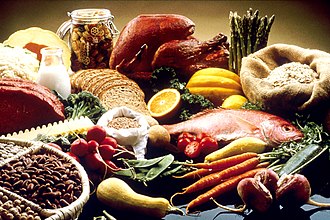
Hunter-gatherers get their food from plants, animals, and water. Near the equator, they eat more plants. In colder places, they eat more fish and stored food. They balance their food so they stay healthy.
In places where plants and fish are hard to find, hunter-gatherers trade meat for other foods from nearby farming groups. This helps everyone get the food they need.
Variability
Hunter-gatherer groups are very different depending on where they live, the tools they have, and how they are organized. Scientists study their tools to learn about these differences. They found that temperature is important — very hot or very cold places often need more kinds of tools to survive.
One way to group hunter-gatherers is by how they use their food. Some groups eat what they find right away, within a day or two. Others save extra food for later.
For much of human history, people got food by hunting and gathering. But watching these groups today doesn’t show exactly how ancient societies lived, since many have met the modern world. The change from hunting and gathering to agriculture wasn’t always permanent. Sometimes, when farmers had a hard time, they went back to hunting and gathering. It can be hard to know where hunting and gathering ends and farming begins, because the two often mixed together over many years. Some groups even traded with farmers while still hunting and gathering.
Modern and revisionist perspectives
Some experts think we can't learn much from ancient hunter-gatherers by looking at modern groups, because these groups changed after meeting other societies. But others think we can learn important lessons, especially about fairness and sharing, by studying groups that still live this way.
Today, there are still some hunter-gatherer groups. The Pila Nguru (Spinifex people) live in Western Australia in the Great Victoria Desert, where the land isn't good for farming. The Sentinelese live on North Sentinel Island in the Andaman Islands, and they choose to stay separate from others. The Savanna Pumé of Venezuela also continue their hunting and gathering ways, adding a little farming to their diet but still relying mostly on what they can find in nature.
Americas
Main article: Paleo-Indians
See also: Aboriginal peoples in Canada § Paleo-Indians period, and Lithic period in Mesoamerica
Early hunter-gatherers moved from Asia into North America across a land bridge called Beringia. They followed large animals through paths between big ice sheets. Some may have also traveled along the Pacific coast in simple boats.
These groups spread throughout the Americas, from the Great Plains of the United States and Canada all the way to Chile in South America. They lived in small family groups and made tools from stone. As the climate changed and large animals disappeared, they started to use more local resources like fish, small animals, and wild plants.
Some scholars say these early people took care of the land. In places like California, they used careful methods to help the land provide food for many years. They believed caring for the land was important.
Images
Related articles




This article is a child-friendly adaptation of the Wikipedia article on Hunter-gatherer, available under CC BY-SA 4.0.
Images from Wikimedia Commons. Tap any image to view credits and license.