 Safekipedia
Montgomery bus boycott
Adapted from Wikipedia · Adventurer experience
The Montgomery bus boycott was a protest against unfair rules that separated people by race on buses in Montgomery, Alabama. It started on December 5, 1955, after Rosa Parks, an African-American woman, was arrested for not giving up her seat to a white person. Her brave act inspired many people in Montgomery to stop using the city’s buses for over a year.
During the boycott, people walked, shared rides, or used other ways to get around without taking the buses. The protest was led by a young pastor named Martin Luther King Jr., who became an important leader in the fight for equal rights. The boycott showed that ordinary people could make a big change when they worked together for what was right.
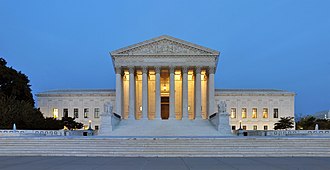
The campaign ended on December 20, 1956, when the United States Supreme Court decided that separating people on buses was against the law. This victory was one of the first big wins of the civil rights movement and helped inspire many more efforts to end unfair treatment and work toward equality in the United States. It remains an important event in history because it showed the power of peaceful protest to create change.
Background
See also: History of civil rights in the United States, Civil rights movement (1865–1896), and Civil rights movement (1896–1954)
Before the Montgomery bus boycott, Jim Crow laws made racial segregation on the buses in Montgomery. Because of these laws, African Americans had to sit at the back of the bus and give up their seats to white people. Many bus drivers were not kind to black passengers.
The year before the boycott, the Supreme Court and Warren Court said that separating children in schools by race was not allowed in the case of Brown v. Board of Education. This made many white people in the South unhappy, and some joined the White Citizens' Council. The Montgomery bus boycott was part of a longer struggle for civil rights, including other protests and court cases like Morgan v. Virginia and the Baton Rouge bus boycott. It also followed the arrests of teenagers Claudette Colvin and Mary Louise Smith for refusing to give up their bus seats.
History
Under the rules of segregation on Montgomery buses, the front seats were for white people, and the back seats were for black people. If the bus got full, black people had to stand. It was against the law for black and white people to sit next to each other.
When Rosa Parks refused to give up her seat, she was arrested. Her arrest started the Montgomery bus boycott. Many black people in Montgomery decided to stop using the buses to protest the unfair rules. Instead, they walked, carpooled, or found other ways to get around. This boycott lasted for over a year and led to a court decision that segregation on buses was unfair and unconstitutional. The success of the boycott helped launch the larger Civil Rights Movement in the United States and made Martin Luther King Jr. a well-known leader.
Main article: Rosa Parks
Aftermath
After the Montgomery bus boycott succeeded, some people in the city reacted badly. There were attacks on Martin Luther King's home and on buses. Some black leaders faced threats. But the boycott showed the power of peaceful protest for equal rights.
The city of Montgomery, Alabama made new rules to keep segregation in other places. This showed that changing one habit did not end all unfair treatment. Over time, many people went back to old ways, sitting at the back of the bus. Today, The National Memorial for Peace and Justice in downtown Montgomery, Alabama honors those who worked for civil rights, including the women who helped the boycott.
Participants
The Montgomery bus boycott was when many people stood together for fairness. A key person was Rosa Parks, an African-American woman who refused to give up her seat on a bus. This led to her arrest and started the boycott [Rosa Parks]. Many people in Montgomery, Alabama, did not use the buses for over a year to show they disagreed with unfair rules.
Several groups supported the boycott. The Montgomery Improvement Association (MIA) was led by Martin Luther King Jr., who helped organize the protest [Martin Luther King Jr.]. The boycott showed how communities can work together to fight for equal rights and brought attention to the struggle for civil rights in the United States.
Images
Related articles




This article is a child-friendly adaptation of the Wikipedia article on Montgomery bus boycott, available under CC BY-SA 4.0.
Images from Wikimedia Commons. Tap any image to view credits and license.