 Safekipedia
Paranthropus aethiopicus
Adapted from Wikipedia · Adventurer experience
Paranthropus aethiopicus
Paranthropus aethiopicus was an extinct species of strong australopithecine that lived in East Africa from about 2.7 to 2.3 million years ago, during the Late Pliocene to Early Pleistocene. Scientists sometimes debate whether this group should be called Paranthropus or if it belongs to the group called Australopithecus, so it is also known as Australopithecus aethiopicus. Many believe it was the ancestor of another strong species called P. boisei.
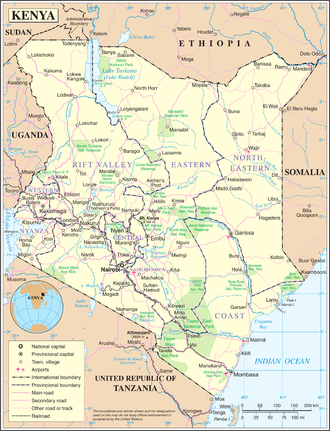
P. aethiopicus had a tall face, a thick roof of the mouth, and very large cheek teeth, like other Paranthropus species. But because it lived earlier, it also had some features similar to an even older species called A. afarensis. Most of what we know about this species comes from a skull called KNM WT 17000 found in West Turkana, Kenya, along with some jawbones found in Koobi Fora, the Shungura Formation in Ethiopia, and Laetoli in Tanzania. These places had landscapes of bushes, open woodlands, and grasslands with wet soil.
Taxonomy
Research history
In 1968, scientists found a jaw bone in Ethiopia. They used it to describe a new type of ancient human relative and named it Paraustralopithecus aethiopicus. In 1985, they found a very old skull in Kenya. This skull showed that these ancient humans had strong jaws, like others found in South Africa and East Africa.
Classification
Scientists often group this ancient human relative with others in a group called Paranthropus. This group has a few types of strong-jawed ancient humans. Paranthropus aethiopicus is the oldest of these, living about 2.6 million years ago. Some scientists think it might belong with another type called Paranthropus boisei, while others think it should stay its own type. Because we only have a few pieces of bone, it is hard to know exactly how these ancient humans are related.
Description
This section talks about the physical features of Paranthropus aethiopicus, an ancient human-like species. Scientists study a special fossil called KNM WT 17000 to learn about this species. This fossil shows that P. aethiopicus had a strong build, a tall face, and a thick roof in the mouth area. Its brain was smaller than other similar species. The teeth of P. aethiopicus were very large, especially the cheek teeth, which helped them chew tough foods.
The shape of the skull and jaw also tells us that P. aethiopicus might have used its front teeth to help chew food. Some features of this species are also found in an older species called A. afarensis, showing that P. aethiopicus was an early form of these ancient human relatives.
Palaeoecology
Paranthropus likely ate many types of food. Their strong skulls helped them chew tough foods during hard times. Unlike another similar species, P. aethiopicus lived in areas with bushes and open woodlands near grasslands that stayed wet. Around 2.5 million years ago, the Omo–Turkana Basin had forests, woodlands, grasslands, and bushlands. During this time, grasslands became more common, and the human-like species Homo arrived in the region between 2.5 and 2.4 million years ago.
Images
Related articles



This article is a child-friendly adaptation of the Wikipedia article on Paranthropus aethiopicus, available under CC BY-SA 4.0.
Images from Wikimedia Commons. Tap any image to view credits and license.