 Safekipedia
Religion in ancient Rome
Adapted from Wikipedia · Adventurer experience
Religion in ancient Rome consisted of many different religious practices followed by the citizens of Rome and people across the empire. The Romans believed their success came from respecting the gods. They practiced a polytheistic religion, meaning they honored many deities.
The Romans were influenced by nearby cultures, especially the Greeks on the Italian peninsula. They often linked their gods with those of the Greeks. The Etruscans also shaped Roman religion.
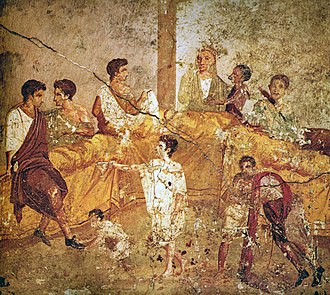
Roman religion focused on doing things correctly through prayers, rites, and sacrifices. Religion was an important part of daily life. Every home had small shrines for family gods, and the city's calendar was filled with religious holidays. Women, slaves, and children all took part in these traditions. Over time, new beliefs entered Rome, and eventually Christianity became the main religion of the empire.
Overview
The priests in ancient Rome were often from wealthy families and could also be leaders of the city. During the Roman Republic, important leaders like Julius Caesar were also religious leaders. The Romans thought that doing well came from respecting the gods.
As Rome grew, it welcomed gods from many other cultures and built temples to honor them. This helped bring different people together under Roman rule. Over time, new religions from around the Mediterranean became popular. Some were viewed with caution. The emperors also became part of the religion, and people showed respect to them and the gods. This helped hold the large Roman Empire together until Christianity became the main religion.
Main articles: Separation of church and state, Roman Republic, Roman triumph, Punic Wars, Mediterranean, Cybele, Isis, Epona, Solar monism, Mithras, Sol Invictus, Roman Britain, Mystery religions, Magic, Senate, Restrict the Bacchanals, Religious tolerance, Monotheistic, Judaism, First Jewish–Roman War, Bar Kokhba revolt, Republic's collapse, Regime of the emperors, Augustus, Veneration of the ancestral dead, Genius, Imperial cult, Christianity, Paganism
Founding myths and divine destiny
See also: Roman mythology and Founding of Rome
The Roman people told stories about how their city began. These stories mix real events and myths, so it is hard to know what really happened. One story says Rome began with help from the gods. A man named Aeneas, who came from Troy, brought special holy objects to Italy. These objects were kept safe by special priestesses called Vestals.
Another story is about twins named Romulus and Remus. Their mother was not allowed to have children, but she had the twins with help from the god Mars. The king wanted to get rid of the twins, but they were saved. When they grew up, they decided to build a city. Romulus and Remus disagreed, and Romulus became the first ruler of Rome. He started many important traditions and temples for the gods.
Roman deities
See also: List of Roman deities
The ancient Romans believed in many gods and goddesses. They thought these gods ruled different parts of the world. The gods lived in the heavens and the underworld. There were also many smaller gods. The Romans believed that by honoring these gods, they could succeed and grow powerful.
Rome's religion changed over time. New gods and ways of worship were added, but they still fit into the old traditions. One of the most important gods was Jupiter. He stood for the power of Rome and its leaders. Other important gods were Mars, Quirinus, Juno, and Minerva. People also honored local and family gods. This created many different religious practices across the Roman world.
Holidays and festivals
See also: Roman festivals, Fasti, Roman calendar, Ludi, and Roman triumph
Ancient Rome had many religious festivals each year. Some lasted one day, and others lasted several days. These festivals often had games like chariot races and plays. One famous event was the Ludi Romani, held to honor the god Liber.
Festivals sometimes happened after special events, like when a Roman general won a battle. These celebrations showed respect to the gods and brought people together. Over time, emperors took charge of these big events, making them even bigger. Even as Rome changed, many of these old festivals stayed important.
Temples and shrines
Main article: Roman temple
In ancient Rome, many religious ceremonies happened outside, not inside buildings. These ceremonies sometimes included visiting a temple or shrine. Special objects used in rituals might be kept there. Sacrifices, often of animals, usually happened at open-air altars near the temple steps. Inside the main room of a temple, called the cella, there was a statue of the god or goddess the temple honored. There was also a small altar for offerings to the gods.
The word "templum" meant a sacred space, not the building itself. Temples and shrines in Rome often remembered important events in the city’s history. Many were built to honor promises made by leaders during battles.
Religious practice
Prayers and vows were important in ancient Roman religion. Every sacrifice and offering needed a prayer to work well. Public prayers were said by priests for the community, and they had to be said perfectly. Private prayers also followed special rules.
Sacrifices were also a big part of Roman religious life. These often used animals like cattle, sheep, and pigs. The animals were prepared and sacrificed to keep the gods happy. Different gods got different animals, and after the sacrifices, there were feasts. Special sacrifices were sometimes made during hard times or to thank the gods.
Religio and the state
Roman religio (religion) was an important part of daily life and tradition, known as the mos maiorum. The state controlled religious practices and laws. Romans believed that caring for the gods, or pietas, brought harmony and success.
Religious acts happened everywhere—homes, cities, and even during travel. Proper rituals, following the rule do ut des ("I give, that you might give"), were thought to bring blessings. Neglecting these duties was seen as harmful to the community. Public rituals were performed by priests acting for the whole Roman people, showing commitment to shared values.
Public priesthoods and religious law
Rome did not have a special group of priests. Leaders of communities often acted as priests. Special religious experts, like haruspices who read signs from animal organs, were available for advice. Important priests included the flamines, each dedicated to a god. They had strict rules to follow.
The rex sacrorum oversaw religious duties in early Rome. Later, the powerful pontifex maximus took charge, especially over the Vestales, who served Vesta, the goddess of the hearth.
The Vestals
The Vestales were six women priests devoted to Vesta. They held a special place in Roman society, free from usual rules for women. Their main duty was to keep the sacred fire burning, which symbolized Rome's safety. They participated in many important festivals and helped keep the spiritual health of the city.
Augury
Romans used augurs to seek guidance from the gods before important actions. These officials looked at signs, like the flight of birds, within a sacred space called a templum. If the signs were bad, they could delay or stop plans.
Haruspicy
Haruspices were experts who read the insides of sacrificed animals to learn the gods' wishes. They also explained unusual events.
Omens and prodigies
Romans watched for omens, like bird flights, which could influence decisions. Prodigies, unusual events like strange weather or objects appearing, were seen as signs of divine displeasure. The Senate would decide how to perform rituals to undo these bad signs and bring back favor from the gods.
Mystery religions
Many mystery religions in ancient Rome came from Greek traditions. People practiced them either by themselves or in groups. These religions had special ceremonies with music, dance, and symbolic acts. These ceremonies created strong feelings of wonder and spiritual experience. One well-known mystery religion was that of Mithras. It was very popular with soldiers.
Some important Roman gods also had mystery rites. For example, Magna Mater and her partner Attis brought their own traditions to Rome. These included special festivals led by priests called Galli. There were also mystery traditions linked to the goddess Ceres and her daughter Libera. These were inspired by Greek ceremonies. The mysteries of Isis also came to Rome. They used symbols and practices thought to be from Egypt.
These mystery religions often focused on deep spiritual meanings. They included ideas about life beyond this world. These ideas later helped influence the growth of Christianity in Rome.
Funerals and the afterlife
Main article: Roman funerals and burial
Romans had different ideas about what happened after death, but they all cared deeply for their dead. Keeping the memory of the dead alive was very important in ancient Roman religion.
Wealthy families in early Rome had big funerals with gifts and feasts. They believed the dead would live on in a special place with the gods. As Rome grew, rich families built public monuments like temples instead of having huge funerals. They still remembered their loved ones with statues and names.
Funerals changed based on how rich a person was and what they believed. Wealthier people might offer animals during the funeral, while others had simpler burials with gifts like wine, incense, and food. Families held special ceremonies to honor their loved ones. They believed their spirits lived on in an underworld as spirits called di Manes. These spirits were remembered during festivals like the Parentalia in February. Later, as Christianity spread, some funeral traditions changed, but people still respected each other's family tombs and memories.
Religion and the military
The Roman soldiers thought their success came from their bravery and the help of the gods. Generals often promised the gods to help in battles. If they won, they would build temples or hold special ceremonies.
Soldiers set up their camps in a special way and had places for religious rituals. These camps had small shrines where soldiers could pray to the gods. They also did special ceremonies before big battles to ask for protection and good luck. Soldiers respected the emperor and celebrated Roman festivals even when they were far from home.
Women and religion
See also: Women in ancient Rome § Religious life
Roman women took part in many festivals and religious events. Some special rituals were only for women, like the ceremonies for the goddess Bona Dea. Men were not allowed at these ceremonies. Women could not do certain important rites, such as animal sacrifices, which were usually done by men. But they had their own important roles in religion. Goddesses like Juno, Diana, Lucina, and other specialized divine attendants were linked to motherhood and protecting babies. This was very important in ancient Rome because many babies did not survive early childhood.
Superstitio and magic
The ancient Romans had a word for what they thought was too much or wrong religious behavior: superstitio. They believed this went beyond what was needed in religious practices. Women and foreigners were often thought to do this more often.
People sometimes wanted to learn about the future, change it, or get help for revenge. They would turn to private fortune-tellers. The government allowed some public fortune-telling to understand what the gods wanted. But secret meetings between individuals and fortune-tellers were viewed with suspicion. Magic and astrology were banned at times, but they remained popular among all classes of people.
Main article: Magic in the Greco-Roman world
History of Roman religion
Rome's government, politics, and religion were closely linked. The Romans believed their success came from keeping the gods happy. Religion was part of everyday life and important in making decisions.
Early Rome was ruled by kings who also had religious duties. After the kings left, these duties were shared among elected leaders. As Rome grew, it brought in people from other places with their own gods and ways of worship. Rome usually welcomed these new beliefs, allowing people to keep their traditions as long as they also respected Roman ways. This helped Rome build a large empire where many different religions could coexist.
Images
Related articles



This article is a child-friendly adaptation of the Wikipedia article on Religion in ancient Rome, available under CC BY-SA 4.0.
Images from Wikimedia Commons. Tap any image to view credits and license.