 Safekipedia
Sense of balance
Adapted from Wikipedia · Adventurer experience
The sense of balance or equilibrioception is the perception of balance and spatial orientation. It helps prevent humans and nonhuman animals from falling over when standing or moving. This ability lets us stay upright and move safely, whether we're walking, running, or even just standing still.
Equilibrioception comes from several sensory systems working together. Our eyes, through the visual system, give us clues about where we are. The inner ears, with their vestibular system, sense movements and changes in position. And our bodies also know where they are in space thanks to proprioception. When these systems work well, we can keep our balance without even thinking about it.
The vestibular system, located in the inner ear, has three semicircular canals that help us detect movements. Together with our vision, it keeps objects clear when our heads move. Our balance system also works with the skeletal systems, using muscles and joints to stay steady. All this information is sent to the brain, which helps us maintain our balance and know where we are in the world around us.
Vestibular system
Main article: Vestibular system
The vestibular system helps us keep our balance. It uses a special fluid called endolymph. This fluid moves in tubes in our inner ear, called the labyrinth. It helps us know where we are and stay upright.
Dysfunction
Main article: Balance disorder
When the sense of balance doesn't work right, it can make you feel dizzy or sick to your stomach. This can happen because of illnesses such as Ménière's disease, infections in the inner ear, or even a bad cold. Quick movements, like riding a merry-go-round, can also upset your balance for a little while.
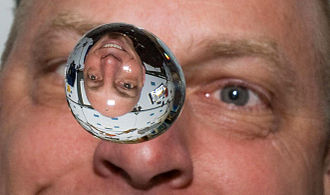
Astronauts sometimes have trouble with their balance when they are in space because of the weightlessness. This can cause motion sickness called space adaptation syndrome.
System overview
The sense of balance, also called equilibrioception, helps us stay upright and prevents falls when we stand or move. It works by combining information from several parts of our body: our eyes, inner ears, and muscles and joints.
Our inner ears contain special structures called semicircular canals and otolith organs. These detect head movements and changes in position. When our head moves, tiny hair cells in these structures bend, sending signals to the brain. The brain then uses this information along with vision and the sense of where our body is to keep us balanced.
Other animals
Some animals have a better sense of balance than humans. For example, a cat uses its inner ear and tail to walk on thin surfaces like a fence.
Many sea animals use a special organ called the statocyst to sense their position. This organ detects tiny calcareous stones to figure out which way is "up".
In plants
Main article: Gravitropism
Plants have a special way of staying upright, similar to how we keep our balance. When a plant is moved to a new spot, its stems grow upward, away from the pull of gravity. The roots grow downward, toward gravity. This ability to respond to gravity is called gravitropism. For example, poplar stems can sense when they are tilted and change how they grow to stay stable.
Images
Related articles



This article is a child-friendly adaptation of the Wikipedia article on Sense of balance, available under CC BY-SA 4.0.
Images from Wikimedia Commons. Tap any image to view credits and license.