 Safekipedia
Sertorian War
Adapted from Wikipedia · Adventurer experience
Sertorian War
The Sertorian War was a civil war in the Roman Republic. It happened between 80 and 72 BC. Two Roman groups fought. One was led by a man named Quintus Sertorius. The other was led by the Roman Senate. The fighting mostly took place in the Iberian Peninsula, which the Romans called Hispania.
Sertorius was a good leader. He used clever and surprise attacks, called guerrilla warfare, against the Senate's armies. He had help from people who had to leave Rome and from local tribes. Sertorius often won battles and gained support.
The Senate sent strong generals like Pompey to fight Sertorius, but he kept winning for years. After some big battles, Sertorius's forces grew weaker. Sertorius was killed by one of his own men. After that, the war ended when the remaining fighters were defeated by Pompey.
Origins
During Sulla's civil war, a man named Quintus Sertorius fought for the Marian-Cinnan side against Sulla. In 83 BC, Sertorius was sent to govern the Iberian Peninsula. But his side lost in Italy, and Sulla's army made him leave Iberia.
Sertorius went to Tingis in North Africa. There, he helped local people remove a harsh leader named Ascalis. Leaders of the Lusitanians asked him to help them stand up against the Sullan government, which was treating them unfairly. They chose Sertorius because he had been fair when he governed before.
In 80 BC, Sertorius defeated a small navy near Mellaria and landed in the Iberian Peninsula at Baelo, close to the Pillars of Hercules. He organized local tribes and later fought a Roman army led by Lucius Fufidius in the Baetis valley.
Events of 80–77 BC
Quintus Sertorius won a battle at the Baetis River and took control of most of Hispania Ulterior. He sent his lieutenant, Lucius Hirtuleius, to face the governor of Hispania Citerior and the forces loyal to Sulla. The Roman leaders in Rome became worried and sent Quintus Caecilius Metellus Pius to lead the forces in Hispania Ulterior.
Hirtuleius used smart tactics to weaken the enemy army led by Marcus Domitius Calvinus. They fought a battle at the Anas River where Domitius was defeated. Metellus, not knowing about this loss, sent help, but it was also defeated by Sertorius. Metellus went to Spain to fight Sertorius. Sertorius used quick, surprise attacks that made it hard for Metellus. Metellus tried to build forts and secure towns, but Sertorius kept attacking, making it difficult for Metellus to succeed.
Events of 76–74 BC
The Sertorian War was a big problem for the leaders in Rome. They sent more soldiers to fight against Sertorius and his supporters in a place called Hispania.
In 76 BC, a man named Pompey was given a big army to help fight Sertorius. He had many foot soldiers and horse soldiers.
Sertorius got help from a man named Marcus Perperna, who brought more soldiers to join him. Sertorius wanted to fight the cities that supported the other side. One of these cities was Lauron. Pompey tried to attack Sertorius there but was tricked and lost the battle.
Pompey also tried to capture a city called New Carthage but was blocked by Sertorius’s allies. In other battles near Valentia and Italica, Pompey and another leader named Metellus won against Sertorius’s generals. Later, Sertorius fought Pompey at the River Sucro, but the battle ended without a clear winner. Sertorius then went to a town called Clunia to rebuild his army while Pompey and Metellus followed him.
In 74 BC, Metellus and Pompey focused on fighting in the lands of the Celtiberians and Vaccaei. Sertorius surprised the Romans at one point. The Senate tried to help Pompey with a naval attack, but it did not work well. Pompey wrote a letter to the Senate asking for more support because his soldiers were running out of food and money. Some rich people in Rome decided to help raise funds to support Pompey’s army.
Events of 73–71 BC
In 73 BC, problems grew between the Roman soldiers and local soldiers in Sertorius's army. Some Romans were unhappy because Sertorius had replaced his Roman guards with local soldiers. This made some Romans think Sertorius was not trustworthy anymore.
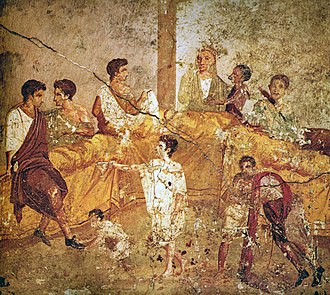
In 72 BC, Perperna invited Sertorius to a feast. He planned to trick Sertorius. During the feast, Perperna's men attacked and killed Sertorius. After this, many local soldiers made peace or went home. Perperna tried to lead but needed to win quickly. Pompey set a trap, pretending to run away before ambushing Perperna's army. Pompey's soldiers attacked from hidden spots, surrounding and defeating Perperna's troops. Perperna tried to save himself by offering important papers, but Pompey burned them and killed Perperna and those who had killed Sertorius. After this battle near Osca, the war was essentially over.
Main article: final battle
Aftermath
After the war ended, many people who had supported the other leader were treated kindly by Pompey. They were given Roman citizenship, letting them be part of Rome. Some who still disagreed with him were moved to a new place called Lugdunum Convenarum in southern Gaul.
Timeline
The Sertorian War lasted from 80 BC to 72 BC. It was a fight between two Roman groups in a place called Hispania, which is now the Iberian Peninsula. One group was led by a man named Quintus Sertorius, and the other was led by the Roman Senate.
Here are some important events from the war:
- In 80 BC, Sertorius and his small army arrived at a place called Baelo near the Pillars of Hercules.
- Over the next few years, Sertorius and his soldiers fought many battles against Roman leaders sent to stop him.
- Sertorius used clever tactics to wear down his enemies.
- In 73 BC, some of Sertorius's own followers turned against him and removed him.
- The war ended in 72 BC when the remaining followers of Sertorius were defeated by another Roman leader named Pompey.
Notes and references
Modern Sources
Here are some books you can read to learn more about the Sertorian War:
Related articles




This article is a child-friendly adaptation of the Wikipedia article on Sertorian War, available under CC BY-SA 4.0.
Images from Wikimedia Commons. Tap any image to view credits and license.