 Safekipedia
Time travel
Adapted from Wikipedia · Adventurer experience
Time travel is the idea of moving to the past or the future. It is a popular topic in stories, science, and deep thinking about the world. In books and movies, characters often use a special time machine to travel through time. One famous story about this is H. G. Wells’s book called The Time Machine from 1895.
We do not know if it is really possible to travel back in time. If it were, it might create puzzles about what causes what. Moving forward in time, in a way that feels faster or slower, has been seen many times and is understood using special ideas in physics. But changing time by more than a very tiny bit is not something we can do with our tools today.
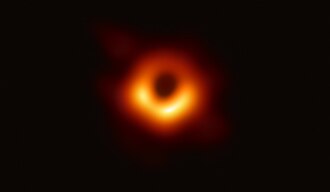
Some ideas in physics, like those around a spinning black hole, suggest that traveling back in time could be possible. However, going to any exact moment in time and space is not something most scientists think is likely, and it is usually linked to very small and complex parts of physics.
History of the concept
In religion
Some old stories have characters who seem to jump forward in time. In Hindu stories, the tale of Raivata Kakudmi tells of a visit to the god Brahma, after which the character returns to Earth to find many ages have passed. In Buddhist writings, the Payasi Sutta explains how time feels different in heavenly places. The Japanese story of Urashima Tarō tells of a fisherman who visits an underwater palace for just a few days but returns to find centuries have passed.
In Jewish stories, Moses once visited a study hall and saw the future. Another story tells of Honi HaMe’agel, who fell asleep and woke up 70 years later to find a tree fully grown that he had seen planted.
In Islamic tradition, the Quran tells of the Seven Sleepers, who hid in a cave to escape bad leaders. When they woke up long later, the world had changed.
Science fiction
Time travel appears often in science fiction stories and media. Early tales include characters who sleep for years and wake up in a different world, or who are taken to the past by magic. Examples include L'An 2440, rêve s'il en fût jamais by Louis-Sébastien Mercier, Rip Van Winkle by Washington Irving, Looking Backward by Edward Bellamy, and When the Sleeper Awakes by H. G. Wells.
Some very old stories describe traveling back in time using special objects. The Chinese novel A Supplement to the Journey to the West includes magical mirrors and gateways linking different times. Samuel Madden’s Memoirs of the Twentieth Century uses letters from the future given to people in the past. Charles Dickens’ A Christmas Carol shows a character moving between Christmas days past and future.
Early time machines
Main article: Time machine (device)
One of the first stories to use a machine for time travel is “The Clock that Went Backward” by Edward Page Mitchell, where a strange clock moves people back in time. Enrique Gaspar y Rimbau’s El Anacronópete (1887) features a built vessel for time travel. H. G. Wells’ The Time Machine (1895) helped make the idea of mechanical time travel well-known.
Time travel in physics
Some ideas from Einstein's work on how space and time work together suggest that special shapes of space might let people travel to the past or future. Scientists talk about special paths in space-time that could let objects go back to their own past. There are some ideas from Einstein's math that show space-times with these special paths, but it is not clear if they could really happen.
Any idea that would let people travel backward in time could cause problems with cause and effect. A famous example is the "grandfather paradox," where someone goes back in time and stops their grandparents from meeting. Some scientists think these problems can be avoided by rules that say only certain things can happen.
General relativity
Traveling to the past might be possible in some special shapes of space-time. Einstein's ideas do suggest that under very unusual conditions, moving backward in time might be possible, but we do not yet know for sure.
Different spacetime geometries
Einstein's work describes the universe using math. There are special answers to these math problems that include paths that loop back on themselves. One such idea was first suggested by a scientist named Kurt Gödel, but his idea needs the universe to act in ways that we do not see.
Wormholes
Wormholes are an idea where space-time is bent in a way allowed by Einstein's math. One way to use a wormhole for time travel would be to move one end of the wormhole close to something with strong gravity, like a big star. Because of how time works differently in strong gravity, one end of the wormhole would seem to age slower than the other end. However, it is only possible to go back as far as when the wormhole was first made.
Making a wormhole that people could use would need a special kind of material with very strange properties.
Other approaches based on general relativity
Another idea is a very thin, spinning cylinder. If it spins fast enough, someone traveling around it in a certain way could go back in time. But the cylinder would need to be made of materials stronger than anything we know.
A big problem with these ideas is that they need materials with special properties that do not exist in normal matter. Stephen Hawking suggested that the laws of physics stop these kinds of time machines from being built.
Quantum physics
No-communication theorem
When a signal is sent from one place to another at or slower than the speed of light, the math of relativity shows that everyone agrees the signal was sent before it was received. If a signal could go faster than light, it might seem to be received before it was sent. Some quantum ideas like entanglement might seem to let information move faster than light, but careful study shows that real messages still cannot go faster than light.
Interacting many-worlds interpretation
Some versions of a quantum idea where many universes exist at once suggest that a person going back in time might end up in a different universe instead of their own. This could avoid problems like the grandfather paradox.
Experimental results
Some experiments seem to show effects that look like cause and effect are reversed, but when looked at more closely, they do not really break the rules of cause and effect.
Several experiments have tried to attract people from the future who might invent time travel, but so far, no one from the future has shown up. Some think this shows that time travel might not be possible.
Time dilation
Main article: Time dilation
Time dilation is a real effect that shows how time can change depending on how fast you move or how strong gravity is. According to the theory of relativity, the speed of light is always the same for everyone.
For example, if one person travels very fast in space and then comes back to Earth, they might find that they have aged slower than someone who stayed on Earth. This is called the twin paradox. Gravity can also affect time. A clock closer to a big object like a black hole will tick slower than a clock farther away. This effect helps GPS satellites work properly.
Right now, we can only see this effect through very small changes in aging after long space trips.
Philosophy
Main article: Philosophy of space and time
People have thought about space and time for a very long time, starting in ancient Greece. Some believed time was just an illusion. Later, Isaac Newton thought of time as fixed and absolute, while Gottfried Wilhelm Leibniz believed time was just a way to connect events.
Some thinkers say that the past and future already exist, like different places we can visit. Others say only the present is real, and the future hasn't happened yet.
One famous idea is the grandfather paradox, where someone travels back in time and changes something that stops them from being born. This creates a problem because it doesn’t make sense. Some believe this shows time travel can't change the past.
There are also ideas about how time travel might work without causing problems.
Related articles


This article is a child-friendly adaptation of the Wikipedia article on Time travel, available under CC BY-SA 4.0.
Images from Wikimedia Commons. Tap any image to view credits and license.