Apostles in the New Testament
Not to be confused with Disciple (Christianity). For apostles in general, see Apostle. In Christian theology and ecclesiology, the apostles, particularly the Twelve Apostles (also known as the Twelve Disciples or simply the Twelve), were the main disciples of Jesus according to the New Testament. During the life and ministry of Jesus in the 1st century AD, the apostles were his closest followers and became the main teachers of the gospel message of Jesus.
There is also an Eastern Christian tradition, based on the Gospel of Luke, that there were seventy apostles during the time of Jesus' ministry. The word comes from the Koine Greek apóstolos, meaning a messenger or envoy, with a sense closer to delegate than to messenger. The gospels and Acts give four lists of the Twelve, which differ slightly in the names. The Gospel of John refers to the Twelve without ever listing them.
The commissioning of the Twelve Apostles during the ministry of Jesus is described in the Synoptic Gospels. After his resurrection, Jesus sent eleven of them in the Great Commission to spread his teachings to all nations, because Judas Iscariot had by then died. Peter, James and John formed an inner circle within the group. They alone were present at the raising of Jairus' daughter, the Transfiguration and the agony in Gethsemane. After Judas Iscariot betrayed Jesus and died, the remaining eleven chose Matthias by lot to restore the number to twelve.
Apart from the original twelve, other people were also considered apostles. In the Pauline epistles, Paul, although not one of the original twelve, described himself as an apostle. He said he was called by the resurrected Jesus himself during his road to Damascus event. Later he described himself as "an apostle to the Gentiles". Paul also described Andronicus and the woman Junia as "outstanding among the apostles." The period and events in the timeline of early Christianity during the lifetimes of the twelve apostles is called the Apostolic Age. Barnabas and James the brother of Jesus are also called apostles in the New Testament, and Paul uses the word well beyond the original twelve.
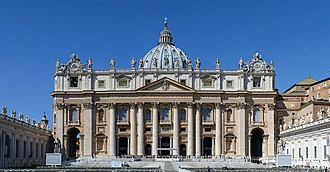
Christian tradition holds that all the Twelve except John were martyred, though only the death of James son of Zebedee is recorded in the New Testament. Scholars differ over how much of the martyrdom tradition is historical, with some treating most accounts as late legend. Relics of the apostles are claimed by churches across Europe and beyond, including St. Peter's Basilica in Rome, Santiago de Compostela Cathedral and San Thome Basilica in Chennai. By the 2nd century, a link to the apostles was treated as a mark of authority. Churches founded by one of them were known as apostolic sees, and bishops traced their office to the Twelve through apostolic succession. Texts including the Didache and the Apostles' Creed were attributed to them.
Etymology
Further information: Apostle § Terminology
The word apostle comes from the Greek word apóstolos. It is made from two parts: apó- ('from') and stéllō ('I send, I depart'). Originally, it meant 'messenger' or 'envoy'. It has a stronger meaning than the word messenger and is closer to a 'delegate'.
Biblical narratives
Mark 6:7–13 says that Jesus first sent out these twelve in pairs (cf. Mt 10:5–42, Lk 9:1–6) to towns in Galilee. Their first task was to heal the sick and drive out demons. They were told to take only a staff and sandals, not two tunics. Later, the Twelve Apostles were described as having been commissioned to preach the Gospel to "all the nations", whether Jew or Gentile. The commissioning of the Twelve Apostles appears in the three Synoptic Gospels as the first choosing of the Twelve from among the disciples of Jesus. In the Gospel of Matthew it comes shortly before the miracle of the man with a withered hand, and in Mark and Luke it comes shortly after.
All four canonical Gospels tell how some disciples were recruited. In the Gospel of John, Andrew, a disciple of John the Baptist, and another disciple followed Jesus after the Baptist called him the "Lamb of God". They became the first two disciples Jesus called, so the Eastern Orthodox Church honours Andrew with the name Protokletos, meaning "the first called". Matthew and Mark name James and John as sons of Zebedee, and Luke says they worked as a team with Simon and Andrew. Matthew says that Jesus found James and John repairing their nets, and they joined him at once. The Synoptic Gospels also tell that Jesus invited a tax collector, named Matthew or Levi, to become a disciple. Tax collectors were seen as villains in Jewish society, and the Pharisees asked Jesus why he ate with such people. He replied, "it is not the healthy who need a doctor, but the sick."
Lists of the Twelve Apostles in the New Testament
Each of the four lists of apostles in the New Testament shows that all the apostles were men, and Christian tradition says they were all Jews. The lists always place the same four apostles in each of three groups. Peter is always listed first, Philip is always fifth, James, son of Alphaeus is always ninth, and Judas Iscariot is always last. The Gospel of John does not give a formal list. According to the New Testament, only two pairs of brothers were among the Twelve: Peter and Andrew, and James and John. Some traditions, such as the one of the Eastern Orthodox Church, and the one of the Catholic Church, name other brothers among the apostles.
Peter, James, and John formed a small inner group among the Twelve. Jesus chose them to be the only apostles present on three important occasions. Later, the remaining apostles chose a new twelfth apostle to replace Judas.
Main article: Matthias the Apostle
After Judas betrayed Jesus, the apostles numbered eleven. The remaining apostles chose a twelfth apostle by casting lots, a traditional way to find out the will of God. The lot fell upon Matthias.
Main article: Paul the Apostle
The New Testament also uses the word apostle in a wider sense. Paul was not one of the original twelve, but he described himself as an apostle, saying he was called by Jesus himself. He called himself the "apostle of the Gentiles."
Main article: Seventy disciples
Luke's gospel also tells of seventy disciples, known in Eastern Christianity as the "Seventy Apostles," whom Jesus sent out in pairs.
| Gospel of Matthew | Gospel of Mark | Gospel of Luke | Gospel of John | Acts of the Apostles |
|---|---|---|---|---|
| Simon ("also known as Peter") | Simon ("to whom he gave the name Peter") | Simon ("whom he named Peter") | Simon Peter / Cephas "which is translated Peter" | Peter |
| Andrew ("his [Peter's] brother") | Andrew | Andrew ("his [Peter's] brother") | Andrew ("Simon Peter's brother") | Andrew |
| James ("son of Zebedee") | James ("son of Zebedee") / one of the "Boanerges" | James | one of the "sons of Zebedee" | James |
| John ("his [James's] brother") | John ("brother of James") / one of the "Boanerges" | John | one of the "sons of Zebedee" / the "disciple whom Jesus loved" | John |
| Philip | Philip | Philip | Philip | Philip |
| Bartholomew | Bartholomew | Bartholomew | Nathanael | Bartholomew |
| Thomas | Thomas | Thomas | Thomas ("also called Didymus") | Thomas |
| Matthew ("the publican") | Matthew / Levi | Matthew / Levi | not mentioned | Matthew |
| James ("son of Alphaeus") | James ("son of Alphaeus") | James ("son of Alphaeus") | not mentioned | James ("son of Alphaeus") |
| Thaddaeus (or "Lebbaeus"); | Thaddaeus | Judas ("son of James," referred to as brother in some translations) | Judas ("not Iscariot") | Judas ("son of James," referred to as brother in some translations) |
| Simon ("the Canaanite") | Simon ("the Cananaean") | Simon ("who was called the Zealot") | not mentioned | Simon ("the Zealot") |
| Judas Iscariot | Judas Iscariot | Judas Iscariot | Judas ("son of Simon Iscariot") | (Judas replaced by Matthias) |
| Person called apostle | Where in Scripture |
|---|---|
| Paul | Throughout Acts, the Pauline epistles and 2 Peter 3:15 |
| Barnabas | Acts 14:14 |
| James the Just, the brother of Jesus | 1 Corinthians 15:7, Galatians 1:19 |
| Andronicus and Junia | Romans 16:7 |
Deaths
Christian tradition has generally passed down that all of the Twelve Apostles except John were martyred. It is traditionally believed that John lived to old age and died of natural causes at Ephesus sometime after AD 98, during the reign of Trajan. However, the New Testament describes only the death of his brother James, who became the first Apostle to die, in about AD 44. According to the 18th-century historian Edward Gibbon, early Christians believed that only Peter, Paul, and James, son of Zebedee, were martyred. Some people think that the other claims of martyred apostles rely on late legends rather than historical or biblical evidence. Others, such as academic Sean McDowell, are more favorable to the martyrdom traditions.
Relics of the apostles are claimed by various churches, many in Europe. For example, Andrew is buried in the Cathedral of Saint Andrew, Patras in Greece, and Peter is buried in St. Peter's Basilica in Vatican City, Rome, Italy. James the Great is buried in Santiago de Compostela Cathedral in Spain, and Thomas is buried in the San Thome Basilica in Chennai, India. John has no relics, because when his tomb in Ephesus was opened during Constantine the Great's reign, no bones were found. This gave rise to the belief that his body was assumed into heaven. Judas Iscariot is buried at Akeldama near Jerusalem.
Legacy
By the 2nd century AD, being connected with the apostles was seen as a sign of authority. Churches believed to have been started by one of the apostles are known as apostolic sees. Paul's letters were accepted as scripture, and two of the four canonical gospels were linked to apostles, as were other New Testament works. Some Christian writings, such as the Didache and the Apostolic Constitutions, were credited to the apostles. The Apostles' Creed, which was popular in the West, was said to have been written by the apostles themselves.
Bishops traced their lines of leadership back to individual apostles, who were said to have spread out from Jerusalem and established churches across large areas. Christian bishops have traditionally claimed authority that comes, through apostolic succession, from the Twelve Apostles. Early Church Fathers who came to be linked with apostles, such as Pope Clement I with St. Peter, are called the Apostolic Fathers.

Quiz time!
5 questions about Apostles in the New Testament
What did the word "apostle" originally mean?
Pictures
Keep exploring


This article is a child-friendly adaptation of the Wikipedia article on Apostles in the New Testament, available under CC BY-SA 4.0.
Images from Wikimedia Commons. Tap any image to view credits and license.