 Safekipedia
B virus
Adapted from Wikipedia · Discoverer experience
B virus, also known as Herpes B, is a virus that infects macaque monkeys. It belongs to a group of viruses called Simplexviruses and is very similar to the virus that causes cold sores in humans. Unlike cold sores, B virus affects the nervous system and is not found in the blood.
When macaque monkeys carry this virus, it usually causes symptoms similar to mild cold sores. However, when humans accidentally get infected, it can become very serious. Researchers working with rhesus macaques have sometimes gotten infected by accident.
In humans, B virus can cause a severe brain infection called encephalitis. Without early treatment, this infection can lead to permanent damage or even be deadly. That is why quick diagnosis and proper care are very important if someone gets infected with B virus.
History
B virus was first found in 1932 after a young doctor, William Brebner, was bitten by a rhesus monkey during polio research. Though his bite healed, he later became very sick and passed away. Doctors found a tiny germ in his body that looked like another germ called HSV-1.
Soon after, a scientist named Albert Sabin studied these samples and named the virus B virus. He showed that this virus could make people very sick, no matter how it entered the body. It acted much like HSV-1 and was related to other germs found in monkeys.
By 1959, B virus had made about 17 people sick, and many of them didn’t survive. By 2002, around 50 people had gotten sick from it, but doctors learned better ways to treat these cases. From 1987 to 2004, fewer people died because of better treatments and ways to find the virus early.
There have been a few more cases since then, including one in 1997 when a researcher in the United States got sick after an infected monkey splashed her in the eye, and another in 2019 in Japan, where a worker got very sick. In 2021, a veterinarian in China also got very sick while working with monkeys.
Virology
Structure
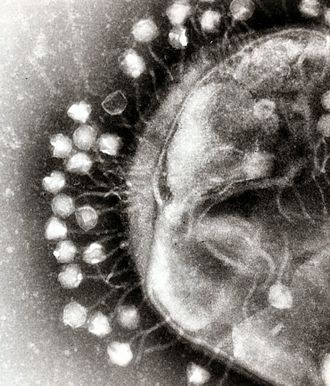
B virus is about 200 nanometers wide and looks very similar to two other viruses called HSV1 and HSV2. It has a special shape made of many tiny parts called an icosahedral capsid. This capsid is made from 150 hexons and 12 pentons, which are formed from six different proteins. Around this capsid is a loose layer called the envelope, which has important proteins that help the virus attach to and enter host cells. Between the capsid and the envelope is another layer called the tegument, which contains proteins that help the virus work inside the cell.
Genome
The full genetic code, or genome, of B virus was discovered in 2003 from a sample taken from a rhesus macaque. Like other herpes viruses, B virus has double-stranded DNA that is about 157 kilobase pairs long. Its DNA is arranged in a special way with repeated sections at both ends and in the middle. This arrangement is the same as in HSV viruses. The genetic code shows that B virus and HSV types 1 and 2 share a common ancestor. The proteins on the surface of B virus are about 50% similar to those on HSV viruses, especially HSV-2. One important difference is that B virus lacks a specific gene found in HSV viruses, which means it uses different ways to grow inside nerve cells. This difference might explain why B virus affects humans very differently from HSV viruses.
Infection
B virus can infect people, but this is very rare. It usually happens if a person is bitten or scratched by an infected macaque monkey, or comes into contact with the monkey's eyes, nose, or mouth. It is possible but uncommon for one infected person to pass the virus to another. Traveling to areas where these monkeys live, especially places like temples where close contact happens, can increase the risk. Even in places where the virus is found, cases in humans are still rare.
When humans get infected with B virus, they can become very sick, sometimes leading to serious brain problems or other health issues. Without treatment, the illness can become worse. Since it was first found in 1932, there have been about 50 known cases of people getting this virus, and many of these cases were severe. This virus is special because it is the only virus from non-human primates known to cause serious illness in people.
Prevention
When working with macaque monkeys, especially those known to carry the virus, it is important to use protective gear. This helps prevent infection from bites, scratches, or contact with fluids near the eyes or other sensitive areas. Cleaning these areas right away if they happen is also very important to stay safe.
Treatment
Getting the right help quickly is very important if someone might be infected with the B virus. Doctors need samples from both the person and, if possible, the monkey to test for the virus.
One medicine, called Acyclovir, has helped stop the disease from getting worse in some cases. It can be very important to treat the infection right away to avoid serious problems with the brain.
Related articles

This article is a child-friendly adaptation of the Wikipedia article on B virus, available under CC BY-SA 4.0.
Images from Wikimedia Commons. Tap any image to view credits and license.