 Safekipedia
Latin alphabet
Adapted from Wikipedia · Discoverer experience
The Latin alphabet is the set of letters the ancient Romans used to write Classical Latin. Over time, it was changed and added to, including the use of smaller letters, to write Medieval Latin and later Modern Latin.
Today, the Latin alphabet has 26 main letters. This form came from important changes that happened a long time ago, when new letters like J, U, and W were added. Because of this, the Latin alphabet became the base for the Latin script, which is the most common way people write around the world.
The Latin script is used for more than 3,000 languages. It helps most of the people live in western and central Europe, sub-Saharan Africa, the Americas and Oceania to read and write every day. Sometimes extra marks are added to the letters to suit different languages better, known as diacritics.
Etymology
The term Latin alphabet can mean the alphabet used to write Latin or other alphabets based on the Latin script. This script is the basic set of letters shared by many alphabets that come from the classical Latin alphabet, such as the English alphabet. These Latin-script alphabets can sometimes leave out letters, like the Italian alphabet, or add new ones, like the Danish and Norwegian alphabets. Over time, the shapes of letters changed, including the creation of lower-case forms in Medieval Latin, which were not part of the original classical alphabet.
Evolution
For broader coverage of this topic, see History of the alphabet.
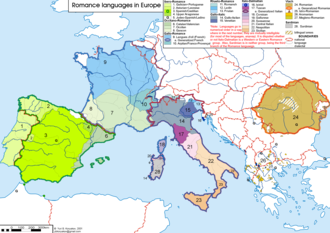
The Latin alphabet started from a style that looked like the Etruscan alphabet. The Etruscans ruled early Rome, and over many years, their alphabet changed in Rome to become the Latin alphabet. During the Middle Ages, people used the Latin alphabet to write many languages such as Romance languages, Celtic, Germanic, Baltic, and some Slavic languages. Later, as people explored new places, the Latin way of writing spread around the world. It is now used for many languages from America to Australia and Africa. Today, experts often choose the Latin alphabet or a special writing system called the International Phonetic Alphabet when they need to write down languages that do not usually use the Latin letters.
Signs and abbreviations
Even though Latin writing did not use special marks on letters, people often used short forms and symbols to make writing faster and use less space. This helped when writing on stone or valuable paper. These short forms and symbols were used for many years in different ways.
History
Main article: History of the Latin script
The Latin alphabet used by the Romans came from the Old Italic alphabet used by the Etruscans. That alphabet came from the Euboean alphabet used in Cumae, which itself came from the Phoenician alphabet.
Latin started with 21 letters. The letter ⟨C⟩ was used for two sounds, /ɡ/ and /k/, possibly because of Etruscan influence. Later, around the 3rd century BC, the letter ⟨Z⟩ was replaced by ⟨G⟩, a changed form of ⟨C⟩, to better show the /ɡ/ sound. ⟨G⟩ took the place of ⟨Z⟩, and ⟨C⟩ was mostly used for the /k/ sound. The letter ⟨K⟩ was used only in a few words, often interchangeably with ⟨C⟩.
After the Roman conquest of Greece in the 1st century BC, Latin added the letters ⟨Y⟩ and ⟨Z⟩ to write Greek words that didn’t exist in Latin. An attempt by the emperor Claudius to add three more letters did not last. So, during the classical Latin period, the alphabet had 21 letters and two foreign letters.
It was during the Middle Ages that the letter ⟨W⟩ was added to the Latin alphabet. This happened because it was needed for sounds in Germanic languages that did not exist in Latin. Only after the Renaissance did people start treating ⟨I⟩ and ⟨U⟩ as vowels, and ⟨J⟩ and ⟨V⟩ as consonants. Before that, ⟨I⟩ and ⟨J⟩, and ⟨U⟩ and ⟨V⟩, were used interchangeably.
| Letters | 𐌀 | 𐌁 | 𐌂 | 𐌃 | 𐌄 | 𐌅 | 𐌆 | 𐌇 | 𐌈 | 𐌉 | 𐌊 | 𐌋 | 𐌌 | 𐌍 | 𐌎 | 𐌏 | 𐌐 | 𐌑 | 𐌒 | 𐌓 | 𐌔 | 𐌕 | 𐌖 | 𐌗 | 𐌘 | 𐌙 | 𐌚 |
|---|---|---|---|---|---|---|---|---|---|---|---|---|---|---|---|---|---|---|---|---|---|---|---|---|---|---|---|
| Transliteration | A | B | C | D | E | V | Z | H | Θ | I | K | L | M | N | Ξ | O | P | Ś | Q | R | S | T | Y | X | Φ | Ψ | F |
| As Old Italic | 𐌀 | 𐌁 | 𐌂 | 𐌃 | 𐌄 | 𐌅 | 𐌆 | 𐌇 | 𐌉 | 𐌊 | 𐌋 | 𐌌 | 𐌍 | 𐌏 | 𐌐 | 𐌒 | 𐌓 | 𐌔 | 𐌕 | 𐌖 | 𐌗 |
|---|---|---|---|---|---|---|---|---|---|---|---|---|---|---|---|---|---|---|---|---|---|
| As Latin | A | B | C | D | E | F | Z | H | I | K | L | M | N | O | P | Q | R | S | T | V | X |
| Letter | A | B | C | D | E | F | G | H | I | K | L | M | N | O | P | Q | R | S | T | V | X |
|---|
Images
Related articles



This article is a child-friendly adaptation of the Wikipedia article on Latin alphabet, available under CC BY-SA 4.0.
Images from Wikimedia Commons. Tap any image to view credits and license.