 Safekipedia
Music of Austria
Adapted from Wikipedia · Discoverer experience
Vienna has been a very important place for music to grow and change. During the 18th and 19th centuries, many famous composers came to the city because the Habsburgs supported the arts. This helped make Vienna the center of classical music in Europe.
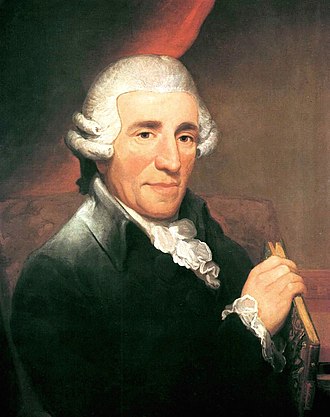
Some of the greatest composers, like Joseph Haydn, Wolfgang Amadeus Mozart, Ludwig van Beethoven, Franz Schubert, and Johann Strauss II, were linked to Vienna. Franz Schubert was even born there.
In earlier times, during the Baroque period, music from Slavic and Hungarian folk traditions also shaped Austrian music. Vienna started becoming a cultural hub in the early 16th century, and musicians played instruments such as the lute.
Yodel
Further information: Yodeling
Yodeling is a special way of singing where the voice quickly switches between high and low notes. This style started in the beautiful Alps mountains. In Austria, people called this singing "juchizn".
Rock and pop music
Falco was Austria's most popular solo artist in the 1980s. His hit song "Rock Me Amadeus" reached the top of the Billboard Hot 100 in 1986.
Austria has many talented musicians and bands, even if it is not the largest exporter of international rock and pop music. Opus achieved worldwide chart success. Recently, artists like Christina Stürmer and bands such as SheSays, who toured with Bryan Adams, have gained attention. Wanda and Bilderbuch became popular in the 2010s. Soap&Skin is known for her work on the Netflix series Dark.
The Austrian metal scene includes groups like Belphegor, Hollenthon, and Pungent Stench. Electronic music in Austria features artists such as Christian Fennesz and Der Blutharsch.
The Waves Vienna Music Festival & Conference happens every October, showcasing European pop music acts.
Classical music
The Vienna Philharmonic is a classical music group that travels all over the world. Every year, they hold a special New Year's Day concert in Vienna at the Musikverein, which is one of the most important classical music concerts in Europe.
Electronic music
See also: Category:Electronic music festivals in Austria
Austria has a strong scene for electronic music. Famous groups and artists include Parov Stelar, Bernhard Fleischmann, Kruder and Dorfmeister, and Elektro Guzzi. The style called Drum 'n' Bass is also popular in Austria, with successful artists such as Camo & Krooked, Disaszt, Ill.Skillz, and Mefjus.
Neue Deutsche Härte
Neue Deutsche Härte (New German Hardness) is very popular in Austria and other German-speaking areas. Some well-known bands from this style are Stahlhammer and L'Âme Immortelle, and they have gained attention outside of Austria. Another German band, Samsas Traum, now calls Austria its home.
Eurovision success
Main article: Austria in the Eurovision Song Contest
In 2014, Conchita Wurst won the Eurovision Song Contest for Austria. This victory led to the 60th anniversary event being held in Vienna in 2015. Austria also hosted the contest in 1967 after a winning song by Udo Jürgens.
Austria won again in 2025 with the song "Wasted Love" performed by JJ. The country will host the contest once more in 2026, with the host city to be chosen soon.
Other musicians
Austria has many popular musicians who have found success. Some well-known names include Wolfgang Ambros, Rainhard Fendrich, Georg Danzer, S.T.S., Erste Allgemeine Verunsicherung, Willi Resetarits, Hubert von Goisern, Papermoon, Seiler und Speer, and Pizzera & Jaus.
There are also famous rap artists like RAF Camora. In traditional music styles such as Schlager and Volkstümliche Musik, artists like Andreas Gabalier, Melissa Naschenweng, DJ Ötzi, Hansi Hinterseer, Die Seer, and Nockis (previously known as Nockalm Quintett) are popular. Famous choirs include the Vienna Boys' Choir and The Cistercian Monks of Stift Heiligenkreuz.
Related articles


This article is a child-friendly adaptation of the Wikipedia article on Music of Austria, available under CC BY-SA 4.0.
Images from Wikimedia Commons. Tap any image to view credits and license.