 Safekipedia
National Academy of Engineering
Adapted from Wikipedia · Discoverer experience
The National Academy of Engineering (NAE) is an American nonprofit, non-governmental organization. It is part of the National Academies of Sciences, Engineering, and Medicine (NASEM), along with the National Academy of Sciences (NAS) and the National Academy of Medicine (NAM).
The NAE works on engineering programs that help meet important needs for the country. It supports education and research in engineering and honors the best achievements of engineers. Each year, new members are chosen by the current members based on their outstanding work in original research. The NAE is independent in how it runs and chooses its members, but it works with the other National Academies to give advice to the government.
History
The National Academy of Sciences began in 1863 when Abraham Lincoln, the president of the United States, signed a special act. At first, it focused only on science, not engineering. Over time, engineering was included in some of its committees.
As the United States prepared for possible war, engineers helped the government with technical advice. By 1919, the Academy created its first engineering section.
In 1964, the National Academy of Engineering (NAE) was created as a separate group to support engineering. Its goals were to advise the government on engineering matters, work with the National Academy of Sciences, and help solve important engineering problems in the country.
The NAE has worked on many projects since then, such as advising on airport planning and education for future engineers.
Membership
The National Academy of Engineering has over 2,000 members who are top engineers from the United States and around the world. Being chosen as a member is a big honor in engineering. To be considered, a current member must nominate an engineer who has made important contributions to engineering research, education, or technology.
Since it started, the Academy has chosen about 5,020 members. The Massachusetts Institute of Technology has the most members with 207, followed by Stanford University with 172, and the University of California at Berkeley with 127.
| Top 10 Institutions | Members (1969–2024) | Living Members |
|---|---|---|
| MIT | 207 | 114 |
| Stanford | 172 | 109 |
| UC Berkeley | 127 | 72 |
| Carnegie Mellon University | 75 | 29 |
| UT Austin | 74 | 43 |
| Caltech | 57 | 31 |
| UIUC | 55 | 23 |
| Michigan | 44 | 28 |
| Georgia Tech | 42 | 37 |
| Columbia | 40 | 30 |
| Cornell | 40 | 25 |
| UCSD | 40 | 23 |
| Harvard | 39 | 29 |
| Princeton | 39 | 28 |
Program areas
Greatest Engineering Achievements of the 20th Century
In February 2000, during a special event at the National Press Club, astronaut and engineer Neil Armstrong announced the top 20 engineering achievements that greatly improved life in the 20th century. These achievements were chosen from many nominations by professional engineering societies. Some achievements, like the telephone and automobile, were included because their big impact happened mostly in the 20th century, even though they were invented earlier. Electrification was ranked the most important because it is essential for almost all parts of modern life.
The list of top achievements includes things like electrification, automobiles, airplanes, and computers. Later, in 2003, the National Academy of Engineering published a book about these achievements.
Grand Challenges for Engineering
The Grand Challenges are big problems around the world that need new ideas and technology to solve. They include issues like clean energy, better health care, and protecting against natural disasters. The National Academy of Engineering created these challenges to inspire engineers and others to find solutions. These challenges are important for improving life for everyone and are connected to goals set by the United Nations.
In 2007, a special group of experts started working on these challenges, and in 2008, they announced 14 big challenges. These challenges cover areas like energy, health, and safety. The Academy wanted to inspire people to work on these problems and make the world a better place.
Frontiers of Engineering
The Frontiers of Engineering program brings together young engineering leaders to talk about new research and share ideas. There are three meetings each year, focusing on different areas of engineering.
Diversity in the Engineering Workplace
The National Academy of Engineering works to make engineering more open to everyone. They hold workshops and work with other groups to find ways to improve opportunities for all people in engineering.
Engineering, Economics, and Society
This program looks at how engineering and technology affect the economy. It also studies how to help students and teachers understand technology better.
Engineering and the Environment
This program shows how engineers are working to protect the environment and make the world safer for everyone.
Center for the Advancement of Scholarship on Engineering Education
This center aimed to improve engineering education to prepare students for future challenges. It is no longer active.
Center for Engineering, Ethics, and Society
This center helps engineers deal with important moral questions in their work. It works closely with an online resource about ethics.
Outreach efforts
The National Academy of Engineering (NAE) works hard to share its work and ideas with everyone. They create a weekly radio spot that you can hear on WTOP radio in Washington, D.C., and you can also find it on their website. They send out a newsletter every two weeks about new things in engineering.
The NAE also holds workshops to help reporters and public officials share important information during emergencies. They work with groups like the Department of Homeland Security to make these workshops happen. The NAE also uses social media to talk to people of all ages and to answer questions about engineering.
Presidents
| No. | Image | President | Term |
|---|---|---|---|
| 1 |  | Augustus B. Kinzel | 1964-1966 |
| 2 | | Eric A. Walker | 1966-1970 |
| 3 |  | Clarence H. Linder | 1970-1973 |
| 4 |  | Robert C. Seamans Jr. | 1973-1974 |
| 5 | | William E. Shoupp | 1974-1975 |
| 6 | | Courtland D. Perkins | 1975-1983 |
| 7 |  | Robert M. White | 1983-1995 |
| 8 | | Harold Liebowitz | 1995-1996 |
| 9 | | Wm. A. Wulf | 1996-2007 |
| 10 |  | Charles M. Vest | 2007-2013 |
| 11 | 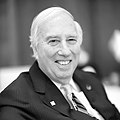 | C. D. Mote, Jr. | 2013-2019 |
| 12 |  | John L. Anderson | 2019-2025 |
| 13 | Tsu-Jae King Liu | 2025-Present |
Prizes
The National Academy of Engineering gives out several important prizes, each worth $500,000. These prizes include the Bernard M. Gordon Prize, the Fritz J. and Dolores H. Russ Prize, and the Charles Stark Draper Prize. These prizes are sometimes called the American version of a Nobel Prize for engineering.
Gordon Prize
Main article: Gordon Prize
The Bernard M. Gordon Prize began in 2001. It honors leaders in teaching and learning about engineering. The winner gets $500,000, with $250,000 going to them personally and $250,000 to their school to support teaching.
Russ Prize
Main article: Russ Prize
The Fritz J. and Dolores H. Russ Prize started in 1999 in Athens, Ohio. It is given every two years to recognize big achievements in bioengineering that help people and improve lives. The prize honors Fritz Russ and his wife Dolores Russ.
Charles Stark Draper Prize
Main article: Charles Stark Draper Prize
The Charles Stark Draper Prize is given each year for advances in engineering and for teaching the public about engineering. The winner receives $500,000. The prize is named after Charles S. Draper, known for his work in inertial navigation.
Related articles


This article is a child-friendly adaptation of the Wikipedia article on National Academy of Engineering, available under CC BY-SA 4.0.
Images from Wikimedia Commons. Tap any image to view credits and license.