 Safekipedia
Petroform
Adapted from Wikipedia · Discoverer experience
Petroforms are special shapes and patterns made by arranging large rocks on the ground. People often create them on flat areas, and they can look like animals, lines, or other interesting designs. In North America, many different Native American and First Nation tribes made petroforms a long time ago. They had their own names for these rock patterns.
Petroforms can also include things like small rock piles called cairns, tall standing stones, circles known as medicine wheels, places for fires, and even special flying shapes called desert kites. In the Old World, far away from North America, people made similar rock patterns too, like the famous Carnac stones and other big stone monuments. These rock designs show how creative and clever ancient people were.
Definition
Petroforms are special shapes and patterns made by arranging big rocks and boulders on the ground. They are much bigger than the pictures called petroglyphs that are drawn on rocks. Native peoples in North America made these petroforms a long time ago. They used them for many important reasons, like studying the stars, special ceremonies, healing, helping people remember things, and teaching others. Different groups had their own names and uses for these rock formations. Even today, some of these places are still important to First Nations, elders, and others.
History
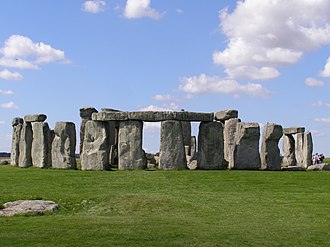
The first stone structures at Stonehenge date back to around 2600 BCE. People in Wales still create stone circles today as part of the Eisteddfod movement, which includes ideas from the Druidic revival. Desert kites may have been used as early as 3000 BCE but stopped being used when animal populations changed and more people lived in the area.
Some petroforms in North America are more than 2,500 years old, but it is hard to know exactly how old they are because of missing information. Like petroglyphs, many petroforms have important stories shared by the Ojibwe, other First Nations, and the Midewiwin. Sadly, some of these stories may be lost forever. In many places, there are laws to protect these special historical sites. Detailed studies of petroform sites in Manitoba began in the 1950s.
Today, many Ojibwe or Anishinaabe ceremonies include making fire pits shaped like turtles. Rocks are sometimes placed near entrances to symbolize important things. People still build rock piles to mark paths and special places. Recently, a large turtle-shaped petroform was created in Whiteshell Park in Manitoba.
Designs and purposes
Petroforms were created by people who did not leave written records, so we know about them mainly through stories passed down by word of mouth. Some petroforms were used to mark special times in the year, like the longest and shortest days, by lining up rocks to point toward the sunrise or sunset. These markers were often placed on high ground so people could see far away.
Petroforms also helped with hunting, guiding travel, and remembering important stories and places. Some shapes made from rocks were used to help remember tales or mark special areas for ceremonies. Large rocks were used to remember important events or people from long ago, serving as lasting reminders for future generations.
Localities
Whiteshell Provincial Park
One of the places where people made special shapes with rocks is in Southeastern Manitoba, at Whiteshell Provincial Park, Canada. The park’s name comes from white shells used in ceremonies by some Anishinaabe peoples. The park has many loose rocks left behind after the last ice age, making it easy for people to arrange them into patterns. It’s where three rivers meet, close to the edge of the Canadian Shield, and near prairie grasslands. These rivers were old paths for travel and trade.
In Whiteshell Park, you can find many rock shapes, such as snakes, turtles, lines, patterns, and large circles. Most of these rock shapes sit on top of flat granite ridges. The granite there is very smooth, almost like a large flat surface left from the ice age. Local First Nations share stories about these rock shapes, but many of their meanings remain unknown. Some places are considered very special and sacred by elders.
Wisconsin
Petroform sites in Wisconsin are being studied more because soil layers over centuries help tell their age. Many other sites don’t have these soil layers. Forests and soil have helped protect some petroforms in Wisconsin and Minnesota. In prairie areas, large circles called medicine wheels were made for use as tools to track the stars, maps for directions, and for ceremonies. Some of these medicine wheels were destroyed when the land was cleared for farming, but some still exist in areas like the Turtle Mountains or in sandy, rocky, or remote places with fewer farms. Building mounds was also linked to the use of petroforms. Mounds were made before the more complex earth works and might have helped people stay safe during floods or watch over the land.
Related articles



This article is a child-friendly adaptation of the Wikipedia article on Petroform, available under CC BY-SA 4.0.
Images from Wikimedia Commons. Tap any image to view credits and license.