 Safekipedia
Pope Leo X
Adapted from Wikipedia · Discoverer experience
Pope Leo X was the leader of the Catholic Church and ruler of the Papal States from 1513 until he passed away in 1521. He was born Giovanni di Lorenzo de' Medici into the powerful Medici family of Florence, the second son of Lorenzo de' Medici, a key figure in the Florentine Republic. Giovanni became a cardinal in 1489 and was elected pope in 1513 after the death of Pope Julius II.
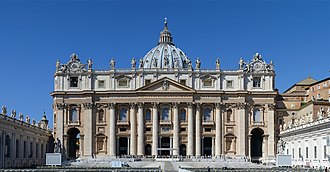
During his time as pope, Leo X supported the arts and helped shape the Renaissance period. Artists like Raphael worked on decorations in the Vatican rooms, and progress was made on rebuilding St. Peter's Basilica. He also encouraged the study of literature, poetry, and the Classics at the Roman University. Unfortunately, his spending habits caused financial difficulties.
Leo X is also remembered for his role in events that led to the Protestant Reformation. His decision to offer special pardons for donations toward St. Peter's Basilica was challenged by Martin Luther in his famous 95 Theses. In response, Leo X issued a Papal bull in 1520 called Exsurge Domine, condemning Luther's views. This made it hard to continue discussions between the two sides.
Early life
Giovanni di Lorenzo de' Medici was born on 11 December 1475 in Florence. He was the second son of Lorenzo the Magnificent, the leader of the Florentine Republic, and Clarice Orsini. From a young age, Giovanni was prepared for a life in the church. At just seven years old, he received a special ceremony called the tonsure. By the time he was ten, he had already been given many church positions that provided income.
His father, Lorenzo de' Medici, cared deeply about Giovanni's character. He wrote a letter to him, giving advice for his future. One important piece of advice was to rise early each morning, which would help with health and managing daily tasks.
Cardinal
Giovanni's father asked Pope Innocent VIII to name him cardinal of Santa Maria in Domnica when he was just 13 years old on 9 March 1489. However, he couldn't wear the special clothes or join important meetings until he was a bit older. During this time, he studied at his father's humanistic court with teachers like Angelo Poliziano, Pico della Mirandola, Marsilio Ficino, and Bernardo Dovizio Bibbiena. From 1489 to 1491, he learned about religion and church laws at Pisa.
On 23 March 1492, Giovanni officially became part of the Sacred College of Cardinals and moved to Rome. After his father passed away, he returned to Florence but soon came back to Rome. He took part in choosing the next pope in 1492 but did not support the person who became Pope Alexander VI. Later, he lived with his brother Piero in Florence during some difficult times, including when soldiers from Charles VIII of France arrived and when a leader named Girolamo Savonarola caused trouble. When the Medici family had to leave Florence in 1494, Piero went to Venice and Urbino, while Giovanni traveled through Germany, the Netherlands, and France.
Giovanni returned to Rome in May 1500 and was welcomed by Pope Alexander VI. He spent several years enjoying art and books there. In 1503, he supported Pope Julius II becoming pope, and after his brother Piero passed away, Giovanni became the leader of their family. In 1511, he was sent by Pope Julius II to represent the church in Bologna and the Romagna areas. When the leaders of Florence sided against some people from Pisa, Julius II sent Giovanni with the church’s army to fight the French. Although the French won and captured Giovanni, they were not able to take control of Florence. Eventually, the Medici family returned to power without any fighting, and Giovanni’s younger brother Giuliano became the leader of Florence, with Giovanni managing the government.
Pope
Papal election
Main article: 1513 papal conclave
Giovanni was elected pope on 9 March 1513, and this was announced two days later. The French cardinals were not present, so the choice was between Giovanni, who had support from younger and noble members, and Raffaele Riario, who had support from older members. On 15 March 1513, he became a priest, and then a bishop on 17 March. He was crowned pope on 19 March at age 37. He was the last person to become pope without first being a priest.
War of Urbino
Main article: War of Urbino
Leo wanted his younger brother Giuliano and his nephew Lorenzo to have important positions. Lorenzo was placed in charge of Florence, while Leo brought Giuliano to Rome and married him. Leo planned to create a kingdom for Giuliano in central Italy.
When Giuliano died in March 1516, Leo turned his attention to Lorenzo. In 1516, Leo took away the title of Duke of Urbino from Francesco Maria della Rovere, giving it to Lorenzo instead. Francesco Maria fled to Mantua. In January 1517, Francesco Maria tried to take back Urbino, starting a war that lasted eight months.
The war lasted from February to September 1517 and ended with Lorenzo winning. However, the war brought more problems to the Papal States and cost a lot of money. Eventually, Lorenzo became the new duke of Urbino.
Plans for a crusade
Leo wanted to stop the Ottoman sultan, Selim I, who was threatening eastern Europe. He made big plans for a group of Christian countries to work together in a crusade. The pope would decide disputes, the emperor and the king of France would lead the army, and England, Spain, and Portugal would provide ships. They would all work together against Constantinople.
However, things did not go as planned. The English king decided to make his own decisions, and much of the money collected for the crusade was used for other purposes.
In 1519 Hungary made a peace agreement with Selim I, but the next sultan, Suleiman the Magnificent, started fighting again in June 1521. He captured the citadel of Belgrade on 28 August. Leo was very worried and sent money to help the Hungarians. He also worked to keep peace between different Christian groups.
Protestant Reformation
Main article: History of Lutheranism § The start of the Reformation
In 1517, Martin Luther wrote his _Ninety-five Theses about some concerns he had. His ideas spread quickly across Germany and Europe. Leo did not fully understand how important this movement would become.
Luther sent an explanation of his ideas to the pope on 24 May. On 7 August, he was asked to come to Rome, but instead went to Augsburg to meet with a church leader. Talks continued, but Luther did not change his mind.
In June 1520, Leo issued a document condemning some of Luther’s teachings. Finally, in January 1521, Leo officially declared Luther no longer a member of the Catholic Church. The pope also asked the Holy Roman Emperor to take action against those who supported Luther’s ideas.
Leo was also pope when Lutheran ideas began to spread into Scandinavia. He sent a representative to Denmark, but the king did not make changes to the church there.
Other activities
Consistories
Main article: Cardinals created by Leo X
Leo created 42 new cardinals during his time as pope. This included two cousins and a nephew. One of these cardinals later became Pope Clement VII. In July 1517, Leo created 31 cardinals in one group — the most until modern times.
Canonizations
Pope Leo X officially recognized eleven people as saints during his time as pope. The most well-known was Francis of Paola, recognized in 1519.
Final years
Leo was busy dealing with politics in Italy and Europe. The death of the Emperor Maximilian in 1519 made things more complicated. Leo supported Charles of Spain to become the next emperor.
Leo wanted to add Ferrara, Parma, and Piacenza to the Papal States. In May 1521, he made an agreement with the emperor. They planned to work together against France. Leo heard news that papal troops had taken control of some areas he wanted.
Leo fell ill and died on 1 December 1521. He was buried in Santa Maria sopra Minerva.
Character, interests and talents
Pope Leo X was known for his pleasant voice and cheerful nature. He was good at speaking and writing in an elegant way. He loved music, theater, art, and poetry, and enjoyed both old masterpieces and new creative works. He was especially fond of making poems in Latin on the spot and liked to support talented writers.
Though he was busy as a leader, Leo still took part in religious services and prayers. He was generous and kind, often giving money to help those in need, but he was also clever and sometimes tricky in his decisions. Some people thought he was too relaxed in his important role.
Leo grew up in Florence and studied in Pisa, which helped him develop a love for art and learning. He enjoyed reading Latin poems, Greek tragedies, and comedies. As pope, he brought in talented musicians from many places and cared greatly about the quality of church music. He even helped improve how music was printed and shared.
Some of Leo’s actions, like enjoying playful entertainment and tolerating funny behavior from his friends, were seen as inappropriate by others. Despite these moments, he was known for his kindness, giving money each year to help many people, including the poor, sick, and those who were struggling.
Death
Pope Leo X became very ill and passed away from pneumonia at the age of 45 on 1 December 1521. He was laid to rest in a church called Santa Maria sopra Minerva in Rome. This happened just ten months after he had forbidden Martin Luther from being part of the Catholic Church because of differences in their beliefs.
Legacy
Pope Leo X is remembered mainly for how his time as leader of the Catholic Church affected big changes in Europe. Many think that during his time as Pope, he did not stop important changes from happening in the Church, and in fact may have helped them along. One big reason was that he did not fully follow through on plans made by an earlier church meeting to fix problems inside the Church. Instead, he spent a lot of money on art, building projects, and other things. Because of this, the Church ran into serious money troubles. One way he tried to get more money was by selling special pieces of paper called indulgences, which many people felt was wrong. This upset many people, including a man named Martin Luther, who spoke out strongly against the Church. These events helped lead to a big split in the Church known as the Protestant Reformation.
Even with these problems, Pope Leo X did many good things. He loved learning and made Rome a place where artists and thinkers could grow. He helped build important buildings and brought teachers from far away to share their knowledge. He also showed kindness to different groups of people, including Jewish communities, allowing them to print important religious books.
Images
Related articles


This article is a child-friendly adaptation of the Wikipedia article on Pope Leo X, available under CC BY-SA 4.0.
Images from Wikimedia Commons. Tap any image to view credits and license.