 Safekipedia
Speech
Adapted from Wikipedia · Discoverer experience
Speech is the use of the human voice to communicate using language. Spoken language combines vowel and consonant sounds to create words that belong to a language's lexicon. People use speech for many purposes, such as informing, asking, persuading, and directing others. The way someone speaks, including their enunciation, intonation, loudness, and tempo, helps convey meaning and can also show aspects of their social background, like where they are from or their level of education.
Speech is not only for talking to others; people sometimes use it to express their feelings or desires, even when no one else is listening. For example, people talk to themselves to help organize their thoughts, memorize information, or during prayer and meditation. Researchers study many aspects of speech, including how we produce and understand sounds, how we repeat speech, and how the brain areas like Broca's area and Wernicke's area are involved in speech.
While many animals also communicate using sounds, human speech is unique. Even though some trained apes can use simple sign language, no animals use speech in the same articulated and structured way that humans do. Speech is studied by fields such as linguistics, cognitive science, communication studies, psychology, computer science, speech pathology, otolaryngology, and acoustics. It is different from written language, which can have different words and structures, a situation known as diglossia.
Evolution
Main article: Origin of speech
The development of human speech is a fascinating area of study. While many animals, including monkeys and apes, can make sounds to communicate, humans are special because we use our tongues, lips, and other parts of our mouths in unique ways to create speech. This makes human speech different from other animal communication.
Studying when and how human speech evolved is difficult because we can't find direct evidence in old bones. The parts of our bodies that help us speak do not preserve well over time, making it a challenging puzzle for scientists.
Production
Speech production is how our minds turn thoughts into spoken words. It happens without us even realizing it. Our brain picks the right words and puts them together in the right order. Then, we use our tongue, lips, jaw, and vocal cords to make the sounds that form those words.
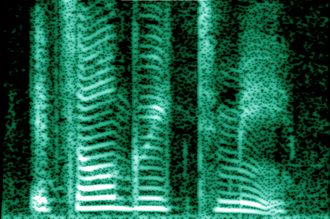
In linguistics, articulatory phonetics studies how we use our speech organs to create sounds. Sounds are described by where they are made in the mouth or throat and how the organs work together to make them. Most of the time, we use air from our lungs to make sounds, which start in the larynx and are shaped by our mouth and throat into vowels and consonants. There are also special ways to make sounds without using the lungs, like the famous Donald Duck talk.
Errors
Making mistakes when we talk is normal, especially for children. These mistakes help scientists understand how we learn to speak. For example, kids might say "singed" instead of "sang," showing how they learn rules before exceptions. Studying these errors can also help us learn about how the brain works when we talk.
Perception
Speech perception is how we understand and make sense of the sounds we use when we talk. It connects to the study of sounds in language and how our minds process these sounds. Scientists study speech perception to learn how we recognize words and sounds, which helps in creating computers that can understand speech and in supporting people who have trouble hearing or speaking.
When we listen to speech, we sort sounds into groups rather than hearing every small change. For example, people can more easily notice a big change in certain sounds than small changes, which helps us understand spoken language better.
Development
Main article: Language development
Most children start making sounds like speech when they are four to six months old. By their first year, they usually say their first words. By the time they are three years old, children often speak in phrases with two or three words, and by four years old, they can form short sentences.
Repetition
When children hear speech, they quickly learn to copy the sounds. This helps them remember new words and speak them later. Studies show that children who repeat more new words tend to know more words as they grow older. Repeating words helps children learn and remember more of what they hear.
This type of learning is important for building a larger vocabulary.
Problems
See also: Speech disorder
Many things can affect how we speak. Problems can come from the body or the mind. For example:
- Health issues in the lungs or vocal cords, like infections or injuries, can change our voice.
- Issues with the brain, such as trouble planning movements or understanding sounds, can make speaking harder.
- Hearing problems, including being deaf or hard of hearing, can affect how we form words.
- Articulation problems, like speaking slowly or making certain sounds, can also impact speech.
- Some psychiatric conditions can change the way our voice sounds.
Speech and language challenges may also happen after a stroke, injury, or due to development issues.
Treatment
People who have trouble with speech can get help from special doctors called speech-language pathologists. These experts check what someone needs, figure out what’s causing the trouble, and then work to improve their speech.
Brain physiology
Classical model
The classical model of how the brain handles language focuses on two key areas: Broca's area and Wernicke's area. Broca's area is found in the front part of the brain, while Wernicke's area is in the back. When sound enters the ear, it first goes to Wernicke's area, where words are understood. These words then travel to Broca's area, where the brain puts them together into sentences. Finally, the signal moves to the part of the brain that controls movement, so we can speak.
In the past, scientists discovered that damage to Broca's area makes it hard for people to form full sentences, leading to slow and simple speech. Damage to Wernicke's area, on the other hand, makes it hard to understand words and can lead to speech that doesn’t make sense.
Modern research
Today, we know that while Broca's and Wernicke's areas are important, many parts of the brain work together for speech. The brain can also change and become better at understanding speech, especially with practice.
Animal communication
Main article: Talking animals
Some animals can make sounds or gestures that look a bit like human language. Many animals have ways to talk to each other, but these are usually not considered real languages. This is because they often lack things like grammar, rules for putting words together, or the ability to talk about things that are not right here and now. Scientists have taught some animals to use signs similar to sign language, but it is still debated whether this should be called a real language.
Related articles





This article is a child-friendly adaptation of the Wikipedia article on Speech, available under CC BY-SA 4.0.
Images from Wikimedia Commons. Tap any image to view credits and license.