Straight-tusked elephant
The straight-tusked elephant (Palaeoloxodon antiquus) is an extinct species of elephant that lived in Europe and Western Asia during the Middle and Late Pleistocene. It was one of the largest elephant species known. Fully grown adult males were, on average, about 4 metres (13 ft) tall at the shoulder and weighed 13 tonnes (29,000 lb). This placed them among the largest land mammals ever.
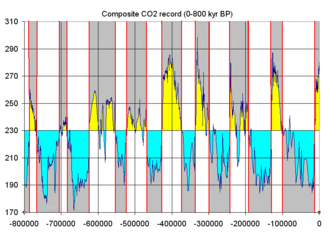
These elephants probably lived much like modern elephants do today. They lived in herds of adult females and young elephants, while adult males often lived alone. The species mostly lived in temperate and Mediterranean woodlands and forests. It thrived during interglacial periods, when its range stretched across Europe as far north as Great Britain and Denmark and east into Russia. During glacial periods, when northern Europe was home to steppe mammoths and later woolly mammoths, it survived in southern Europe. Some skeletons have cut marks, and some were found with stone tools. In one case, a wooden spear was found. These clues suggest that early humans, including Homo heidelbergensis and their Neanderthal successors, scavenged and hunted them.
The straight-tusked elephant belongs to the genus Palaeoloxodon, whose other members are also sometimes called straight-tusked elephants. This genus appeared in Africa during the Early Pleistocene. At the start of the Middle Pleistocene, it spread across Eurasia. The earliest record of Palaeoloxodon in Europe is dated to around 800–700,000 years ago, around the time that the mammoth species Mammuthus meridionalis, which had been dominant, became extinct. The straight-tusked elephant is the ancestor of more than half a dozen named species, and several more unnamed ones, of dwarf elephants that lived on islands in the Mediterranean. Some of these shrank to only 2% of the size of their mainland ancestor.
The straight-tusked elephant became extinct during the latter half of the Last Glacial Period. The youngest remains were found in the Iberian Peninsula and date to around 44,000 years ago. Even younger possible records exist. These include a single tooth from the Netherlands, dated to around 37,000 years ago, and footprints from the southern part of the Iberian Peninsula, dated to 28,000 years ago.
Description
See also: Elephant § Anatomy
Anatomy
The straight-tusked elephant had a broad body and long front legs, so its shoulders sat high, and its head was the highest point of its body. Its tail was relatively long, and it was probably only lightly covered in hair, like modern elephants, with fairly large ears. Its very wide, tall skull had a bony crest at the top, growing from the occipital bone of the skull roof. Muscles, including the splenius and a muscle like one in Asian elephants, were probably attached to this crest, which likely helped support the large head. Its tusks were very long for its body size and straight to slightly curved, and its teeth were hypsodont, meaning high-crowned. Its leg bones were hard to tell apart from those of mammoths. Differences in the crest from Palaeoloxodon namadicus were linked to age (ontogenetic variation) and to distortion during fossilisation (taphonomic variation).
Size
Males and females differed greatly in size, a difference called dimorphism. Males were much larger than females, and on average the straight-tusked elephant was considerably bigger than any living elephant, making it one of the largest land mammals ever. Most fully grown males stood about 3.8 to 4.2 metres tall at the shoulder and weighed 10.8 to 15 tonnes, while the largest living elephant, the African bush elephant, usually stands 3.04 to 3.36 metres tall and weighs 5.2 to 6.9 tonnes. Some very large males may have reached about 4.6 metres tall and over 19 tonnes, which is more than the largest Paraceratherium transouralicum, the otherwise largest known land mammal. Females were also larger than living female elephants, and newborn calves were about the same size as modern elephant calves.
History of discovery, taxonomy and evolution
In the second century AD, the Greek writer Pausanias noted that the Megalopolis area in the Peloponnese peninsula of southern Greece had huge bones, which some people thought belonged to giants from the Gigantomachy, a myth about a battle between giants and the Greek gods. In 1695, remains were found in travertine deposits near Burgtonna in what is now Thuringia, Germany. Wilhelm Ernst Tentzel, who worked for the court of Saxe-Gotha-Altenburg, correctly said they were elephant remains, which he thought came from the biblical deluge. A century later, Johann Friedrich Blumenbach used the Burgtonna skeleton to describe the woolly mammoth, and remains of straight-tusked elephants were still called woolly mammoths until the 1840s. In 1847, Hugh Falconer and Proby Cautley gave the species its scientific name. Its type specimen is a mandible (lower jaw), probably from Britain, possibly near Grays in Essex. The species has had a confusing history, with at least 21 names given to it by different scientists, and it is now considered to be separate from the living Asian elephant group.
Earlier scientists thought Palaeoloxodon was closely related to Asian elephants, but a 2016 study of mitochondrial DNA linked it to the African forest elephant. A 2018 study using a complete nuclear genome showed a more complicated history, shaped by reticulate evolution and mixing between different elephant lines, including hybridisation with African forest elephants and a smaller share from mammoths. The species is believed to have come out of Africa around 800,000 years ago from Palaeoloxodon recki, near the boundary between the Early Pleistocene and Middle Pleistocene. It first appeared in Europe during the Middle Pleistocene and arrived at the same time as changes in the mammals there, including the loss of Mammuthus meridionalis. Over half a dozen dwarf elephants that probably came from the straight-tusked elephant lived on Mediterranean islands, from Sicily and Malta to Cyprus. Some were only a small fraction of its size, and island conditions such as less food and fewer predators are thought to have played a part.
Further information: Dwarf elephant § The Mediterranean islands
Distribution and habitat
Palaeoloxodon antiquus is known from many fossil finds across Europe, where it spread most widely during warm interglacial periods. Fossils are also known from Israel, western Iran and probably Turkey in West Asia. Some remains have been found in Central Asia, in northeastern Kazakhstan and Tajikistan, and there are rare records from nearby areas of southwest Siberia. Outside Eastern Europe, the northernmost finds come from Great Britain, Denmark and Poland, around the 55th parallel north. Some of the most northern fossils are from the banks of the Kolva river in the Russian Urals, at about the 60th parallel north. During glacial periods, P. antiquus lived all year in the Mediterranean region.
Many West Asian remains were linked to this species mainly because of where they were found, and some may belong to P. recki instead. A 2004 study linked the holotype of Palaeoloxodon turkmenicus, a skull found in western Turkmenistan, to P. antiquus, but later analysis found that P. turkmenicus was a different, valid species. In the 2020s, some authors suggested that Palaeoloxodon remains from China, which are otherwise assigned to species such as Palaeoloxodon huaihoensis, may belong to P. antiquus. The straight-tusked elephant is mainly linked to temperate and Mediterranean forests and woodlands, unlike the colder open steppe areas where mammoths lived. It is also known to have lived in open grasslands, and it seems to have handled a range of environmental conditions.
See also: Elephant § Behaviour_and_ecology
Like modern elephants, straight-tusked elephants are thought to have lived in matriarchal (female-led) herds of related females and young. Males left these herds to live alone when they reached about 14–15 years of age. Adult males likely sometimes fought each other during musth, as living elephants do. Some fossils show healed wounds from these fights. Herds needed fresh water, and some populations may have made seasonal migrations. Their diet was very varied, ranging from almost all grazing to almost all browsing, and it likely changed with the seasons and local conditions.
Straight-tusked elephants may have grown for longer than living elephants and may have lived past 80 years. They ate many kinds of trees and plants. They sometimes lived alongside steppe mammoths, but they shared the land by eating different foods. During warm periods, they were part of a group of large animals that included the hippopotamus, aurochs, wolves and brown bears. Some scientists have suggested that these large animals helped make forests more open, though other scientists disagree. Marks on some bones suggest that cave hyenas and cave lions sometimes fed on the remains of these elephants, and juvenile elephants may have been hunted by cave hyenas.
Relationship with humans
Remains of straight-tusked elephants at many sites are linked to archaic humans, who used stone tools and left cut marks on the bones. At most sites, it is unclear whether the elephants were hunted or scavenged, though both are likely to have happened. Some older sites, such as Torralba and Ambrona in Spain and Notarchirico in Italy, are now considered questionable because the marks may have come from chance. The Gesher Benot Ya'akov site in Israel, once linked to this species, is now linked to P. recki. The remaining sites are likely the work of Homo heidelbergensis and Neanderthals, who made tools such as flakes, choppers, handaxes, and cores. Some bones, and in at least one case ivory, were used to make tools. Most elephants at these sites were young or adult, and mostly male, likely because lone adult males were easier targets and were more likely to die in natural traps or from injuries during fights in musth.
At the Lehringen site in north Germany, from the Eemian/Last Interglacial (around 130–115,000 years ago), a mature male elephant about 45 years old was found in 1948 with a wooden spear between its ribs, which is clear evidence that it was hunted. The spear, about 2.4 metres long, is made of European yew and is one of the oldest known wooden weapons, after the Clacton spearhead and the Schöningen spears. Studies in 2023 suggested that Neanderthals widely hunted these elephants in Germany during the Eemian, with at least 57 elephants found at Neumark Nord.
Bones engraved with lines have been found at Lower Palaeolithic sites such as Bilzingsleben in Germany, though their purpose is unclear. No cave paintings clearly show this species, and a drawing in El Castillo cave in Spain may show it, but it could also show woolly mammoths.
Extinction
See also: Late Pleistocene extinctions
The straight-tusked elephant pulled back from northern Europe into refugia, mainly in southern Europe, after the Last Interglacial ended around 115,000 years ago, when the climate became unfavourable. Fossils from the following Last Glacial Period are rare. In Britain, the species may have survived until around 87,000 years ago, based on remains found in Bacon Hole in Wales. Later remains have been found at several sites, including El Castillo cave in northern Spain, where they were first radiocarbon dated to 43,000 years ago and later calibrated to about 49,570–44,250 years Before Present. Others come from Mousterian layers in Barma Grande cave in northwest Italy, and from Foz do Enxarrique in Portugal, a set of terrace deposits of the Tagus river.
Some authors have suggested that the species may have survived in southern Iberia until around 28,000 years ago, based on footprints. Some researchers think climate change was the main cause of the extinction, while others argue it cannot explain everything, since the species had survived earlier glacial periods of similar severity. The youngest records overlap with the initial occupation of Europe by modern humans, and human hunting may have played a part, though its importance is uncertain. Island dwarf elephant relatives lasted much longer, such as Palaeoloxodon cf. mnaidriensis in Sicily and Palaeoloxodon cypriotes on Cyprus. The extinction was part of the Late Pleistocene megafauna extinctions, which removed most large land mammals worldwide, and it caused a severe loss of functional diversity in European ecosystems.

Quiz time!
5 questions about Straight-tusked elephant
What made the straight-tusked elephant one of the most impressive animals ever?
Pictures
Keep exploring



This article is a child-friendly adaptation of the Wikipedia article on Straight-tusked elephant, available under CC BY-SA 4.0.
Images from Wikimedia Commons. Tap any image to view credits and license.