 Safekipedia
Theoretical computer science
Adapted from Wikipedia · Discoverer experience
Theoretical computer science is a part of computer science and mathematics that looks at the basic ideas behind how computers work. It studies how we can solve problems using math and logic.
This area covers many different topics, such as algorithms, which are step-by-step plans for solving problems, and data structures, ways to organize information. It also looks at how hard certain problems are to solve, called computational complexity, and how computers can work together, known as parallel and distributed computing.
Other important parts include studying how machines can make decisions using probabilistic computation, and even how quantum physics might change computing with quantum computation. Theoretical computer science helps us understand the limits and possibilities of what computers can do.
History
Main article: History of computer science
Theoretical computer science is very close to mathematics and logic. In the 1900s, it became its own special area of study. Important people who helped start this field include Kurt Gödel, Alonzo Church, Alan Turing, Stephen Cole Kleene, Claude Shannon, John von Neumann, and Noam Chomsky. In 1931, Kurt Gödel showed that some things can never be proven true or false.
In 1948, Claude Shannon created a math theory about how information works. Around the same time, Donald Hebb suggested how the brain might learn. This led to new ideas about neural networks. In 1971, Stephen Cook and Leonid Levin discovered that some problems are very hard to solve quickly.
Today, theoretical computer science builds on these ideas and explores many other math problems from many areas.
| P → Q {\displaystyle P\rightarrow Q\,} |  |  |  | P = NP ? | |
| Mathematical logic | Automata theory | Number theory | Graph theory | Computability theory | Computational complexity theory |
| GNITIRW-TERCES | Γ ⊢ x : Int {\displaystyle \Gamma \vdash x:{\text{Int}}} |  | 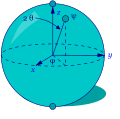 | ||
| Cryptography | Type theory | Category theory | Computational geometry | Combinatorial optimization | Quantum computing theory |
Topics
Algorithms
Main article: Algorithm
An algorithm is a step-by-step plan for solving problems or doing calculations. Algorithms help us process data, make decisions, and solve problems by following clear steps.
Automata theory
Main article: Automata theory
Automata theory studies special machines that help us understand how inputs and outputs are processed. These machines follow rules to change information step by step.
Coding theory
Main article: Coding theory
Coding theory looks at how we can make data clearer and safer when sending it from one place to another. It helps us compress data, correct mistakes, and keep information secure.
Computational complexity theory
Main article: Computational complexity theory
This area tries to figure out how hard different problems are to solve with a computer. Some problems need a lot of time or memory to solve, while others are easier.
Computational geometry
Main article: Computational geometry
Computational geometry uses math to solve problems about shapes and spaces. It helps in designing things, planning routes, and creating computer images.
Computational learning theory
Main article: Computational learning theory
This area studies how computers can learn from examples. It helps machines improve their decisions by looking at past information.
Computational number theory
Main article: Computational number theory
Computational number theory looks at using computers to solve problems with numbers, like finding factors of big numbers.
Cryptography
Main article: Cryptography
Cryptography is about keeping information safe. It uses special methods to protect data from being seen or changed by people who shouldn’t access it.
Data structures
Main article: Data structure
Data structures are ways to organize information in a computer so it can be found and used quickly and easily.
Distributed computation
Main article: Distributed computation
Distributed computation looks at how many computers can work together to solve a problem. Each computer does part of the work and shares results with others.
Information-based complexity
Main article: Information-based complexity
This area studies the best ways to solve problems that involve continuous values, like those found in math and physics.
Formal methods
Main article: Formal methods
Formal methods are special math tools used to make sure software and hardware work correctly and safely.
Information theory
Main article: Information theory
Information theory studies how to measure and send information clearly. It helps us compress data, send it without errors, and understand how information works.
Machine learning
Main article: Machine learning
Machine learning is about teaching computers to learn from data. The computer uses what it learns to make decisions or predictions about new information.
Parallel computation
Main article: Parallel computation
Parallel computation uses many computers or parts of a computer to work on a problem at the same time. This makes solving big problems faster.
Programming language theory and program semantics
Main articles: Programming language theory and Program semantics
Programming language theory studies how we design and understand programming languages. It looks at what programs mean and how they work.
Quantum computation
Main article: Quantum computation
Quantum computation uses special properties of tiny particles to do calculations. These computers could solve some problems much faster than regular computers.
Symbolic computation
Main article: Symbolic computation
Symbolic computation studies how to use computers to work with math symbols and formulas exactly, without turning them into numbers.
Very-large-scale integration
Main article: VLSI
Very-large-scale integration is about putting many tiny parts called transistors onto one small chip to make complex electronic devices.
Organizations
Theoretical computer science has many groups that help bring people together to share ideas. Some important organizations include the European Association for Theoretical Computer Science, SIGACT, and the Simons Institute for the Theory of Computing. These groups support research and learning in this exciting field.
Journals and newsletters
Theoretical computer science has many journals and newsletters where researchers share their work. Some of these include Discrete Mathematics and Theoretical Computer Science, Information and Computation, Theory of Computing (open access journal), and Journal of the ACM. There are also other important journals like SIAM Journal on Computing and SIGACT News. Many of these journals are available online for anyone to read.
Conferences
Theoretical computer science has many important meetings where experts share their ideas. Some of the big meetings include the Annual ACM Symposium on Theory of Computing, the Annual IEEE Symposium on Foundations of Computer Science, and the Innovations in Theoretical Computer Science conference. There are also meetings like the Mathematical Foundations of Computer Science (MFCS), the International Computer Science Symposium in Russia (CSR), and the ACM–SIAM Symposium on Discrete Algorithms. Other important events are the IEEE Symposium on Logic in Computer Science, the Computational Complexity Conference, and the International Colloquium on Automata, Languages and Programming. These meetings help researchers discuss new discoveries and advances in the field.
``
Related articles


This article is a child-friendly adaptation of the Wikipedia article on Theoretical computer science, available under CC BY-SA 4.0.
Images from Wikimedia Commons. Tap any image to view credits and license.