 Safekipedia
Weapon
Adapted from Wikipedia · Discoverer experience
A weapon is any tool or device that people use to scare, hurt, or protect themselves. Weapons can be very simple, like rocks or bottles, but many are made just for fighting or hunting. These include things like clubs, swords, and even very advanced tools such as firearms, tanks, and missiles.
People have used weapons for many reasons throughout history. They help in hunting animals for food, in law enforcement to keep communities safe, and in self-defense to protect themselves. Sadly, weapons are also sometimes used for crime, including murder, and in warfare when countries fight each other.
Over time, weapons have changed a lot as technology improves. From basic tools made of wood and stone to today’s complex machines, the way we make and use weapons shows how societies develop and face new challenges. Some weapons are even made by changing natural things, like a weaponized virus, to cause harm in wars or other conflicts.
History
Main article: History of weapons
The use of weapons has been very important in shaping human history and culture. Weapons are tools used to control animals or other people, which helped humans expand their influence and adapt to new challenges. This led to a continuous improvement in weapon technology and skills as different groups tried to outdo each other.
Prehistoric
Early humans may have used simple objects like sticks or stones as weapons millions of years ago, but the first clear evidence of weapons are wooden spears from over 300,000 years ago. Later, around 10,000 years ago, injuries found on ancient skeletons suggest that early people fought with weapons like arrows and clubs.
Ancient history
In ancient times, weapons improved greatly. The discovery of metals like copper and bronze led to better tools and weapons, such as swords. Fortifications were built for protection, and weapons like battering rams were developed to attack them. The use of iron changed warfare, and the invention of the horse and chariot made battles faster and more mobile. Warships like triremes were also used in sea battles.
Post-classical history
During the Middle Ages, knights on horseback fought alongside foot soldiers. Knights used lances for charging, while infantry used spears and bows. The introduction of gunpowder changed warfare forever, leading to the use of muskets and cannons.
In both Europe and the Middle East, similar battle tactics developed. Gunpowder from Asia revolutionized warfare, with musketeers and cannons becoming important on the battlefield.
Modern history
Early modern
The Renaissance brought firearms to Europe. Guns and rockets changed battle tactics. Firearms were different because they used gunpowder to release energy quickly, making them much more powerful than older weapons. By the 19th century, firearms like the machine gun and ironclad warships changed warfare.
From the 1700s to the early 1900s, weapons changed from being powered by people to using gunpowder. This time, called the "Age of Rifles," saw the development of rifles for soldiers and cannons for support, as well as early mechanized weapons like the machine gun. New artillery could destroy old stone forts, leading to new battle tactics.
World War I
See also: Military technology during World War I
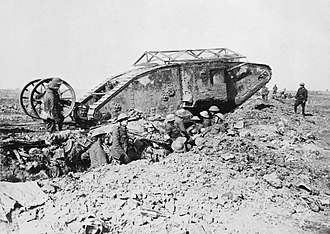
World War I showed how quickly new technologies could be developed for war. Aircraft and ships changed how battles were fought, and new weapons were created to meet the needs of the war.
Interwar
This time between World Wars saw many changes in weapon design. Countries worked on new weapons, and some tried to limit the use of harmful weapons like poison gas through agreements.
Criminalizing poison gas
In the 1920s, many people worked to stop the use of poison gas in war. An agreement called the Geneva Protocol was made in 1925 to ban these gases, though some countries still used them against others who lacked protection.
World War II and postwar
See also: Military technology during World War II
World War II was a time of very fast development in weapons. Many new types of weapons were created, and existing ones were improved. The most powerful was the nuclear bomb. After the war, during the Cold War, countries competed to build more nuclear weapons, but later focused more on conventional weapons for smaller conflicts.
Nuclear weapons
Main article: Nuclear holocaust
After realizing that using nuclear weapons could destroy the world, countries shifted their focus during the Cold War to developing conventional weapons for limited wars instead of total war.
International arm cooperation
International military teamwork is becoming more important. Countries share weapons and military skills with friends and groups to make their defenses stronger. This helps them protect larger areas and show they mean business.
Today, weapons are powerful not just because of how they work, but also because of how countries work together. Sharing missiles, setting up defense networks, and building alliances show that working together across borders changes how weapons are used. This teamwork can affect strategies and influence far beyond any one country.
Types
Weapons come in many forms and are used for different purposes. Some are made for one person to use, like small handheld tools, while others need a team to operate, such as bigger machines mounted on vehicles or in forts. There are also weapons designed for special places, like mountains or ships, and even ones that can fly in the sky or travel through space.
Weapons can also be grouped by what they do. Some are meant to shoot far, like tools that launch objects using strings or explosions. Others might spread harmful substances or create loud blasts. There are weapons that use energy like light or sound, and some are built to hurt without killing. Each type has its own way of working, from simple tools to very advanced technology.
Manufacture of weapons
Main article: Arms industry
The arms industry is a worldwide business that makes and sells tools used for protection and fighting. It includes research, building, and caring for military tools and places. Many countries have their own arms industry to provide for their own armies, and some also sell weapons to others for use in self-defense, hunting, or sports.
Governments give out contracts for these weapons, which can be very important politically. This link between government and weapons making can create what is called a "military–industrial complex," where the army, business, and politics work very closely together.
Legislation
The making, owning, trading, and using of many weapons are controlled by rules. These rules can come from local or central governments or from international agreements. Some examples include:
- The right of self-defense
- Knife legislation
- Air gun laws
- Gun law
- Arms trafficking laws
- Arms control treaties
- Space Preservation Treaty
Gun laws
Main article: Gun laws
Every country has laws that control different parts of gun use, such as making, selling, moving, owning, changing, and using small guns by regular people.
Countries that control who can get guns usually limit which types of guns people can have and who can get a license to have them. There might be different licenses for hunting, sport shooting, self-defense, collecting, and carrying guns hidden, each with its own rules.
Arms control laws
Main article: Arms control
International treaties and agreements set limits on making, storing, spreading, and using weapons, from small guns and big weapons to very powerful weapons. Arms control is usually done through diplomacy, where countries agree to these limits. Sometimes, countries try to make sure others follow these limits too.
Arms trafficking laws
Main article: Arms trafficking
Arms trafficking is the illegal trading of hidden weapons and ammunition. What is allowed when trading guns changes a lot depending on where you are. In 2001, the United Nations made a protocol against making and trading illegal guns. This agreement asked governments to get rid of illegal guns and to license new guns to make sure they are real. It was signed by 122 countries.
Lifecycle problems
There are important safety issues with weapons that are already in use, stored, or need to be removed.
Many places have been used to throw away old weapons like bombs and landmines, which can be very dangerous. Some weapons, called unexploded ordnance, did not go off when they were first used and can still cause harm many years later. Removing these is very hard and can be very unsafe for people living nearby. There have also been worries about certain powerful weapons being stolen and used by bad people, especially after big changes in some countries.
In science fiction
Science fiction stories often include unusual and exciting weapons. Some of these weapons, like certain types of guns, started in science fiction and are now real. Others, such as force fields and stasis fields, are still only found in stories and may not be possible in our world.
Popular science fiction shows and movies feature many famous weapons. For example, the phaser from Star Trek and the lightsaber and blaster from Star Wars have become well-known. These weapons add excitement to the stories and sometimes help explore important ideas, such as those involving weapons of mass destruction like doomsday devices.
Images
Related articles




This article is a child-friendly adaptation of the Wikipedia article on Weapon, available under CC BY-SA 4.0.
Images from Wikimedia Commons. Tap any image to view credits and license.