 Safekipedia
World War II in Albania
Adapted from Wikipedia · Discoverer experience
World War II began in Albania in April 1939 when Italy invaded the country. The Italians set up Albania as a state they controlled, called a protectorate or puppet state. During this time, many people in Albania resisted the Italian rule.
By 1942, different resistance groups joined together, mainly those who supported Communist ideas. They fought against the Italian forces and later against German troops who took over after Italy surrendered in 1943. Their efforts helped free Albania from occupation in 1944.
The war caused great damage in Albania. Many homes were destroyed, and a large part of the population lost their houses. Albania was one of the most affected countries in Europe during World War II.
Background
Main article: Italian invasion of Albania
See also: Battle of Durrës (1939)
In 1939, Italy decided to take control of Albania. On April 7, 1939, Italian soldiers invaded Albania. They attacked several cities and quickly took over the country. The leader of Albania, King Zog, fled to safety. The Italians set up their own government in Albania and began to build roads and other important places. Some people in Albania saw these changes as positive at first, but the country was now under Italian control.
Italian puppet state
Main article: Italian protectorate of Albania (1939–1943)
In April 1939, just before World War II began, soldiers from Italy entered and took over Albania. The leaders of Albania could not stop them. After this, Albania was controlled by Italy.
Italy tried to make the people of Albania like their rule by promising to help take back areas such as Kosovo and Chameria. But many Albanians did not support Italy in the war. Some Albanian soldiers who were supposed to fight with Italy ran away instead. A few Albanians worked against Greek forces, but this did not happen very often. Most people in southern Albania welcomed the Greek soldiers when they arrived.
Communist and Nationalist resistance
Origin of Communism
Albania's Communist movement began with few followers during the time of King Zog's rule. Before World War II, Albania did not even have a full Communist Party. Some people who supported leftist ideas moved to Moscow and joined groups there. In 1930, a person named Ali Kelmendi was sent to Albania to start small Communist groups, but there were not many people to support them.
Enver Hoxha's and Mehmet Shehu's early years
Enver Hoxha and Mehmet Shehu became very important leaders in Albania after the war. Enver Hoxha was born in 1908 and studied in France but did not finish his studies. He returned to Albania and became a leader of the Communist Party when it was formed in 1941. Mehmet Shehu also became a key leader and had experience fighting in Spain.
Beginning of Albanian Communist and Fascist parties and National Liberation Movement
Main article: Albanian National Liberation Front
See also: Greco-Italian War
In 1939, Italy invaded Albania and settled many Italian soldiers and colonists there. At first, some people supported the new Italian-led Albanian Fascist Party because it included areas like Kosovo.
Several groups formed to resist, including one led by Major Abaz Kupi. In November 1941, the Albanian Communist Party was created with Enver Hoxha as its leader. The resistance grew stronger after Italy lost battles in Greece. By 1942, many young people joined the fight for freedom.
In mid-1942, the Communist Party called for young people to fight for their country’s liberation from Italy. This brought in many new fighters. In September 1942, they formed the National Liberation Movement, uniting several resistance groups.
In February 1943, leaders of the Communist Party met and decided to create a unified army. In May 1943, they attacked an Italian garrison and won. By the summer of 1943, resistance forces had grown to almost all of the mountainous areas.
The National Liberation Movement created the National Liberation Army in July 1943, with Spiro Moisiu as its military leader and Enver Hoxha as its political leader. By the end of 1943, they had 20,000 soldiers and guerrillas.
Nationalist resistance
Main article: Balli Kombëtar
See also: Legaliteti
In October 1942, a group called the Balli Kombëtar was formed to resist the Italian occupiers. They wanted to create a republic and make economic changes but were careful not to anger the Italians. Sometimes they worked with the Italians to protect their own interests.
Prominent leaders included Safet Butka and Hysni Lepenica. Butka led a group of experienced fighters and helped others by returning goods taken by the Italians.
Hysni Lepenica led battles against the Italians in places like Dukat. After Italy surrendered, some Balli Kombëtar leaders tried to take weapons from Italian soldiers. However, fighting broke out between the Balli Kombëtar and the Communists.
Between Italian surrender and German occupation
With Italy’s surrender in 1943, many Italian soldiers joined the resistance. The Communists took control of many southern cities, while nationalists took control of the north.
British agents told the resistance fighters that the Allies would invade the Balkans, encouraging them to work together. In August 1943, Communist and Balli Kombëtar leaders signed an agreement to coordinate their efforts, though they disagreed about Kosovo.
Mukje agreement
Main article: Mukje Conference
The Mukje Agreement was signed on August 2, 1943, between the Balli Kombëtar and the National Liberation Movement to fight Italy together. However, they argued about whether Kosovo should join Albania, leading to conflict between them.
German occupation
Main article: Albanian Kingdom (1943–44)
After Italy’s surrender, Germany occupied Albania. Balli Kombëtar forces fought with the Germans against the Communists. Tirana was freed by the partisans on November 17, 1944, and by November 29, 1944, Albania was fully liberated from German occupation. The National Liberation Army also helped free parts of nearby countries.
Communist takeover
See also: LANÇ counter-offensive in Albania (1944)
In early 1944, communist groups in Albania regrouped and took control of much of the southern part of the country. German forces pushed them out of some areas, but by May, these groups held a meeting and formed a new leadership to run the country. Enver Hoxha became a key leader. By the summer, the communist forces defeated other resistance groups and moved into more parts of Albania. With support from allies, they continued to expand their control.
By November, German troops left the capital, Tirana, and the communists moved in. They had already set up a temporary government in October, with Enver Hoxha as the leader.
Aftermath
After World War II, Albania found itself in a difficult situation. The group leading the resistance had strong ties with nearby Yugoslavia, which also had support from Britain. Because of this, Yugoslavia had a big influence on Albania after the war. The leaders of the war did not recognize an Albanian government or discuss Albania’s borders during their meetings.
Many villages and homes in Albania were destroyed during the war, and many people lost their homes. During the time when Nazi Germany occupied parts of Albania, most Jewish people living there were kept safe. However, in areas like Kosovo, some Albanians worked with the occupying forces and caused trouble for other groups of people.
Foreign participation
Many people from other countries joined the fight in Albania during World War II. Most of these were Italian soldiers who did not want to keep fighting for their own country anymore. After Italy surrendered in 1943, about 100,000 Italian soldiers were in Albania. Some of them decided to help the Albanian resistance instead of fighting.
There were also soldiers from Germany and other places who left their armies and joined the Albanian fighters. As the war continued, more and more of these soldiers came to help. The British also tried to support the resistance by sending supplies and help, even though it was sometimes hard to reach them.
Images
Related articles


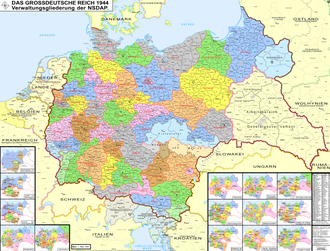

This article is a child-friendly adaptation of the Wikipedia article on World War II in Albania, available under CC BY-SA 4.0.
Images from Wikimedia Commons. Tap any image to view credits and license.