
Fractal
What is a Fractal?
A fractal is a special kind of shape in mathematics. These shapes have tiny patterns that look like the whole shape. This is called self-similarity. When you zoom in or out, the shape looks almost the same.
Fractals are different from normal shapes like circles or squares. They have something called a fractal dimension, which is not like our usual way of measuring size. For example, a straight line has a dimension of 1, but a fractal can have a dimension between 1 and 2.
Where Do We See Fractals?
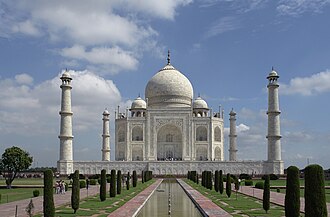
People have studied fractals for many years. They became well-known in the 20th century with the help of computers. Fractals appear in many places, including nature, technology, art, and architecture. They help us understand complex processes in chaos theory.
Who Named Fractals?
The word "fractal" was first used by the mathematician Benoît Mandelbrot in 1975. He chose this name because it comes from a Latin word, frāctus, which means "broken" or "fractured." Mandelbrot used the idea of special "fractional" dimensions to describe certain patterns in nature.
Fractals can look very interesting and unusual. They are used in many kinds of pictures and designs. For example, some artists make beautiful fractal art by using math and computers. Looking at fractals can even help us feel calmer and think better.
Pictures
Keep exploring


This article is a child-friendly adaptation of the Wikipedia article on Fractal, available under CC BY-SA 4.0.
Images from Wikimedia Commons. Tap any image to view credits and license.