 Safekipedia
Mass
Adapted from Wikipedia · Explorer experience
What is Mass?
Mass is a special idea in science that tells us how much “stuff” is in something. Imagine you have a big ball of clay and a tiny ball of clay. The big ball has more mass because it has more material in it. Mass helps us understand why things pull toward each other because of gravity.
Mass is different from weight. Your mass stays the same no matter where you are, but your weight can change. For example, you would weigh a little less on the Moon than on Earth, but your mass is the same. This is because the Moon’s gravity is weaker than Earth’s.
Measuring Mass
We measure mass in kilograms. A kilogram is a unit that scientists use to measure how much stuff is in an object. For very tiny things like atoms, scientists use a different unit called the dalton. One dalton is one-twelfth the mass of a carbon-12 atom.
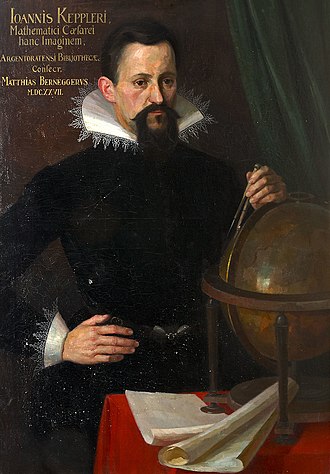
Long ago, people used balance scales to compare weights. If two objects balance, they have the same mass, even if they feel different when lifted. Scientists like Johannes Kepler and Galileo Galilei helped people understand that mass and weight are related but not the same thing.
Why Mass Matters
Mass helps us understand how objects move when a force is applied. It also shows how much an object pulls on other objects with gravity. Even though we often say “weight” in everyday life, scientists make a clear difference between mass and weight. Mass is a property of the object itself and never changes, while weight can change depending on where you are.
Mass is an important idea in physics that helps us learn more about our universe. It connects to many other ideas, like gravity and how objects move.
Images
Related articles


This article is a child-friendly adaptation of the Wikipedia article on Mass, available under CC BY-SA 4.0.
Images from Wikimedia Commons. Tap any image to view credits and license.