
Riemann zeta function
The Riemann Zeta Function
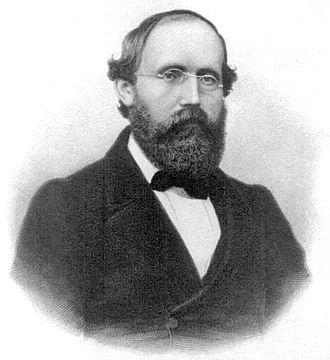
The Riemann zeta function is a special math tool that helps us learn about numbers in fun and clever ways. It was first studied a long time ago by a smart mathematician named Leonhard Euler. Later, another great thinker named Bernhard Riemann added more ideas to it in 1859.
This function is written with a Greek letter ζ (zeta) and it helps connect many parts of math and science. It even touches on areas like physics and probability theory! Imagine a magic key that opens many doors—this is a bit like that.
One cool thing about the Riemann zeta function is that it helps us understand prime numbers. These are special numbers like 2, 3, 5, and 7 that can only be divided by 1 and themselves. The function shows us patterns in how these primes are spread out.
People still study the Riemann zeta function today because it holds big secrets, like the famous Riemann hypothesis. This idea guesses where all the important points, called zeros, of the function can be found. Solving this puzzle would help mathematicians learn even more about numbers!
The zeta function can be drawn in special pictures that show its shapes and colors, making math look like beautiful art. It’s a wonderful example of how math can be both useful and amazing.
Keep exploring




This article is a child-friendly adaptation of the Wikipedia article on Riemann zeta function, available under CC BY-SA 4.0.
Images from Wikimedia Commons. Tap any image to view credits and license.