Safekipedia

Stephen Hawking

Explorer · ages 7 and underAdapted from Wikipedia
Stephen Hawking, the famous physicist who studied black holes and the universe, was elected a member of the Royal Society in 1974.

Who Was Stephen Hawking?

Stephen Hawking was a scientist from England. He studied the universe, which is everything that exists in space. He worked at the Centre for Theoretical Cosmology at the University of Cambridge. He was known for his clever ideas and for sharing them with many people.

Growing Up

Stephen was born in 1942 in Oxford. His parents both studied at the University of Oxford. As a boy, he worked with a teacher to build a computer from clock parts.

His Big Ideas

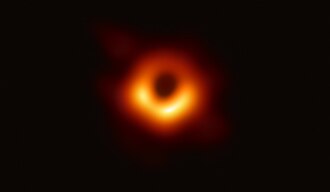
Stephen had an idea that black holes give off a special kind of energy. People now call this Hawking radiation. He also wrote books that explained science in a way that many people could enjoy. His book A Brief History of Time stayed on a bestseller list for a record-breaking 237 weeks.

Stephen had an illness that slowly made it hard for him to move. He kept working and sharing his ideas. Later, he used a computer and a small cheek muscle to speak.

In 2002, the BBC ranked him number 25 in its poll of the 100 Greatest Britons. A film called The Theory of Everything was later made about his life. Stephen passed away in 2018, and a stone in his memory can be found at Westminster Abbey.

Quiz time!

3 questions about Stephen Hawking

Question 1 of 3

What did Stephen Hawking study?

Pictures

Physicist Stephen Hawking (center) floats weightlessly during a zero-gravity flight in 2007, helped by his team, including Peter Diamandis and Byron Lichtenberg.
Hubble's colorful view of the Crab Nebula, the leftover cloud from a star that exploded and was seen on Earth in 1054. Its glowing center is powered by a spinning neutron star.
A colorful map of the baby universe made from nine years of NASA's WMAP data. The colors show tiny temperature differences in the oldest light we can see, about 13.77 billion years old, which helped seed the growth of galaxies.
Stephen Hawking as a young boy, pictured with his parents, Frank and Isobel.
A diagram comparing two ideas about the universe: in the Big Bang theory, the expanding universe spreads matter out so its density drops over time, while in the Steady-State theory, new matter is continually created so the density stays the same.
Physicists David Gross, Edward Witten, and Stephen Hawking at the 2001 Strings Conference held at the Tata Institute of Fundamental Research in India.
Stephen Hawking speaking at a press conference at the National Library of France in Paris in 2005, where he also discussed the French release of his book God Created the Integers.
Physicist Stephen Hawking giving a lecture at the Stockholm Waterfront Congress Centre in August 2015.
Stephen Hawking being introduced by his daughter Lucy Hawking at a lecture he gave for NASA's 50th anniversary in 2008.
Physicist Stephen Hawking speaking at NASA's 50th anniversary celebration in 2008.
Physicist Stephen Hawking at a conference in San Francisco in the 1980s, where he spoke about amyotrophic lateral sclerosis (ALS), the condition that affected his body and speech.
Professor Stephen Hawking (right) at the unveiling of the Corpus Clock in Cambridge, alongside Professor Christopher Andrew and Dr John Taylor.
An animation showing how space itself can flow inward toward a black hole, faster than light inside the event horizon, as described by the Gullstrand-Painlevé model.
A 2009 image of the black hole candidate Cygnus X-1 by the Chandra X-ray Observatory
Stephen Hawking's memorial stone in Westminster Abbey
A mural commemorating Stephen Hawking in Warsaw, Poland (2022)
U.S. president Barack Obama and Hawking in the White House in 2009, when Hawking received the Presidential Medal of Freedom

Keep exploring

This article is a child-friendly adaptation of the Wikipedia article on Stephen Hawking, available under CC BY-SA 4.0.

Images from Wikimedia Commons. Tap any image to view credits and license.