 Safekipedia
Assassination of John F. Kennedy
Adapted from Wikipedia · Adventurer experience
John F. Kennedy, the 35th president of the United States, was killed while riding in a presidential motorcade through Dealey Plaza in Dallas, Texas, on Friday, November 22, 1963. Kennedy was with his wife Jacqueline, Texas governor John Connally, and Connally's wife Nellie. He was shot from a nearby building called the Texas School Book Depository.
The motorcade quickly went to Parkland Memorial Hospital, where Kennedy was said to have passed away about 30 minutes later. Connally was also hurt in the attack but later got better.
Vice President Lyndon B. Johnson became president two hours and eight minutes later aboard Air Force One at Dallas Love Field.
Kennedy's death is still talked about a lot, and many people have different ideas about what happened. The event deeply affected the nation. Kennedy was the fourth U.S. president to be killed while in office and is the most recent one to have died in office.
Background
Further information: John F. Kennedy and Presidency of John F. Kennedy
Kennedy
In 1960, John F. Kennedy, then a U.S. senator from Massachusetts, was elected the 35th president of the United States with Lyndon B. Johnson as his vice president. During his time as president, Kennedy faced big challenges, especially during the Cold War. He worked hard to stand up against the Soviet Union and communism. One famous moment was when he helped avoid a big problem called the Cuban Missile Crisis.
In 1963, Kennedy planned to visit Texas. This visit was also seen as a way to start his campaign for being re-elected in 1964.
Oswald
Main article: Lee Harvey Oswald
Lee Harvey Oswald was a former U.S. Marine who had traveled to many places. He believed in communist ideas after reading Karl Marx when he was young. Oswald even lived in the Soviet Union for a while before returning to the United States. In 1963, he was living in the Dallas/Fort Worth area and worked at the Texas School Book Depository on Dealey Plaza.
November 22
For a chronological guide, see Timeline of the John F. Kennedy assassination.
President John F. Kennedy traveled to Dallas, Texas, on November 22, 1963. He rode in a motorcade with his wife, Jacqueline, and Texas Governor John Connally and his wife, Nellie. The route was meant to show Kennedy to many people.
As the motorcade moved through Dealey Plaza, shots were fired. Kennedy was struck and died from his injuries. Governor Connally was also hurt but lived. The motorcade quickly went to Parkland Memorial Hospital, where Kennedy was pronounced dead about 30 minutes after the shooting. Vice President Lyndon B. Johnson became president later that day aboard Air Force One.
Immediate aftermath
Autopsy
Main article: Autopsy of John F. Kennedy
President Kennedy’s autopsy happened at Bethesda Naval Hospital in Maryland on the night of November 22. The doctors worked fast but didn’t have all the details right away. Some important pieces of evidence were lost later, which caused many questions.
Funeral
Main articles: State funeral of John F. Kennedy and List of dignitaries at the state funeral of John F. Kennedy
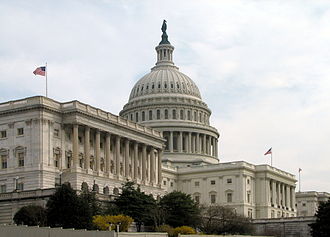
After the autopsy, Kennedy’s body lay in the East Room of the White House for a day. Then his coffin was carried to the Capitol, where many people came to show their respect. The funeral service was on November 25 at St. Matthew’s Cathedral, with leaders from many countries there. Kennedy was buried at Arlington National Cemetery, where a special flame was lit in 1967 to remember him.
Murder of Oswald
Further information: Lee Harvey Oswald § Murder
On November 24, Lee Harvey Oswald was shot by Jack Ruby while police were moving him. Oswald was taken to the same hospital where Kennedy had been treated, but even though people tried to save him, he died that day. Ruby said he did it because he was upset about Kennedy’s death. Ruby was later found guilty, but his case was overturned, and he passed away before a new trial could happen.
Films and photographs of the assassination
A tailor named Abraham Zapruder recorded what happened on film from 65 feet away. His film, called the Zapruder film, showed the moment and was shown to people years later. Many others also took photos or film during this time.
Mary Moorman took pictures with her Polaroid camera, including one taken just after the shooting. Other films were made by people like Marie Muchmore and Orville Nix, but they were farther away. There were also stories about a woman called the Babushka Lady who may have filmed what happened, but later it was found that this story was not true.
Official investigations
Dallas Police
At the Dallas Police headquarters, officers asked Lee Harvey Oswald about the shooting of President Kennedy and a police officer named Tippit. They talked to him for about 12 hours. Oswald said he did not do it, but later it was found that some of his words were not true.
Captain J. W. Fritz led most of the talks. There were no recordings, only notes written down after. People from other police groups, like the FBI and the Secret Service, were also there.
FBI investigation
The FBI started looking into the shooting very quickly. In less than a day, FBI Director Hoover sent President Johnson a report saying that Oswald was the only person responsible. The FBI’s report said that three bullets were fired — the first hit Kennedy in the upper back, the second hit Texas governor John Connally, and the third hit Kennedy in the head, which killed him.
Warren Commission
President Johnson started the President’s Commission on the Assassination of President Kennedy, led by Chief Justice Earl Warren. Its big report said that Lee Harvey Oswald acted alone in killing Kennedy and hurting Connally. The report also said that Jack Ruby acted alone when he killed Oswald.
The commission talked about the "single-bullet theory," which said that one bullet caused small injuries to both Kennedy and Connally. This idea was checked with tests and looks.
Trial of Clay Shaw
In 1967, New Orleans district attorney Jim Garrison arrested a businessman named Clay Shaw, saying he helped plan the shooting of Kennedy. After a trial in 1969, Shaw was found not guilty. Many people thought the trial was not fair and was based on wrong ideas.
Ramsey Clark Panel
In 1968, Attorney General Ramsey Clark brought together medical experts to look at pictures and X-rays from Kennedy’s medical exam after the shooting. The group agreed with the Warren Commission that Kennedy was hit by two bullets, both coming from behind.
Rockefeller Commission
In 1975, President Gerald Ford started the United States President’s Commission on CIA Activities within the United States, led by Vice President Nelson Rockefeller. The commission agreed that Kennedy was killed by two shots from behind and found no proof that the CIA was involved in the shooting.
Church Committee
In 1975, the U.S. Senate started the Church Committee to look into things the CIA and FBI may have done wrong. The committee did not find proof of a plan to kill Kennedy but said that the FBI and CIA did not share information with the Warren Commission.
United States House Select Committee on Assassinations
In 1976, the House Select Committee on Assassinations looked into the killings of Kennedy and Martin Luther King, Jr. The committee thought it was likely that Kennedy was killed as part of a plan, and there was a good chance that a fourth shot was fired from the grassy knoll but did not hit Kennedy. However, this idea was based on information that many people argued about.
JFK Act and Assassination Records Review Board
In 1991, Congress passed the JFK Records Act, asking for all papers about the killing to be made public. The Assassination Records Review Board gathered and made public about 60,000 papers from 1994 to 1998. Most of the remaining papers were set to be made public by October 2017, but some were delayed. In 2022 and 2023, more papers were made public, and in March 2025, the last papers were made public.
Main article: Warren Commission
Main article: Trial of Clay Shaw
Main article: United States President's Commission on CIA Activities within the United States
Main article: Church Committee
Main article: United States House Select Committee on Assassinations
Main article: President John F. Kennedy Assassination Records Collection Act of 1992
Conspiracy theories
Main article: John F. Kennedy assassination conspiracy theories
Many people have wondered if there was more to the assassination of President John F. Kennedy than what officials said. Over time, many books and ideas have suggested that others were involved besides Lee Harvey Oswald. Some ideas point to groups like the FBI, the CIA, the U.S. military, or even foreign agencies.
Well-known people have also talked about these ideas. For example, some believed that more than one person was involved in the shooting. Others have questioned the official reports about what happened that day.
Legacy
Political impact and memorialization
President Johnson spoke to Congress just five days after the assassination. He asked the country to keep working on Kennedy’s ideas, especially about civil rights. This helped pass the Civil Rights Act of 1964. To remember Kennedy, Florida’s Cape Canaveral was renamed Cape Kennedy. A big airport in New York was also named after him. The Secret Service made new rules to keep future presidents safer.
Cultural impact and depictions
Kennedy’s death surprised many people worldwide and made him a well-known figure. It was one of several important deaths in the 1960s. The event has inspired many books, films, and songs.
Artifacts, museums, and locations
Dealey Plaza in Dallas is now a historic landmark. Museums show items from that day, including Air Force One and Kennedy’s limousine. Many of Kennedy’s personal things are kept in archives, though some were destroyed because of the family’s wishes.
Notes and references
(Note: This section has been omitted as it contains only references and citations, which are not suitable for the Adventurer level.)
Images
Related articles




This article is a child-friendly adaptation of the Wikipedia article on Assassination of John F. Kennedy, available under CC BY-SA 4.0.
Images from Wikimedia Commons. Tap any image to view credits and license.