 Safekipedia
Christiaan Huygens
Adapted from Wikipedia · Adventurer experience
Christiaan Huygens, Lord of Zeelhem (14 April 1629 – 8 July 1695) was a Dutch scientist. He was a mathematician, physicist, engineer, astronomer, and inventor. He helped scientists learn more about the world.
One of his most famous inventions was the pendulum clock. This clock was the best way to tell time for almost 300 years after it was made.
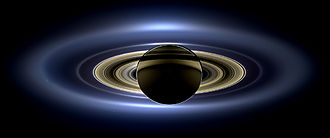
Huygens loved looking at the stars. He studied the rings of Saturn and found its biggest moon, named Titan. He also made telescopes better. Telescopes help us see objects far away in space more clearly.
Huygens was good at math and physics. He wrote books about how things move and how light acts. His ideas about light, called the wave theory of light, were important. They helped other scientists later on. His work inspired many people and helped science grow.
Biography
Christiaan Huygens was born into a wealthy Dutch family in The Hague on 14 April 1629. His father, Constantijn Huygens, was a diplomat and advisor to the House of Orange. Christiaan was educated at home and later studied at Leiden University and the Orange College in Breda.
Huygens made many important discoveries. He was the first to identify Titan as one of Saturn’s moons in 1655. He also invented the pendulum clock in 1657, which was the most accurate timekeeper for almost 300 years. Huygens worked with scientists in Paris at the Académie des sciences. He returned to The Hague in 1681 and continued his work until he passed away on 8 July 1695.
Mathematics
Huygens became famous for his work in mathematics. He shared important ideas that many European mathematicians noticed. He worked in a way similar to Archimedes, and he used ideas from Descartes and Fermat in his private notes.
Huygens’s first book, Theoremata de Quadratura Hyperboles, Ellipsis et Circuli, showed how to find the areas of shapes like hyperbolas, ellipses, and circles. He proved that the balance point of these shapes was linked to their area. He also wrote De Circuli Magnitudine Inventa, where he improved how we guess the size of a circle, getting closer to the true value of pi (π).
He also wrote about games of chance in his book De Ratiociniis in Ludo Aleae, using math to explain fair games and chances. This helped show how algebra could solve problems that seemed very different from math shapes.
Natural philosophy
Christiaan Huygens was an important European scientist between Descartes and Newton. He did not create big theories but instead solved physical problems using math. He liked explanations about how objects touch each other and avoided abstract ideas.
Huygens worked with other scientists like Robert Boyle and Jacques Rohault. He learned about Boyle's air pump experiments when he visited England and later did his own experiments to test new ideas. His work usually involved watching carefully and testing scientific theories.
Laws of motion, impact, and gravitation
Huygens studied how objects move and bump into each other. He made correct rules for these actions. He showed that Descartes's ideas were often wrong and created new rules that kept mass and motion the same.
He also found the number for gravitational acceleration and described what we now call centrifugal force. This helped explain motion in spinning systems and was important for understanding orbits in astronomy.
Horology
In 1657, Huygens invented the pendulum clock, which was much more accurate than older clocks. His clock lost only about 15 seconds each day, while older clocks lost minutes. He wanted to use it for navigation at sea, but the movement of ships made it hard to use as a marine chronometer.
In 1673, Huygens published "Horologium Oscillatorium", sharing his work on pendulum clocks. He found that pendulums swing best when they follow a cycloid path. He also noticed that two pendulum clocks could start to swing together, an early observation of what we now call entrainment.
Optics
Huygens was very interested in how light behaves and worked on improving telescopes. He found ways to make telescope images clearer and invented the Huygenian eyepiece, a special lens for telescopes.
He is best known for his wave theory of light, which he published in 1690. This theory said that light is made of waves spreading out from a source. This idea later helped explain many things about light. Even though many people did not accept it at the time, it became important for future science.
Astronomy
In 1655, Huygens discovered Titan, the largest moon of Saturn, and saw the Orion Nebula. He learned that Saturn looks the way it does because of a thin ring around the planet. In 1659, he published his discoveries in "Systema Saturnium", which included new methods to measure distances and sizes in space.
Huygens also guessed how long a day is on Mars by watching a dark spot move across its surface. He built a mechanical planetarium to show how planets and moons move, using clever gears to match their times.
Before he died, Huygens wrote "Cosmotheoros", where he imagined life on other planets. He thought life elsewhere might be like life on Earth and discussed how different worlds could support life in many ways.
Legacy
Huygens was an important scientist known for his work in physics and mathematics. Famous scientists like Isaac Newton and Gottfried Wilhelm Leibniz admired his skills. He helped scientists share their discoveries better across Europe.
Huygens used math to solve science problems. He studied shapes and motion, which created new ideas in physics. His designs for clocks with pendulums were very accurate and used for many years. His work inspired scientists for centuries to use math to understand the world.
Works
Christiaan Huygens wrote many important books and papers about science and math. Some of his most famous works include:
- De Saturni Luna Observatio Nova (1656) – where he described discovering Titan, a moon of Saturn.
- Horologium Oscillatorium (1673) – about his designs for very accurate pendulum clocks.
- Traité de la Lumière (1690) – exploring how light travels.
- Cosmotheoros (1698) – discussing ideas about the solar system and life beyond Earth.
Many of Huygens’s works were published after his death. He shared a lot of knowledge for future scientists.
Images
Related articles




This article is a child-friendly adaptation of the Wikipedia article on Christiaan Huygens, available under CC BY-SA 4.0.
Images from Wikimedia Commons. Tap any image to view credits and license.