 Safekipedia
Hirohito
Adapted from Wikipedia · Adventurer experience
Emperor Shōwa, known as Hirohito, was the 124th emperor of Japan. He ruled from 1926 until he died in 1989, the longest reign of any emperor in Japanese history. Hirohito was born in 1901. He became crown prince in 1916 and later married Princess Nagako Kuni. They had seven children.
During his time as emperor, Hirohito was the head of state during important events. This included times of war and big changes for Japan. After the war, Hirohito helped Japan rebuild. In 1946, he said he was no longer a god and became a symbol of unity under Japan's new constitution. When he died in 1989, his son Akihito became the new emperor, beginning the Heisei era.
Early life and education
Hirohito was born on 29 April 1901 at Tōgū Palace in Aoyama, Tokyo when his grandfather, Emperor Meiji, ruled Japan. He was the first son of Crown Prince Yoshihito, who later became Emperor Taishō, and Crown Princess Sadako, who later became Empress Teimei. As a young child, Hirohito was called Prince Michi.
After his birth, Hirohito was raised by Count Kawamura Sumiyoshi until he was three. Then he and his brother Yasuhito returned to live at the palace. Hirohito started school at the Gakushūin, a special school for children of noble families. He later joined both the Imperial Japanese Army and the Imperial Japanese Navy as a young teenager and received important honors.
Crown Prince
On 2 November 1916, Hirohito was named crown prince and heir apparent. A special ceremony was not needed.
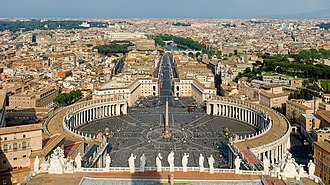
From March to September 1921, Hirohito visited several countries in Europe, including the United Kingdom, France, the Netherlands, Belgium, Italy, Vatican City and Malta. This was his first trip to Europe and was supported by experienced Japanese leaders.
He traveled on the Japanese battleship Katori from Yokohama to many places before arriving in London. In the UK, he met King George V and other leaders. He also visited important places such as the British Museum and Oxford University.
After returning to Japan, Hirohito became Regent for his father in November 1921. In April 1923, he visited Taiwan, which was then a Japanese colony. During this visit, he explored local hot springs.
The Great Kantō earthquake struck Tokyo in September 1923, causing damage. After this event, Hirohito continued his duties as Regent.
Marriage
Prince Hirohito married his distant cousin Princess Nagako Kuni in 1924. She was the eldest daughter of Prince Kuniyoshi Kuni. They had seven children, including two sons and five daughters. You can learn more about their family by visiting the page about their Issue.
Because of changes made by American leaders in 1947, some of the daughters had to leave the imperial family. This happened because of the changes or because of rules when they got married later on.
Early reign and World War II
Accession
On 25 December 1926, Yoshihito died and Hirohito became emperor. The end of the Taishō era and the beginning of the Shōwa era were announced. The new emperor was always called “His Majesty the Emperor” and never by his given name.
Early reign
The early years of Hirohito’s rule had money problems and more military power in the government. The Japanese military could approve new governments. During this time, there were many violent events involving politicians.
In 1932, Hirohito was almost hurt by a bomb thrown by someone who wanted Japan’s independence. Later that year, a leader was killed, and this ended civilian control over the military.
In 1936, some army officers tried to take control of the government. When Hirohito learned about it, he quickly ordered them to stop and they had to end their attempt.
Second Sino-Japanese War
Japan began fighting China after a planned incident in 1931. Japan took over parts of China and set up a government there. Hirohito’s advisors encouraged this, and he did not object.
There were concerns about starting the war with China, but once it began, it needed to be fought fully. Hirohito focused on the possibility of war with the Soviet Union rather than China.
Pacific War
In 1940, Japan joined a group of countries led by Germany and Italy. The United States placed restrictions on Japan because of its actions in China and Southeast Asia.
In 1941, Japan decided to go to war with the United States and others. Hirohito agreed to this decision after discussions with his military leaders. On 8 December 1941, Japan launched attacks on several places, including Pearl Harbor in Hawaii.
War: advance and retreat
At first, Japan had many successes in the war. But by 1942, things began to change as American forces started to push back. Hirohito took an active role in directing military operations and made several important decisions about where to focus Japan’s efforts.
As the war continued, Japan faced many difficulties. Cities were bombed, and there were shortages of food and supplies. Leaders tried to keep up people’s spirits, but it became clear that Japan was losing.
Surrender
In 1945, after many defeats, Hirohito began to consider ending the war. On 15 August 1945, he announced Japan’s surrender on the radio, marking the end of World War II. He explained that continuing the war would lead to great loss of life and that it was time to end the conflict.
Postwar reign
After Japan surrendered in August 1945, many people wanted Hirohito to step down. Some felt he should face trials for war actions. However, General Douglas MacArthur believed keeping Hirohito as a symbol would help bring peace to Japan. He protected Hirohito from being tried.
Hirohito was not put on trial for war actions. He was asked to give up the idea that the emperor was a god. Instead, he became a symbol of the state with no real power, acting only on the advice of the government. This helped Japan move forward after the war.
Hirohito became a public figure, visiting other countries and meeting leaders. In 1975, he visited the United States, where he was welcomed by President Gerald Ford. He also had a strong interest in marine biology and wrote scientific papers on sea creatures.
Hirohito chose not to visit a certain shrine after it honored people who had committed serious war actions. He kept this distance until his death, and his successors followed the same choice.
Death and state funeral
Main article: Death and state funeral of Hirohito
In September 1987, Hirohito had surgery on his pancreas after having problems with digestion. Doctors found he had duodenal cancer. For a while, it seemed he was getting better. But in September 1988, he became very unwell and his health kept getting worse.
Hirohito passed away in the early morning of 7 January 1989 at the age of 87. He was the oldest and longest-reigning emperor in Japanese history. He was succeeded by his eldest son, Akihito, whose ceremony to become emperor was held in November 1990 at the Tokyo Imperial Palace.
When Hirohito died, the Shōwa era ended, and a new era called the Heisei era began the next day. His formal funeral took place on 24 February at the Shinjuku Gyo-en. Many leaders from around the world attended, and he was buried in the Musashi Imperial Graveyard in Hachiōji, Tokyo.
Accountability for Japanese war crimes
The question of Emperor Hirohito's role during the war is still talked about. During the conflict, some saw him like other leaders. After the war, many thought he had little say in military decisions. But later, evidence showed he might have been more involved than people first believed.
Historians look at different clues to understand his role. Some think he played a big part in the war and the choices made by Japan's military leaders. Others say he had less power because of how Japan's government was set up at the time.
Over time, new information has come out, like personal writings and stories from people close to him. These give us a look into what he thought and did during the war. People still discuss how responsible he was and how his choices affected what happened.
Titles, styles, honours and arms
Military appointments
Hirohito was the Grand Marshal and Supreme Commander-in-Chief of Japan from December 25, 1926, when he became emperor.
Foreign military appointments
He had honorary military titles from other countries, including:
- Honorary General in the British Army in May 1921
- Field Marshal of the Regular Army in the British Army in June 1930
National honours
He created the Order of Culture on February 11, 1937.
Foreign honours
Hirohito received many honours from other countries, including:
- Grand Cross Special Class of the Order of Merit of the Federal Republic of Germany
- Grand Cross of the Order of the White Rose of Finland
- Grand Cross of the Order of Saint Olav from Norway
- Knight of the Royal Order of the Seraphim from Sweden
- Knight of the Order of the Elephant from Denmark
- Knight of the Order of the White Eagle from Poland
- Knight of the Order of the Rajamitrabhorn and the Order of the Royal House of Chakri from Thailand
- Member of the Most Glorious Order of Ojaswi Rajanya from Nepal
- Grand Collar of the Order of Sikatuna from the Philippines
- Grand Cross of the National Order of the Southern Cross from Brazil
- Knight of the Supreme Order of the Most Holy Annunciation from the Italian Royal Family
- Grand Cross of the Order of Merit of the Italian Republic
- Grand Cordon of the Order of Leopold from Belgium
- Honorary Recipient of the Order of the Crown of the Realm from Malaysia
- Grand Cross of the Royal Order of Pouono from Tonga
- Honorary Knight Grand Cross of the Royal Victorian Order and the Order of the Bath from the United Kingdom
- Stranger Knight Companion of the Order of the Garter from the United Kingdom
- Fellow of the Royal Society from the United Kingdom
- First Class of the Order of the Crown of Brunei
- Knight of the Order of the Golden Fleece and Grand Cross of the Royal and Distinguished Order of Charles III from Spain
- Grand Cross of the Order of the Redeemer and the Royal Family Order of Saints George and Constantine from Greece
- Collar of the Order of the White Lion from Czechoslovakia
- Order of the Yugoslav Great Star from Yugoslavia
- Collar of the Order of Solomon from the Ethiopian Imperial Family
- Knight of the Order of Saint Andrew the Apostle the First-called from the Russian Empire
Issue
Emperor Shōwa and Empress Kōjun had seven children. They had two sons and five daughters.
| Name | Birth | Death | Marriage | Children | |
|---|---|---|---|---|---|
| Date | Spouse | ||||
| Shigeko Higashikuni (Shigeko, Princess Teru) | 9 December 1925 | 23 July 1961 | 10 October 1943 | Prince Morihiro Higashikuni | Prince Nobuhiko Higashikuni Princess Fumiko Higashikuni Naohiko Higashikuni Hidehiko Higashikuni Yūko Higashikuni |
| Sachiko, Princess Hisa | 10 September 1927 | 8 March 1928 | None | ||
| Kazuko Takatsukasa (Kazuko, Princess Taka) | 30 September 1929 | 26 May 1989 | 20 May 1950 | Toshimichi Takatsukasa | Naotake Takatsukasa (adopted) |
| Atsuko Ikeda (Atsuko, Princess Yori) | (1931-03-07) 7 March 1931 | 10 October 1952 | Takamasa Ikeda | Motohiro Ikeda (adopted) | |
| Akihito, Emperor Emeritus of Japan (Akihito, Prince Tsugu) | (1933-12-23) 23 December 1933 | 10 April 1959 | Michiko Shōda | ||
| Masahito, Prince Hitachi (Masahito, Prince Yoshi) | (1935-11-28) 28 November 1935 | 30 September 1964 | Hanako Tsugaru | None | |
| Takako Shimazu (Takako, Princess Suga) | (1939-03-02) 2 March 1939 | 10 March 1960 | Hisanaga Shimazu | Yoshihisa Shimazu | |
Scientific publications
Emperor Hirohito wrote several papers about small sea creatures called hydroids. His first paper was in 1967, and he kept writing until 1995, even after he was no longer emperor. These papers helped scientists learn more about the different kinds of hydroids found around the world.
Images
Related articles



This article is a child-friendly adaptation of the Wikipedia article on Hirohito, available under CC BY-SA 4.0.
Images from Wikimedia Commons. Tap any image to view credits and license.