 Safekipedia
Human rights in Madagascar
Adapted from Wikipedia · Adventurer experience
Human rights in Madagascar
Human rights in Madagascar are protected by the country's constitution. But how well these rights are respected can vary.
In 2009, a report by the United States Department of State noted some problems. These included delays in fair elections due to political troubles.
There are also issues such as corruption, arbitrary arrest, and child labor. These show that many people in Madagascar still face challenges with their rights.
These problems remind us of the importance of working to protect everyone's rights and treating them fairly.
Constitution and statutory responses
Madagascar’s Constitution, adopted in 2010, says that everyone has the right to vote and the freedom to share thoughts.
The country also has laws that set a minimum age for work and stop children from being forced to work in very hard jobs.
International treaties
Madagascar's ideas about international human rights treaties are shown below.
Issues
There are concerns that the government limits news reports, especially about opposition groups. During a leadership fight, a leader closed down a TV station owned by his rival. There are worries about unfair arrests of journalists and political leaders. Opposition groups sometimes face restrictions.
Peaceful protests are sometimes handled too roughly by authorities.
Madagascar has many different ethnic groups. Some groups sometimes have disagreements. Some people, like those of Indian origin, face issues with citizenship.
There are still problems with unfair treatment of women and human trafficking. Young pregnant girls often face problems in school. Women also face challenges in finding jobs. People with albinism sometimes face danger because of superstitions.
The legal system faces challenges, including unfair arrests and long times before trials. Prisons are often crowded and do not have enough food or proper medical care. Sometimes, security forces use too much force.
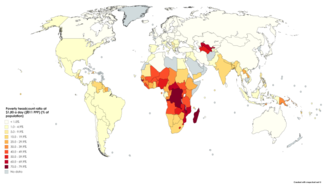
Many people in Madagascar live in poverty. Improving education and literacy rates can help reduce poverty over time.
Historical situation
The chart below shows how Madagascar has been rated each year since 1972 in the Freedom in the World reports by Freedom House. The ratings range from 1, meaning "free," to 7, meaning "not free."
Related articles


This article is a child-friendly adaptation of the Wikipedia article on Human rights in Madagascar, available under CC BY-SA 4.0.