 Safekipedia
Kuala Terengganu
Adapted from Wikipedia · Adventurer experience
Kuala Terengganu, often called KT, is the main city of the state of Terengganu in Malaysia. It is located about 440 kilometres northeast of Kuala Lumpur on the East Coast of Peninsular Malaysia, where the Terengganu River meets the South China Sea.
The city has a special title, Bandaraya Warisan Pesisir Air, meaning "Waterfront Heritage City," which it received on January 1, 2008.
Even though Kuala Terengganu is the smallest district in area, it has a large population. The city is very important for the state, serving as a main center for politics, business, and travel.
Kuala Terengganu is also a gateway to many beautiful places in Terengganu. Visitors can see interesting sites such as Kampung Cina, Pasar Besar Kedai Payang, the Terengganu State Museum, and Batu Buruk Beach. The city still keeps much of its traditional Malay culture mixed with influences from other cultures, thanks to its long history as a busy port.
Etymology
In Malay, the word kuala means "river mouth" or "estuary". So, the name Kuala Terengganu roughly means "the estuary of Terengganu". This name comes from where the Terengganu River meets the South China Sea.
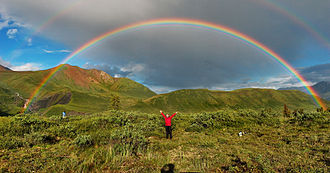
There are a few ideas about where the name Terengganu came from. One story says it might mean "bright rainbow". Another story was told by the ninth Sultan of Terengganu, Baginda Omar. In this story, hunters from Pahang found a large animal fang. They weren’t sure which animal it came from, so they called it taring anu, meaning "fang of something". Over time, this name changed to Terengganu.
History
The earliest mentions of Terengganu come from old Chinese records. These records talk about a place named Tan-Tan. Later, books from China called the area Teng-ya-nu and Teng-ya-nung.
The area later fell under the influence of big kingdoms like Srivijaya, Majapahit, and the Malacca Sultanate. After the Malacca Sultanate ended, the Sultanate of Johor took control. There were also times when other groups, like the Aceh Sultanate, tried to control the area.
The Sultanate of Terengganu was officially started in 1708. The first Sultan, Sultan Zainal Abidin I, set up his court in different places before finally choosing a spot near Bukit Keledang in Kuala Terengganu. Back then, Kuala Terengganu was a small town with about a thousand houses.
In 1957, Malaya became independent. Later, in 1963, Malaya joined with Sabah, Sarawak, and Singapore to form Malaysia. In 2008, Kuala Terengganu became a city.
Governance
The city of Kuala Terengganu is managed by the Kuala Terengganu City Council. This council looks after both the Kuala Terengganu and Kuala Nerus districts. The city is important because it has many government offices and is the royal capital, home to important palaces.
Kuala Terengganu became a city in 2008. It was the first city on the East Coast of Peninsular Malaysia to have this status. The council keeps the city clean, plans where new buildings go, and supports tourism. The main office is in a building called Menara Permint.
Geography
The city of Kuala Terengganu is in the eastern part of the Terengganu district. It faces the South China Sea and has sandy beaches. You can find small bays and flat coastal lands there.
The district is divided into four main areas based on rivers: the Terengganu River, Nerus River, Ibai River, and a few smaller rivers. Some parts along these rivers have swamp forests. The western part of the district has hills that are between 200 and 600 metres high. Most of the district is made up of lowlands that are less than 20 metres above sea level because it is close to the coast. The city itself has a few high points, with Bukit Besar being the highest, followed by Bukit Kecil. Bukit Puteri is located in the center of the city, close to where the Terengganu River meets the sea. These lowlands are good for growing crops like rice, palm oil trees, and rubber trees.
Climate
Kuala Terengganu has a tropical rainforest climate which means the temperature and humidity stay high all year. Days are usually between 28 °C and 30 °C and nights are a bit cooler. The sea helps keep things a little less humid in some places, and the forests and higher ground keep mountain and rural areas cooler.
There are two main monsoon seasons. The southwest monsoon starts late in May or early June and lasts until September. The winds during this time come from the southwest and are usually gentle. The northeast monsoon starts in early November and goes until March. During this time, winds come from the east or northeast and can be stronger. Sometimes, cold air from the north can make these winds even stronger. The area gets about 2,911 millimetres of rain each year. During the northeast monsoon, Kuala Terengganu gets a lot of rain because it is close to the sea. It is best to avoid visiting islands or doing activities on the sea during this time because the water can get very rough. Even during the monsoon season, some days can be clear and sunny with cool winds.
| Climate data for Kuala Terengganu | |||||||||||||
|---|---|---|---|---|---|---|---|---|---|---|---|---|---|
| Month | Jan | Feb | Mar | Apr | May | Jun | Jul | Aug | Sep | Oct | Nov | Dec | Year |
| Mean daily daylight hours | 11.9 | 12.0 | 12.1 | 12.2 | 12.4 | 12.4 | 12.4 | 12.3 | 12.2 | 12.0 | 11.9 | 11.8 | 12.1 |
| Average Ultraviolet index | 6 | 7 | 7 | 7 | 7 | 7 | 7 | 7 | 7 | 7 | 6 | 6 | 7 |
| Source: Weather Atlas | |||||||||||||
Demographics
Kuala Terengganu has a rich mix of people and cultures. In the past, it was home to many Malays, some Chinese, and a few Arabs. Today, the city has around 406,000 people. Most are Malays, with smaller groups of Chinese, Indians, and people from other places.
People in Kuala Terengganu speak many languages. The most common is Terengganu Malay. Some also speak Kelantanese, Hokkien, Teochew, Mandarin, Tamil, and Standard Malay. English is also understood by many.
Economy
Kuala Terengganu was once a large fishing port and a key trading place in Malaya. Important goods traded there included coffee, gambier, gold, ivory, pepper, and tin. These were exchanged for items like rice, tobacco, cotton goods, and other products.
Today, the city's economy has many small factories that make traditional clothes, local food, arts and crafts, and farm products. Larger factories can be found in areas such as Chendering and Gong Badak. Tourism is also important, as many visitors come to see the city and its beautiful surroundings.
The view of Kuala Terengganu from the top of Bukit Puteri.
Public facilities and infrastructure
Transportation
Kuala Terengganu has taxis and a local bus terminal. The buses go to big cities and towns in Peninsular Malaysia and Singapore. There is a special bus called Bas Bandar with a unique roof that shows the state’s culture. These buses have three routes in and out of the city. Each ride costs MYR1.
The BAS.MY program began in February 2025. It offers good and cheap bus services. Buses leave every hour from 6:00 AM to 7:30 PM. They are pink and give free rides to students aged 7–17, seniors 60+, and people with disabilities. There is also a monthly pass for RM50 for unlimited rides.
There are also trishaw services, but they are not common and mostly used by tourists. The city’s only taxi rank is near the bus terminal.
The East Coast Rail Link will connect Kuala Terengganu to cities like Tumpat, Kota Bharu, Kuantan, and Gombak in Kuala Lumpur by 2026.
Kuala Terengganu is the first city on the East Coast to have a public bicycle-sharing system, provided by the Singaporean company oBike. You can leave the bikes anywhere after use by hiring them through a smartphone app.
The Sultan Mahmud Bridge is a three-kilometre bridge over the Terengganu River. It connects the two sides of the river and Duyong Island. Other bridges include Manir Bridge and Pulau Sekati Bridge. A new bridge called Kuala Terengganu Drawbridge, finished in mid-2019, connects the city centre with Seberang Takir.
The city has good roads for driving. The East Coast Expressway makes it easier to travel from the West Coast of Peninsular Malaysia. It takes about four hours to drive from Kuala Lumpur. Visitors can also use Federal Route 3 for a scenic coastal drive, or East-West Highway and Second East–West Highway from the north.
The nearest airport is Sultan Mahmud Airport. It has flights within Malaysia and to other countries. Airlines like Malaysia Airlines, Firefly, AirAsia, and Malindo Air fly there. The airport is made for up to two million passengers each year.
Boats called bot penambang travel on the Terengganu River. They carry people between parts of the city. There are also ferry services to islands like Redang. Ferries leave from Syahbandar Jetty near the General Post Office.
Courts of law and legal enforcement
Kuala Terengganu has many courts on Jalan Sultan Mohamad. The High Court, Sessions Court, and Magistrate Court are in one building. The Syariah Court is close by. The police headquarters for Terengganu and Kuala Terengganu are on Jalan Sultan Omar. There are smaller police stations around the city. The main fire station is on Jalan Kemajuan, with another near Pasar Payang. The civil defence headquarters is near the Terengganu Sports Complex. There is also an army camp that is being upgraded.
Healthcare
Kuala Terengganu has fewer hospitals than big cities. The main hospital is Sultanah Nur Zahirah Hospital. It is the largest in the state and has 821 beds. It has been serving the area since the 1920s. There is a private hospital called Kuala Terengganu Specialist Hospital, opened in 2006. There is also another private hospital named SALAM Specialist Hospital. Many clinics operate in the district.
Religious institutions
Kuala Terengganu has many mosques, including Abidin Mosque and Tengku Tengah Zaharah Mosque, known as the 'floating mosque'. There are also Chinese temples like Ho Ann Kiong Temple and Tian Hou Gong Temple, Presbyterian and Anglican churches, a Catholic mission, and a Hindu temple.
Education
Kuala Terengganu is an important place for higher education. It has three public universities: Universiti Sultan Zainal Abidin, Universiti Malaysia Terengganu, and Universiti Teknologi MARA. Other schools include Insitut Teknologi Petronas and Kuala Terengganu Community College.
The city has many schools. There are 81 primary schools and 34 secondary schools. Examples of secondary schools are KOSPINT, SMJK Chung Hwa Wei Sin, and Sekolah Menengah Sains Sultan Mahmud.
The Terengganu State Library, near Sultan Mahmud Bridge, is the largest library in the state. It serves people of all ages. Smaller libraries are in schools, colleges, universities, and villages like Seberang Takir and Mengabang Telipot.
| Code | Route |
|---|---|
 T10 T10 | Kuala Terengganu - Merang Jety |
| T11 | Kuala Terengganu - Batu Rakit |
| T20 | Kuala Terengganu - Bukit Payung via Pasir Panjang |
| T21 | Kuala Terengganu - Bukit Payung via Sungai Rengas |
| T22 | Kuala Terengganu - Kuala Berang |
| T30 | Kuala Terengganu - Marang via Chendering |
| T31 | Kuala Terengganu - Marang via Kedai Buloh |
| T100 | Kuala Terengganu City Feeder |
Tourism and culture
Attractions and recreation spots
Historical
The Terengganu State Museum is in Kampung Losong. It is one of the largest museum complexes in Malaysia and South East Asia, covering 27 hectares. The museum’s design is based on traditional Terengganu Malay houses. It has eight galleries and outdoor exhibits, including the Petronas Gallery, Maritime Gallery, Islam Gallery, and traditional Terengganuese houses. The museum is home to the Terengganu Inscription Stone, the oldest artefact with Jawi writing in the country.
Near the museum is the Islamic Heritage Park. This park shows replicas of famous mosques from around the world, such as Al-Masjid al-Haram, Qol Sharif Mosque, and Masjid Negara. The Crystal Mosque is also here. Visitors can take boat cruises along the Terengganu River.
A small hill called Bukit Puteri is near Pasar Payang. The hill was used as a fort by local sultans. On top, you can find old artefacts, a graveyard, and monuments. During Ramadan, a century-old brass bell rings to mark the end of fasting.
Cultural
The Chinatown of Kuala Terengganu is the centre of the Peranakan Chinese community. This area has two rows of old shophouses, some dating back to the 1700s. Most houses are two stories high, made of bricks or concrete, with wooden floors upstairs. Some still have beautiful wooden windows and doors. Today, these buildings house shops, coffee houses, offices, restaurants, and more. There are two Chinese temples: Ho Ann Kiong and Tien Hou Kong, built in 1801 and 1896. Another landmark is the Low Tiey water well from 1875, which still provides clean water. The back alleys of Chinatown have thematic lanes with information, decorations, and murals.
Pasar Besar Kedai Payang, or Central Market (Pasar Payang), is the main market. This double-storey building sells fresh produce, poultry, sea products, traditional foods, clothes, and handicrafts like batik, songket, and brass ware. Pulau Duyong is a river island known for traditional boat making. It has a historical monument called Kota Lama Duyong (Duyong Old Fort), a traditional Malay house with local and European styles. Rumah Warisan Haji Su (Haji Su Heritage House) is a complex of two traditional Malay houses in Losong, another historical attraction.
Leisure
Kuala Terengganu has many places for fun. Batu Buruk Beach is close to the city centre. Visitors can enjoy activities like horse riding, horse carriage rides, and kite flying, but it’s not recommended to swim due to strong waves. Taman Shahbandar is a park by the Terengganu River estuary, near Pasar Payang, Bukit Puteri, and Istana Maziah. Other spots include:
- Kuala Terengganu Waterfront, south of Pulau Warisan by the Terengganu River, offering views of Pulau Duyong and Sultan Mahmud Bridge.
- Taman Awam Lagun Kuala Ibai, a park 4 kilometres from the city centre, home to the Tengku Tengah Zaharah Mosque.
- Taman Awam Pantai Teluk Ketapang, a beach and public park near Sultan Mahmud Airport.
Other sights
The Abidin Mosque is Kuala Terengganu’s old royal mosque, built by Sultan Zainal Abidin II between 1793 and 1808. It is known as Masjid Putih (White Mosque) and is the location of the Royal Mausoleum. Seberang Takir is a fishing village on the northern bank of the Terengganu River estuary. Visitors can see local industries like making keropok lekor, batik printing, and shrimp paste.
A giant replica of the Terengganu Inscription Stone stands on a roundabout on Jalan Sultan Ismail.
Food
Keropok lekor (especially from Losong), a local fish snack, and other traditional dishes like nasi dagang, laksam, laksa Terengganu, otak-otak, sata, pulut lepa, ketupat sotong, and roti paun can be found in the city. In Kampung Cina, you can try Peranakan Chinese cuisine, which mixes Malay and Chinese styles, along with other traditional Chinese dishes.
Media
Television and radio
Kuala Terengganu receives almost all Malaysian television channels, including TV1, TV2, TV3, NTV7, TV9, and TV Alhijrah. Most radio stations in Malaysia are available here. The state’s radio station, Terengganu FM, and private stations like Hot FM Teganu and Manis FM are also based in the city.
Newspapers
Major Malaysian newspapers available in Kuala Terengganu include:
- English dailies such as The Star and New Straits Times.
- Malay dailies such as Berita Harian, Utusan Malaysia, Harian Metro and Kosmo!.
- Chinese dailies such as Sin Chew Daily, China Press, Kwong Wah Yit Poh, Guang Ming Daily and Nanyang Siang Pau.
- Tamil dailies such as Malaysia Nanban, Tamir Malar and Makkal Osai.
Local newspapers like Sinar Harian provide regional and local news.
Sports
There are two main stadiums: Sultan Ismail Nasiruddin Shah Stadium in the city centre, and Sultan Mizan Zainal Abidin Stadium at Terengganu Sports Complex in Gong Badak. Both are home to the state’s football teams, Terengganu FC and T-Team FC.
The sports complex was built for the 2008 Malaysian Games (SUKMA). It includes an Indoor Stadium, football fields, a rugby field, a lawn bowls field, a hockey pitch, and bowling lanes. A sports school is being built there to develop new athletes. Other sports venues in Kuala Terengganu include the Kuala Terengganu Aquatic Centre, Hockey Stadium, Tennis Courts, and Lawn Bowls Fields. There are three golf courses: Royal Terengganu Golf Club in Batu Buruk, Ibai Golf & Country Resort in Kuala Ibai, and Kuala Terengganu Golf Resort in Tok Jembal.
Kuala Terengganu has hosted events like the 2008 Malaysian Games, the Annual Sultan Mahmud Bridge International Run, The Monsoon Cup, the International Beach Sports Carnival, National Badminton Circuit Competition finals, and stages of the Tour de Langkawi cycling race. The city also hosted the 2017 AFC Beach Soccer Championship at Batu Buruk Beach and the 2017 ITF Terengganu International Junior Championship at Padang Hiliran Tennis Stadium.
International relations
Kuala Terengganu has an honorary consulate from Kazakhstan.
Sister cities
See also: List of twin towns and sister cities in Malaysia
Kuala Terengganu's sister city is:
- Makassar, Indonesia
Images
Related articles



This article is a child-friendly adaptation of the Wikipedia article on Kuala Terengganu, available under CC BY-SA 4.0.
Images from Wikimedia Commons. Tap any image to view credits and license.