 Safekipedia
Photography
Adapted from Wikipedia · Adventurer experience
Photography is the art and practice of creating images by recording light. This can be done electronically using an image sensor, or chemically using photographic film. Photography is used in many areas such as science, business, art, film, video production, hobbies, and mass communication. A person who takes pictures is called a photographer, and each picture they take is called a photograph.
Usually, a lens focuses light from objects into a clear image inside a camera during an exposure. With a digital camera, this makes tiny electric charges that become a digital image file. With older film cameras, it creates an image that is later turned into a picture by a chemical process. This picture can be a negative or a positive, depending on what is needed.
Before digital photography became common, pictures from film had to be turned into negatives or slides, and then printed as positive images. This was often done in labs, but many photographers did the processing themselves.
Etymology
The word "photography" comes from two Greek words: φωτός (phōtós), meaning "light", and γραφή (graphé), meaning "drawing". Together, they mean "drawing with light".
Several people may have created this word around the same time. Hércules Florence, who lived in Brazil, used a French version of the word, photographie, in his private notes in 1834. The word first appeared in a public article in a German newspaper called Vossische Zeitung on 25 February 1839. Famous inventors like Nicéphore Niépce, Henry Fox Talbot, and Louis Daguerre used different names for their photography methods instead of the word "photography".
History
Main articles: History of photography and Timeline of photography technology
See also: History of the camera
Photography began with the discovery of the camera obscura, a dark room or box that shows an image of a scene through a small hole. Ancient Chinese, Greek, and Byzantine scholars talked about this idea long ago. Later, Arab scientist Ibn al-Haytham invented the pinhole camera and explained how it worked.
People later found ways to capture and keep these images. Early tries used chemicals like silver nitrate to change paper when it was in the light. The first permanent photograph was made in 1826 by Nicéphore Niépce. It showed a view from his window and took many hours of sunlight.
As time went on, new ways made photography easier and faster. Louis Daguerre made the daguerreotype in 1839, which only needed minutes of light. This was a big step, and many people got very excited about this new way to take pictures.
Today, most photos are taken with digital cameras or phones, but the history of photography has many great inventions that helped us see and remember the world in new ways.
Techniques
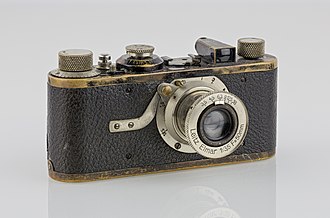
Photography uses many ways to capture images. The main tool is the camera, which can be small or large. Cameras can take still pictures or moving images, like in movies. There are special types of photography, such as stereoscopic (or 3-D) images, which use two pictures side by side to look like how our eyes see the world.
Other techniques include dualphotography, where two pictures are taken at once from different sides, and full-spectrum photography, which uses special light to create unique effects. Layering is a method where parts of a scene are arranged to tell a story, and light field photography lets you change the focus after the picture is taken. Besides cameras, some images can be made using photocopies, photograms (images made without a camera), or image scanners.
Main article: Camera
Main article: Stereoscopy
Main article: Dualphotography
Main article: Full spectrum photography
See also: Light-field camera
Types
Amateur
"Amateur photographer" redirects here. For the British photography magazine, see Amateur Photographer.
Amateur photographers take photos for fun, as a hobby or because they are interested, not for money. Their photos can be just as good as those taken by professionals. Amateurs help photograph things that might not get taken if they were only for selling. Amateur photography became popular in the late 1800s when hand-held cameras were made. Today, social media and camera phones make it easy for everyone to take and share photos. Since the 2010s, smartphone cameras have added helpful features like color management, autofocus face detection and image stabilization that make taking good photos even easier.
Commercial
Commercial photography means taking photos for money. The photographer gets paid for the images, either by the person in the photo or for the photo itself. Commercial photography can include:
-
Advertising photography: Photos made to show and sell a product or service. These are often done with an advertising agency, design firm or a company's design team.
-
Architectural photography: Photos of buildings that show them looking nice and accurate.
-
Event photography: Photos taken at parties and other social events.
-
Fashion and glamour photography: Photos that include models. Fashion photography shows clothes and products, often for magazines like Harper's Bazaar. Glamour photography focuses more on the model.
-
360 product photography: A series of photos that make an object look like it is spinning. This is often used by online shops.
-
Concert photography: Photos taken at music concerts that show the performers and the crowd.
-
Still life photography: Photos of objects that are not alive, like food or everyday items.
-
Real estate photography: Photos of houses and properties that are for sale.
-
Food photography: Photos of food that can be used in magazines, on packaging or in ads.
-
Photojournalism: Photos that tell news stories.
-
Paparazzi: Photos of famous people taken without their permission.
-
Portrait and wedding photography: Photos taken and sold to the people in them.
-
Landscape photography: Photos of nature or places.
-
Wildlife photography: Photos of animals in the wild.
Art
Main article: Art photography
In the 1900s, fine art photography and documentary photography became accepted in art galleries. In the United States, photographers like Alfred Stieglitz, Edward Steichen, John Szarkowski, F. Holland Day, and Edward Weston worked hard to show that photography could be art. At first, these photographers tried to make their photos look like paintings. This style is called Pictorialism. Later, photographers like Weston and Ansel Adams started using straight photography, which shows things clearly and sharply.
People still talk about what makes photography art. Some say that because a camera takes the photo, it cannot truly be art. Others say that a photo can be beautiful [beautiful] in its own way. In 2007, a photo called 99 Cent II Diptychon sold for a lot of money, showing that some photos are very valuable.
Conceptual photography turns ideas into photos. Even though the photos show real things, the meaning is abstract.
Photojournalism
Main article: Photojournalism
Photojournalism is a type of photography that tells news stories using pictures. It uses still images, but sometimes video as well. Photojournalism is different from other types of photography because it must be honest and fair. Photojournalists take pictures for news media, helping people understand what is happening in the world. They need to know about current events and tell their stories in a creative and interesting way, including sports photography.
Science and forensics
Further information: Forensic photography
Cameras have been used for a long time to record scientific events, like eclipses and tiny objects looked at through microscopes, in photomicroscopy. They are also used to record crime scenes and accidents. In the 1800s, a camera was used to record weather and magnetic changes.
Science uses cameras to record many kinds of data. Cameras are used in many fields to capture images, using different kinds of light such as infrared photography and ultraviolet photography, as well as spectroscopy.
In 2012, scientists took the first picture of an atom.
Wildlife photography
Main article: Wildlife photography
Wildlife photography means taking pictures of animals in nature. It is different from other types of photography because it needs the photographer to be in the right place at the right time when animals are active. It takes patience and skill, and the right equipment.
Social and cultural implications
Photography makes us think about how we see the world. Some people feel that photographs are not completely true because photographers decide what to take pictures of and how to show it. These choices can show the time and place where the photo was taken.
Today, with digital tools, people worry about how pictures can be changed after they are taken. Some photographers and journalists follow strict rules to keep their pictures honest. Photography can also change how people think and feel, especially with strong or upsetting images. It helps shape how we see other cultures, sometimes showing only part of the story.
Law
Photography is guided by laws in many places. These laws give photographers rights to their work. In the United States, people can take pictures of things and people in public spaces. Each country has its own rules about what can be photographed.
Images
Related articles




This article is a child-friendly adaptation of the Wikipedia article on Photography, available under CC BY-SA 4.0.
Images from Wikimedia Commons. Tap any image to view credits and license.