 Safekipedia
Somalis
Adapted from Wikipedia · Adventurer experience
The Somalis (/soʊˈmɑːliz, səˈmɑːliz/, sə-MAH-leez) (Somali: Soomaalida, Wadaad: صومالِدَ, Arabic: الصوماليون) are a Cushitic ethnic group and nation native to the Somali Peninsula. They are one of the largest ethnic groups in Africa and live across a wide area.
The Somali language is the main language spoken by Somalis and belongs to the Cushitic branch of the Afroasiatic language family. Most Somalis practice Sunni Muslim beliefs.
Somalis have a rich history tied to the ancient Land of Punt. Many of their cultural traditions come from this area. Classical writers from Greece and Rome often called the region Barbaria.
Today, the majority of Somalis live in Somalia, but large communities also exist in Somaliland, Ethiopia, Kenya, and Djibouti. Somali people can also be found around the world, especially in the Middle East, North America, Western Europe, and other parts of Africa.
Etymology
Main article: proto-Somali
The name Somali has a few possible origins. Many think it comes from Samaale, a famous ancestor of many Somali clans. Another idea is that it comes from the words soo and maal, meaning "go and milk." This might refer to either camel milk in the north or cow milk in the south, showing how important animal raising is to the Somali people.
Historians also suggest the name might come from an Arabic word meaning "wealthy," showing the Somalis' richness in livestock. Some even think the name could be linked to an ancient group of warriors from Egypt called the Automoli. The name Somali is the one Somalis prefer to use for themselves, instead of Somalian.
History
Main articles: History of Somalia, History of Somaliland, and Maritime history of Somalia
The Somali people originally came from the Horn of Africa. They have lived there for about 7,000 years. Ancient rock paintings from about 5,000 years ago are found in the Somaliland region. These paintings show early life, with animals and people. The Laas Geel complex is one of the oldest known rock art sites in Africa.
Inscriptions found under the paintings have not yet been understood by archaeologists. During the Stone Age, the Doian and Hargeisan cultures lived there, making tools and other items.
Somali sailors and traders were important in ancient times. They sold valuable items like frankincense, myrrh, and spices to places like Ancient Egypt, Phoenicia, Mycenae, and Babylon.
In old times, the land where Somalis lived was linked to the Land of Punt. The people there had close ties with Pharaonic Egypt.
In classical times, the Macrobians were a powerful group. They were known for being very tall and handsome. They were also good fighters and sailors.
Several ancient city-states like Opone, Essina, and others traded with many places.
Islam came to Somalia early, brought by Muslims fleeing from Mecca. The town of Zeila has one of the oldest mosques in Africa, built in the 7th century.
Somalis were among the first outside of Arabia to become Muslim. Peaceful teaching by Somali Muslim scholars helped spread the religion. Cities like Mogadishu, Berbera, and others grew as important Islamic centers.
The Sultanate of Ifat ruled parts of what is now eastern Ethiopia, Djibouti, and Somaliland.
In the Middle Ages, strong Somali empires like the Ajuran Sultanate and the Adal Sultanate controlled trade. The Sultanate of the Geledi was powerful in battle.
Berbera was a major port from the 18th to 19th centuries, trading with the Arabian Peninsula. It was a busy marketplace for goods like livestock, coffee, and ivory.
Berbera was described as a very free and important trading place.
In the late 1800s, European powers started to take control of Africa. This led to the creation of the Dervish movement, which fought against British forces for many years.
The Majeerteen Sultanate was important in the 1700s and 1800s, controlling large areas and trading with other places.
In 1888, the Majeerteen and another group, the Sultanate of Hobyo, made agreements with Italy. Italy wanted control of their ports for trade routes.
In the late 1930s, parts of Somalia were developed, with farming and new city designs.
After World War II, Britain controlled both British Somaliland and Italian Somalia. The United Nations let Italy help Somalia become independent within ten years.
In 1960, British Somaliland and Italian Somalia joined to form the Somali Republic.
In 1969, President Abdirashid Ali Shermarke was killed, leading to a military takeover by Mohamed Siad Barre. The new government made changes to improve education and connect with the Arab world.
Clan system
Main article: Somali clans
Somali clans are groups of families who share ancestors. They are important in Somali culture and help organize society. The five main clans are the Hawiye, Darod, Isaaq, Rahanweyn, and Dir. Each clan has leaders and elders who help make decisions.
Clans often have special lands for their members. Leaders can be chosen by elders or passed down through families. Some clans move with their animals, while others live in settled areas and work the land. Clan traditions help keep Somali people connected to their history and each other.
Religion
Most Somalis are Muslims. They mainly follow the Sunni branch of Islam. There are two ideas about when Islam came to Somalia. One idea says Muslims came very early, even before Islam was common. Another idea says traders brought Islam to Somalia's coast between the 7th and 10th centuries.
Today, Islam is the official religion of Somalia. Many Somalis feel proud to say they are related to the family of the Islamic prophet Muhammad. Most follow the Shafi'i school of Islamic law. There are also some Sufi groups, a mystical part of Islam, with local meeting places called jama'a or zawiya.
Languages
Main article: Somali language
The Somali language is part of a big language family called Afroasiatic. It is mainly spoken by people in Somalia and nearby areas. Many people speak Somali, but we do not know the exact number. Somali has different versions or dialects. One version is used as the standard way to write and speak the language.
People in Somalia also use Arabic as an official language. Many Somalis learn Arabic because of its long history and influence in the region.
Culture
Main article: Culture of Somalia
Somali culture is rich and diverse, mixing traditions from many places. It includes strong storytelling, especially through poetry, which is important in daily life and special events. Islam guides many customs and rules. Somali society is often based on clans, with a focus on kindness, family ties, and helping each other. Art appears in music, dancing, and crafts, showing both local and outside influences.
Music is a key part of Somali life, with songs usually using five notes. Traditional music uses instruments like the oud and drums, and it tells stories and shares history. In the past, Somali films and plays were popular, and today there is a growing film movement called Somaliwood. Art includes pottery, jewelry, and wood carving, with special designs used in homes and everyday items. Traditional clothes are made for comfort and modesty, with men often wearing a wrap-around garment called a Macawis and women wearing flowing dresses like the Dirac.
Sports are important, with football being the most popular. The national team is called the Ocean Stars. Basketball and other sports are also played. Somali athletes have succeeded in running and other events. Food in Somalia mixes flavors from Arab, Indian, and Italian traditions. Common dishes include rice, pasta, meat, and special breads. Tea and coffee are popular drinks, and there are sweet treats like Xalwo served with tea.
Somali literature has a long history of oral storytelling and poetry, with scholars contributing to Islamic literature. The legal system, called Xeer, is a custom-based law focused on fairness, family duties, and peace between clans.
Architecture
Main article: Somali architecture
Somali architecture is a rich tradition of building and designing. It includes many types of structures such as stone cities, castles, citadels, fortresses, mosques, mausoleums, towers, tombs, and more. These buildings span from ancient to modern times in Somalia.
In ancient times, pyramid-shaped structures called taalo were used for burials. Many of these dry stone monuments can still be found today. Houses were made from carefully cut stone, much like those in Ancient Egypt. There are also large stone walls and courtyards around some old settlements.
When Islam arrived in Somalia, it brought new building styles from Arabia and Persia. This led to the use of materials like coral stone, sundried bricks, and limestone. Many new buildings, such as mosques, were constructed on the sites of older structures, a practice that continued for many centuries.
Ethnic flag
The Somali flag shows the Somali people. A person named Mohammed Awale Liban made it in 1954. When Somalia became free in 1960, this flag was picked to be the country's flag. In the middle of the flag is a five-pointed star called the Star of Unity. The star stands for Somali people living in five different areas called Greater Somalia.
Geographic distribution
Main articles: Somali diaspora, List of Somalis, and Greater Somalia
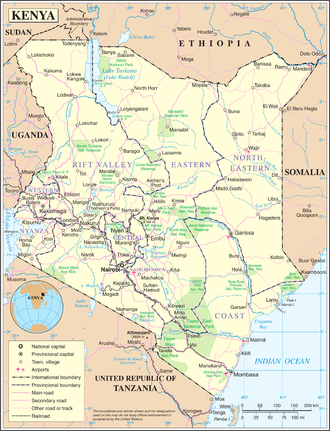
The Somali people mainly live in the Horn of Africa, in an area called Greater Somalia. This includes the country of Somalia and parts of Djibouti, eastern Ethiopia (the Somali Region), and northeastern Kenya. These places share a common language, religion, and family ties. After the Somali civil war began in the early 1990s, many Somalis had to leave their homes. Today, you can find Somali communities in places like the United Arab Emirates, Saudi Arabia, Yemen, the United States, the United Kingdom, Canada, Sweden, Norway, and the Netherlands. These communities stay connected to their homeland.
Genetics
Uniparental lineages
Studies show that Somalis share close family ties with other groups in Northeast Africa. Most Somali men have a specific type of DNA called E1b1b. This type of DNA is also common in places like Ethiopia, Sudan, Egypt, and around the Mediterranean Sea. Another type of DNA, called haplogroup T, is found in many Somali men. It is especially common in certain groups in Djibouti and Dire Dawa.
Autosomal ancestry
Research suggests that Somalis have a mix of different ancestries. They share a special type of African ancestry that is unique to the Horn of Africa. They also have some ancestry that came from outside Africa long ago. This mix makes the Somali population quite similar to each other and to other groups in the Horn of Africa and the Middle East.
Somali studies
Main article: Somali studies
The study of Somalis and their history is called Somali studies. This field looks at many things like people, societies, languages, history, and old remains. Researchers study old stories, writings, and traditions from Somalis and other writers who visited the Horn of Africa and the Middle East. Since 1980, important scholars who study Somalis have met every year at a big meeting called the International Congress of Somali Studies.
Images
Related articles


This article is a child-friendly adaptation of the Wikipedia article on Somalis, available under CC BY-SA 4.0.
Images from Wikimedia Commons. Tap any image to view credits and license.