United States Marshals Service
The United States Marshals Service (USMS) is a federal law enforcement agency that works under the direction of the United States attorney general. It is part of the United States Department of Justice. Its job is to carry out the decisions of the United States federal judiciary and to keep it safe.
United States Marshals are the first federal law enforcement officers of the United States. They were created by the Judiciary Act of 1789 during the time when George Washington was president. At first they were called the "Office of the United States Marshal" and worked under the United States district court. The USMS was started in 1969 to help U.S. Marshals across the federal judicial districts.
The Marshals Service mostly looks for and arrests people who are wanted by federal law. It also runs fugitive operations to find people who are hiding from the law. It takes care of seized property, runs the United States Federal Witness Protection Program and the Justice Prisoner Air Transportation System, protects federal courthouses and the people who work in them, and keeps senior government officials safe through the Office of Protective Operations.
Over the years, the Marshals have also given special help and protection. They protected African American students who went to schools in the South during the civil rights movement. They escorted LGM-30 Minuteman missile convoys for the United States Air Force, helped with law enforcement for the United States Antarctic Program, and protected the Strategic National Stockpile. For information about the air marshal service, see Federal Air Marshal Service.
History
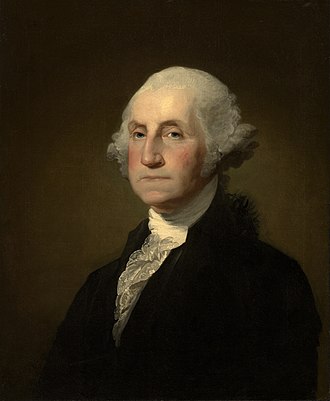
The office of United States Marshal was created by the First Congress. President George Washington signed the Judiciary Act into law on September 24, 1789. The law said a marshal's main job was to carry out lawful warrants and to help federal courts keep order and enforce the law. Six days later, Washington chose the first thirteen U.S. Marshals, one for each federal district at that time. Many of the first marshals had already served in the American Revolutionary War. For over 100 years, marshals were usually controlled by the district judge, and they were paid mostly by fees until a salary system began in 1896. In the case In re Neagle, decided in 1890, the Supreme Court confirmed the legal authority of federal marshals.
Marshals were the main police on the American frontier and are well known for their work in the "Old West." Famous marshals included Wyatt Earp, Bat Masterson, Dallas Stoudenmire, and Bass Reeves. Most of their work, however, was paperwork. They delivered subpoenas, summonses, and warrants, looked after federal prisoners, and helped courts run smoothly. In the 1960s, marshals helped protect people during the civil rights movement. In September 1962, President John F. Kennedy sent 127 marshals to go with James Meredith as he signed up at the University of Mississippi. Marshals also protected Ruby Bridges as she walked to school. The Marshals Service was created in 1969. In 2006, the Adam Walsh Child Protection and Safety Act led to a new branch that helps find people who have broken the law. The law was made to keep children safe. In 2017, marshals began protecting Betsy DeVos. It was the first time since 2009 that a United States Cabinet official had received this kind of protection.
Duties and responsibilities
The Marshals Service catches wanted fugitives. It protects the federal courts and moves federal prisoners from one place to another. It also protects endangered federal witnesses through the Federal Witness Protection Program. The agency manages property taken from criminal groups. In 2012, U.S. marshals captured more than 36,000 federal fugitives.
The agency runs an airline, the Justice Prisoner Air Transportation System, which mostly carries prisoners between prisons and courts. The Marshals also have a Special Operations Group, a fast-response team formed in 1971. An Office of Protective Operations guards top officials and Supreme Court nominees.
The Marshals can carry out orders and papers issued under federal law. They can ask for help when doing so. Long ago, they could enlist willing civilians as deputies, but today this is very unusual. The Marshals no longer deliver most papers in private lawsuits. They still carry out executions and garnishment orders. A 2015 law lets them help other agencies find missing children when asked. It also created a Missing Child Unit within the Marshals Service.
Training and equipment
Getting a job with the Marshals Service is very competitive. It works much like hiring for special agent jobs at other agencies with similar duties. Usually, fewer than five percent of qualified applicants are hired. Applicants need at least a four-year bachelor's degree or strong work experience, usually three or more years at a local or state police department. Applicants must pass a written test, an oral interview, a background check, a medical exam, a drug test, and several fitness tests. Deputy U.S. Marshals then complete an 18-week training program at the Federal Law Enforcement Training Center in Glynco, Georgia.
Today, the main handgun for deputy marshals is the Glock 17 in 9mm. Earlier, deputies were given the Glock 22 in .40 S&W. Deputies also wear body armor and carry collapsible batons. For high-risk warrants, they use ballistic shields, helmets, and protective goggles. The service has recently started a body-worn camera program. The Marshals also have planes registered under a front company called Early Detection Alarm Systems. This company uses a mailbox at a UPS Store in Spring, Texas as its address. This arrangement has been in place since at least 2007.
Organization
The Marshals Service is based in Arlington County, Virginia. It works under the attorney general. A director leads it, with help from a deputy director. The director reports to the deputy attorney general. The headquarters helps coordinate the many parts of the service. Its divisions include the Office of Protective Operations, which has the Deputy Attorney General's Protection Detail and the Secretary of Education's Protection Detail. Another division is the Justice Prisoner Air Transportation System.
The U.S. court system is split into 94 federal judicial districts. Each district has a district court. Guam and the Commonwealth of the Northern Mariana Islands share one U.S. Marshal. Each district has a United States Marshal, who is presidentially-appointed and Senate-confirmed. Each district also has chief deputy marshals (GS-14 or 15), supervisory deputies (GS-13), and deputy marshals (GS-7 and above) as needed. In the United States federal budget for 2005, money was set aside for 3,067 deputy marshals and criminal investigators. The U.S. Marshal for each of the 13 United States courts of appeals is the Marshal for the district where that court is located. The director and each U.S. Marshal are chosen by the president of the United States. They must also be approved by the U.S. Senate. District Marshals are usually picked from a list of qualified law enforcement workers in that district or state.
Personnel
The director is the head of the Marshals Service and leads all of the Marshals. Each United States Marshal leads the service in one of the 94 federal judicial districts. Deputy marshals carry out criminal investigations and make sure arrest warrants are carried out. They also protect government officials and help move federal witnesses to new homes through the United States Federal Witness Protection Program, which the service leads. After Congress passed the Adam Walsh Act, the service was chosen to lead a new federal team that tracks and brings to court adults who want to harm children. Court security officers help check people for weapons as they enter federal courthouses. Deputies become 1811 Criminal Investigators after they graduate from the academy, which lets them earn Law Enforcement Availability Pay. Commissioned officers in the United States Coast Guard may be appointed deputy marshals in Alaska.
Some marshals and deputy marshals have died while doing their jobs. One of the first was Robert Forsyth, who was killed in Augusta, Georgia, on January 11, 1794. The people who died are remembered on an honor roll. Many famous people have served as marshals, including Frederick Douglass, who was appointed U.S. Marshal for the District of Columbia in 1877, Wyatt Earp, and Bass Reeves.
Criticism and controversy
See also: Police misconduct § United States
In November 2010, an audit by the Office of Inspector General found "weaknesses" in how the Marshals Service kept federal court buildings safe. Some court security officers had been hired without background checks. The Service also gave a large contract to a security company, USProtect Corporation, even though the company's owners had been involved in mail fraud, bank fraud, and false insurance claims. Some officers had not been trained to use screening equipment, and many had firearms skills that were out of date.
In 2009, Deputy U.S. Marshal John Thomas Ambrose was found guilty of sharing secret information about Nicholas Calabrese, a former mobster who had helped send three mob bosses to prison for life. Ambrose was sent to prison for four years. That same year, the body of Deputy U.S. Marshal Vincent Bustamante was found in Juárez, Mexico. He had been accused of stealing and pawning government property, and he was wanted by the police at the time. Chihuahua State Police reported on the case.
In 1998, retired Chief Deputy U.S. Marshal Matthew Fogg won a lawsuit against the Justice Department over EEO and Title VII racial discrimination and unfair treatment after he complained. He was awarded $4 million. The jury said the Marshals Service was a "racially hostile environment." U.S. District Judge Thomas Penfield Jackson said the jurors felt there was an "atmosphere of racial disharmony and mistrust." In September 2023, the Marshals Service agreed to settle a $15 million lawsuit, first filed by Fogg in 1994, about unfair treatment of African-American job applicants and employees. As of 2011, Fogg is also connected to Law Enforcement Against Prohibition (LEAP), a group of police officers who work for drug law reform.
The Department of Justice under Janet Reno admitted that U.S. marshals had done wrong during a 1992 standoff at Ruby Ridge. A deputy marshal shot a 14-year-old boy named Samuel Weaver. Newsweek called the event "one of the most shameful episodes in the history of American law enforcement."
Main article: Ruby Ridge standoff
In popular culture
Deputy Marshals are main characters in many books, films, and TV shows. Deputy Marshal Raylan Givens is the hero of Justified and the spin-off miniseries Justified: City Primeval. Both are based on stories by Elmore Leonard. Deputy Marshal Karen Sisco is the main character in the film Out of Sight and the series Karen Sisco. She also appears in a season 3 episode of Justified. Marshal Matt Dillon leads the Western series Gunsmoke. Deputy Marshal Mary Shannon leads the crime drama In Plain Sight. Deputy Marshal "Rooster" Cogburn appears in the novel True Grit and in the sequel film Rooster Cogburn.
Wyatt Earp and his brothers Virgil, James, and Warren were based on real U.S. Marshals. They star in the film Tombstone. It is one of many films and TV shows to feature the Earp brothers. Other brothers and local lawmen, Morgan and Newton, also appear in these stories. Other examples include the TV series The Life and Legend of Wyatt Earp. Deputy Marshal J. D. Cahill appears in Cahill U.S. Marshal. Supervisory Deputy Marshal Samuel Gerard appears in The Fugitive and its spin-off U.S. Marshals. Deputy Marshal Carrie Stetko stars in the graphic novel Whiteout and the 2009 film. In these stories, she is the only Deputy Marshal at Amundsen–Scott South Pole Station in Antarctica. Other shows include The Marshal, Con Air, Chase, Eagleheart, and the video game Outlaws. In the TV series Marshals, Kayce John Dutton is a former Navy SEAL. He joins an elite U.S. Marshals task force in Montana.

Quiz time!
4 questions about United States Marshals Service
What kind of agency is the United States Marshals Service?
Pictures
Keep exploring




This article is a child-friendly adaptation of the Wikipedia article on United States Marshals Service, available under CC BY-SA 4.0.
Images from Wikimedia Commons. Tap any image to view credits and license.