 Safekipedia
Uzbekistan
Adapted from Wikipedia · Adventurer experience
Uzbekistan, officially the Republic of Uzbekistan, is a country in Central Asia. It is surrounded by Kazakhstan, Kyrgyzstan, Tajikistan, Afghanistan, and Turkmenistan. It is one of only two doubly landlocked countries on Earth, the other being Liechtenstein. Uzbekistan has over 38 million people, making it the most populous country in Central Asia. The official language is Uzbek, but many people also speak Russian and Tajik. Most people practice Islam, mainly the Sunni tradition.
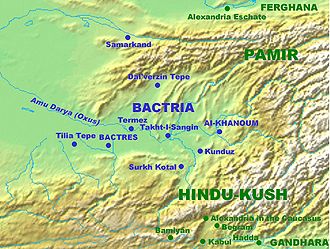
The history of Uzbekistan goes back thousands of years. Early groups, known as Eastern Iranian nomads, created kingdoms in places like Khwarazm, Sogdiana, and Bactria. The area was later part of big empires such as the Achaemenid, Sasanian, and Islamic empires. Cities along the Silk Road became rich and important centers of learning during the Islamic Golden Age. In the 14th century, the Timurid Empire made Samarkand a famous place for science and culture.
Today, Uzbekistan is a secular nation with a semi-presidential government. It has twelve regions, the city of Tashkent, and the autonomous republic of Karakalpakstan. Recently, Uzbekistan has made changes that have improved its ties with neighboring countries and helped it work toward a better future.
The Uzbek economy is changing, with support for local businesses and trade. Uzbekistan is known for producing cotton and creating electricity from power plants and its supplies of natural gas. These efforts have helped the country grow and gain attention from international groups. Uzbekistan is also part of several global organizations, working together for peace and development in the region.
Etymology
The name Uzbekistan might come from words that mean "own master" or "leader." Some think it is named after a leader called Oghuz Khagan. Others believe it comes from a tribe called the Oghuz and a word for leader. A few scholars think it is linked to a ruler named Özbeg Khan.
When Russia ruled the area, the country's name was written in a different way.
History
Main article: History of Uzbekistan
The land that is now Uzbekistan has had many names. The name "Uzbekistan" first appeared in the 16th century. Old names for the area include Transoxiana, Turkestan, and Bukhara. In the 14th century, a famous leader named Tamerlane was born there. He ruled a large empire called the Timurid Empire, which reached from the Black Sea to the Arabian Sea, nearly to Delhi, India.
Prehistory and ancient history
Long ago, many groups of people moved into Central Asia. Nomadic tribes called Scythian people came from the Eurasian Steppe, which includes Uzbekistan today. They built systems to bring water to fields along rivers. This helped important cities like Bukhoro (Bukhara) and Samarqand (Samarkand) grow. By 500 BC, groups such as the Bactrian, Sogdian, and Tokharian lived there.
As trade grew between East Asia and the rest of the world, merchants from Transoxiana became successful. Cities like Bukhara and Samarkand became rich because they were key stops on the Silk Road.
Leaders from far away, such as the Achaemenid emperors Cyrus the Great and Darius the Great, controlled the area around the Amu Darya river. Later, Alexander the Great from Macedonia took over parts of this land. After his time, other groups like the Yuezhi people took control, followed by the Kushan Empire. For many years, different empires, including the Hephthalites and Sassanid Empires, ruled the region.
Medieval history
From the 7th century onward, people brought Islam to Uzbekistan. During this time, many Turkic peoples also began to follow Islam.
In the 8th century, leaders called Arabs took control of Transoxiana, the land between the Amudarya and Syrdarya rivers. Later, new groups like the Karakhanids and their rulers called the Seljuk took over.
In the 13th century, leaders led by Genghis Khan from the Mongol people invaded. Their attacks on cities like Bukhara and Samarkand caused great damage.
After Genghis Khan died in 1227, his empire was divided among his family. Control of Transoxiana stayed with the family of his second son, Chagatai Khan. For many years, the land was peaceful and strong under their rule.
Timurid period
A leader named Timur, also known as Tamerlane, rose to power in the 1380s. Though he was not related to Genghis Khan, Timur took control of Transoxiana and went on to conquer many lands, including parts of Iran, the Caucasus, Mesopotamia, Asia Minor, and areas north of the Aral Sea. He also tried to invade China but died during this attempt in 1405.
Timur brought artists, scholars, and craftsmen from many places to his capital city, Samarkand. This helped create a rich culture. During his time and that of his family, many beautiful buildings were constructed in Samarkand and other cities.
Timur’s grandson, Ulugh Beg, became a famous scientist and astronomer. Writers like Ali-Shir Nava'i also lived during this time.
Uzbek period
After Timur died, his empire split apart. Fighting among his family members caught the attention of Uzbek tribes living north of the Aral Sea. In 1501, these Uzbek tribes invaded Transoxiana. The area was later taken over by leaders from Persia in 1740 and became part of their empire.
Before Russia came, Uzbekistan was divided between two areas: the Emirate of Bukhara and smaller states called khanates in Khiva and Kokand.
Russian conquest
Main article: Russian Turkestan
In the 1800s, the Russian Empire began to move into Central Asia. By 1912, over 200,000 Russians lived in Uzbekistan. This time was called the "Great Game" and lasted from about 1813 until 1907. After the Bolshevik Revolution in 1917, Russia continued to control the area.
Soviet period
Main article: Uzbek Soviet Socialist Republic
By 1920, Russia fully controlled Central Asia, including Uzbekistan, after some people there resisted. On October 27, 1924, the Uzbek Soviet Socialist Republic was formed. During World War II, many soldiers from Uzbekistan fought for the Red Army against Nazi Germany. After the war, Uzbekistan sent soldiers to fight in Afghanistan during the Soviet–Afghan War.
Independence
Uzbekistan announced it would become independent on June 20, 1990. Finally, on August 31, 1991, after a failed attempt to change leaders in Moscow, Uzbekistan declared independence. September 1 is celebrated as National Independence Day. The Soviet Union ended later that year, on December 26.
Islam Karimov, who had been a leader since 1989, became the first president of independent Uzbekistan. After he died in 2016, Shavkat Mirziyoyev, who had been the Prime Minister, took over. He was re-elected in 2021 and continues to lead the country.
Geography and climate
Main article: Geography of Uzbekistan
See also: List of cities in Uzbekistan
Uzbekistan is a large country in Central Asia. It is surrounded by five countries: Kazakhstan to the north, Kyrgyzstan to the northeast, Tajikistan to the southeast, Afghanistan to the south, and Turkmenistan to the southwest. It has no coast or sea nearby.
The country has a hot, dry climate. Most of the land is desert. Summers can be very hot, around 40 °C (104 °F), and winters can be very cold, around −23 °C (−9 °F).
Uzbekistan has deserts, mountains, and woodlands. Focusing on growing cotton has caused problems for the environment, such as pollution and loss of water.
The Aral Sea, once a large lake, has almost disappeared because too much water was taken for farming. This has harmed the land and air around it.
The loss of the Aral Sea has made the soil salty and dirty, especially in Karakalpakstan. Most of the country’s water is used for farming. Uzbekistan also has some oil and gas. The country has had earthquakes in the past.
A dam broke in May 2020, flooding a large area of land.
Air pollution
The air in Uzbekistan has become more polluted over time. This started with local emissions and got worse with industrial activities. The drying up of the Aral Sea has added dust and salt to the air. Today, pollution comes from cars, construction, and heating homes. The capital city, Tashkent, often has dirty air.
Responses to climate change
Uzbekistan’s climate makes it sensitive to changes, especially with water. The country is working on ways to manage risks and help people adapt. Changes in temperature and water are affecting crops like cotton and fruits. The country is also trying to use less energy that pollutes the air, while making sure people have access to health care and technology.
Politics
Main articles: Politics of Uzbekistan and Elections in Uzbekistan
President Shavkat Mirziyoyev leads Uzbekistan. After the country became independent from the Soviet Union in 1991, Islam Karimov was chosen as the first president. Elections for the country's parliament, called the Oliy Majlis, happened many times.
When Karimov passed away in 2016, Mirziyoyev became president and has worked on changes to make the government better.
Foreign relations
Main articles: Foreign relations of Uzbekistan and International organization membership of Uzbekistan
Uzbekistan works with many countries and groups around the world. It joined groups like the United Nations and works to keep peace in its area. The country has had changing relationships with the United States and other nations over the years.
Uzbekistan is part of many important international groups, such as the Shanghai Cooperation Organisation and the United Nations. It is also working towards joining the World Trade Organization.
Recent developments
After Karimov’s passing in 2016, President Mirziyoyev has worked more closely with groups that watch over rights and freedoms. There have been steps to stop forced work on farms, and some rules have been changed to be fairer.
Administrative divisions
Main articles: Regions of Uzbekistan and Districts of Uzbekistan
Uzbekistan is divided into twelve regions, one autonomous republic, and one independent city. These regions are then divided into smaller areas called districts.
| Division | Capital City | Area (km2) | Population (1 January 2024) | Key |
|---|---|---|---|---|
| Andijan Region Uzbek: Андижон вилояти, Andijon Viloyati | Andijan Andijon | 4,303 | 3394,4 | 2 |
| Bukhara Region Uzbek: Бухоро вилояти, Buxoro Viloyati | Bukhara Buxoro | 41,937 | 2044,0 | 3 |
| Fergana Region Uzbek: Фарғона вилояти, Fargʻona Viloyati | Fergana Fargʻona | 7,005 | 4061,5 | 4 |
| Jizzakh Region Uzbek: Жиззах вилояти, Jizzax Viloyati | Jizzakh Jizzax | 21,179 | 1507,4 | 5 |
| Republic of Karakalpakstan Karakalpak: Қарақалпақстан Республикасы, Qaraqalpaqstan Respublikasıʻ Uzbek: Қорақалпоғистон Республикаси, Qoraqalpogʻiston Respublikasi | Nukus No‘kis Nukus | 161,358 | 2002,7 | 14 |
| Kashkadarya Region Uzbek: Қашқадарё вилояти, Qashqadaryo Viloyati | Karshi Qarshi | 28,568 | 3560,6 | 8 |
| Khorezm Region Uzbek: Хоразм вилояти, Xorazm Viloyati | Urgench Urganch | 6,464 | 1995,6 | 13 |
| Namangan Region Uzbek: Наманган вилояти, Namangan Viloyati | Namangan Namangan | 7,181 | 3066,1 | 6 |
| Navoiy Region Uzbek: Навоий вилояти, Navoiy Viloyati | Navoiy Navoiy | 109,375 | 1075,3 | 7 |
| Samarkand Region Uzbek: Самарқанд вилояти, Samarqand Viloyati | Samarkand Samarqand | 16,773 | 4208,5 | 9 |
| Surkhandarya Region Uzbek: Сурхондарё вилояти, Surxondaryo Viloyati | Termez Termiz | 20,099 | 2877,1 | 11 |
| Syrdarya Region Uzbek: Сирдарё вилояти, Sirdaryo Viloyati | Gulistan Guliston | 4,276 | 914,0 | 10 |
| Tashkent City Uzbek: Тошкент, Toshkent Shahri | Tashkent Toshkent | 327 | 3040,8 | 1 |
| Tashkent Region Uzbek: Тошкент вилояти, Toshkent Viloyati | Nurafshon Nurafshon | 15,258 | 3051,8 | 12 |
Largest cities or towns in Uzbekistan | |||||||||
|---|---|---|---|---|---|---|---|---|---|
| Rank | Name | Region | Pop. | ||||||
| 1 | Tashkent | Tashkent | 2,955,700 | ||||||
| 2 | Namangan | Namangan Region | 678,200 | ||||||
| 3 | Samarkand | Samarkand Region | 573,200 | ||||||
| 4 | Andijan | Andijan Region | 468,100 | ||||||
| 5 | Nukus | Karakalpakstan | 310,000 | ||||||
| 6 | Fergana | Fergana Region | 299,000 | ||||||
| 7 | Bukhara | Bukhara Region | 285,000 | ||||||
| 8 | Qarshi | Qashqadaryo Region | 260,000 | ||||||
| 9 | Kokand | Fergana Region | 260,000 | ||||||
| 10 | Margilan | Fergana Region | 242,500 | ||||||
Economy
Main article: Economy of Uzbekistan
Uzbekistan has many natural resources. It mines a lot of gold each year and ranks seventh in the world. The country also has copper and uranium. Uzbekistan makes natural gas and has places where oil and gas could be found.
The economy of Uzbekistan has grown a lot over the years. It has become stronger and more varied. The country grows a lot of cotton, which is very important for its economy. Many people work in agriculture, making things, and providing services.
Uzbekistan has faced economic challenges since it became independent. The government has tried to control the economy, which has sometimes made it hard for foreign businesses to invest. However, the country has grown, especially in technology. The IT sector is growing fast, and Uzbekistan has one of the fastest-growing economies in the world.
Demographics
Main articles: Demographics of Uzbekistan and Uzbeks
As of 2022, Uzbekistan has the largest population of any country in Central Asia. About 36 million people live there. The country has a young population, with about 23% of people younger than 16 years old.
The majority of people in Uzbekistan are Uzbeks, making up about 85% of the population. Other groups include Tajiks, Kazakhs, Karakalpaks, Russians, and Tatars.
Religion
Main article: Religion in Uzbekistan
Most people in Uzbekistan follow Islam. Christianity is practiced by a small group, and there are also people with no religious beliefs and other faiths.
Uzbekistan is a country where the government does not favor any particular religion. After Soviet control ended in 1991, people slowly started to practice their faith more openly again.
Jewish community
Main articles: Uzbek Jews and Bukharian Jews
The Jewish community in Uzbekistan has lived there for many centuries. Today, only a small number of Jews remain in the country, mostly in cities like Tashkent, Bukhara, and Samarkand.
Languages
Main article: Languages of Uzbekistan
The official language of Uzbekistan is Uzbek, which belongs to the Turkic language family. It is written using the Latin alphabet today.
Karakalpak is another official language in the region of Karakalpakstan. Russian is widely used, especially in cities. The Tajik language, a type of Persian, is also spoken in some areas.
Communications
Main article: Communications in Uzbekistan
In Uzbekistan, many people use mobile phones. By 2017, over 24 million people had mobile phones. The biggest mobile phone company is MTS-Uzbekistan, followed by Beeline and UCell.
As of 2019, more than 22 million people used the internet.
Censorship
Censorship in Uzbekistan exists. In 2012, the government made it harder to access the internet by blocking some services. Some groups have criticized this control. Reporters have faced difficulties working in the country since 2005.
Transportation
Main article: Transport in Uzbekistan
Tashkent, the capital of Uzbekistan, has a metro system that began in 1977 and grew after the country became independent in 1991. It is known for being very clean and beautiful, with stations that look fancy. One station even has a space travel theme to celebrate important space achievements.
The city also has trams, buses, and many taxis. Uzbekistan makes modern cars with help from the government and a Korean company. In 2007, a local car maker signed an agreement with a big American car company.
Trains connect many towns in Uzbekistan and nearby countries. In 2011, Uzbekistan opened its first high-speed train between Tashkent and Samarkand.
After Uzbekistan became independent in 1992, the national airline Uzbekistan Airways was created. It helps connect Uzbekistan with the world through flights to many countries. Tashkent International Airport is the biggest airport in the Central Asian region, and several other cities also have airports. The airline works with big airplane companies from Europe and America to keep its fleet modern.
Military
Main article: Armed Forces of the Republic of Uzbekistan
Uzbekistan has the largest armed forces in Central Asia, with around 120,000 servicemen. The military comes from the old Turkestan Military District of the Soviet Army. Most of its equipment is from the Soviet era, with some newer Russian and American additions.
Uzbekistan follows arms control rules from the former Soviet Union and joined the Nuclear Non-Proliferation Treaty as a non-nuclear state. The country works with the U.S. Defence Threat Reduction Agency near Nukus and Vozrozhdeniye Island. Uzbekistan spends about 3.7% of its economy on the military and has received more help for security since 1998.
After the terrorist attacks in the U.S. on September 11, 2001, Uzbekistan allowed the U.S. to use an air base called the Karshi-Khanabad airfield. Later, in 2005, Uzbekistan asked the U.S. to leave, and the last U.S. troops left in November 2005.
In 2006, Uzbekistan joined the Collective Security Treaty Organization (CSTO), but paused its membership in June 2012.
Culture
Main article: Culture of Uzbekistan
See also: Kurash, Islam in Uzbekistan, and Scout Association of Uzbekistan
Uzbekistan has many different ethnic groups and cultures. The Uzbek people are the largest group. Other groups include Russians, Tajiks, Kazakhs, Tatars, and Karakalpaks.
Media
Main article: Mass media in Uzbekistan
Since Uzbekistan became independent in 1991, its media has changed. Television, radio, and newspapers are mostly owned by the government, but the internet is growing.
Music
Main article: Music of Uzbekistan
Central Asian classical music, called Shashmaqam, started in Bukhara in the late 1600s. It has six parts in different musical modes.
Education
Main article: Education in Uzbekistan
Uzbekistan has a high rate of people who can read and write. Students go to school from Monday to Saturday, and schooling ends after 11th grade.
Holidays
See also: Public holidays in Uzbekistan
- 1 January: New Year's Day
- 14 January: Day of Defenders of the Motherland
- 8 March: International Women's Day
- 21 March: Nowruz
- 9 May: Day of Remembrance and Honour
- 1 September: Independence Day
- 1 October: Teachers' Day
- 8 December: Constitution Day
Variable date
- End of Ramadan, Ramazon Hayiti (Eid al-Fitr)
- 70 days later, Qurbon Hayiti (Eid al-Adha)
Cuisine
Main article: Uzbek cuisine
See also: List of Uzbek dishes and Soviet cuisine
Uzbek food uses a lot of grains, so bread and noodles are important. Mutton is popular because there are many sheep. The country’s most famous dish is palov (or plov), made with rice, meat, carrots, and onions. Other common foods include soups, noodle dishes, stuffed pockets, stews, and kebabs. Green tea is the most popular drink.
Sport
Main article: Sport in Uzbekistan
See also: Uzbekistan at the Olympics, Football in Uzbekistan, and Rugby union in Uzbekistan
Before Uzbekistan became independent in 1991, its sports teams were part of the Soviet Union. After independence, Uzbekistan made its own teams for football, rugby, basketball, and futsal.
Football
Football is the most popular sport.
Wrestling
Artur Taymazov won Uzbekistan’s first wrestling medal at the 2000 Summer Olympics.
Boxing
Boxing is very popular. Uzbekistan has won many Olympic medals in boxing.
Ice hockey
Humo Tashkent, a professional ice hockey team, was started in 2019.
Tennis
Tennis became more popular after Uzbekistan became independent in 1991.
Chess
Chess is popular in Uzbekistan. The country has produced world champions.
Other Sports
Other popular sports include basketball, judo, team handball, baseball, taekwondo, and futsal.
UNESCO World Heritage sites
Uzbekistan has five cultural and two natural sites on the UNESCO World Heritage list. The cultural sites are:
- Itchan Kala (Khiva)
- Historic Centre of Bukhara
- Historic Centre of Shakhrisyabz
- Samarkand – Crossroads of Cultures
- Silk Roads: Zarafshan-Karakum Corridor
The natural sites are:
- Western Tien-Shan
- Cold Winter Deserts of Turan
Images
Related articles



This article is a child-friendly adaptation of the Wikipedia article on Uzbekistan, available under CC BY-SA 4.0.
Images from Wikimedia Commons. Tap any image to view credits and license.