Coral reef
A coral reef is an underwater ecosystem built by reef-building corals. Reefs are formed of colonies of coral polyps held together by calcium carbonate. Most coral reefs are built from stony corals, whose polyps cluster in groups.
Coral belongs to the class Anthozoa in the animal phylum Cnidaria, which also includes sea anemones and jellyfish. Unlike sea anemones, corals make hard carbonate exoskeletons that support and protect them. Most reefs grow best in warm, shallow, clear, sunny, and agitated water. Coral reefs first appeared 485 million years ago, at the dawn of the Early Ordovician, replacing the microbial and sponge reefs of the Cambrian.
Sometimes called rainforests of the sea, shallow coral reefs form some of Earth's most diverse ecosystems. They cover less than 0.1% of the world's ocean area, about half the area of France. Yet they are home to at least 25% of all marine species, including fish, mollusks, worms, crustaceans, echinoderms, sponges, tunicates and other cnidarians. Coral reefs flourish in ocean waters that have few nutrients. They are most often found at shallow depths in tropical waters, while deep water and cold water coral reefs exist on smaller scales in other areas.
Shallow tropical coral reefs have declined by 50% since 1950, partly because they are sensitive to water conditions. They face threats from excess nutrients (nitrogen and phosphorus), rising ocean heat content and acidification, overfishing (for example, from blast fishing, cyanide fishing, and spearfishing on scuba), sunscreen use, and harmful land-use practices, including runoff and seeps (for example, from injection wells and cesspools). Coral reefs also provide ecosystem services for tourism, fisheries, and shoreline protection. The yearly global economic value of coral reefs has been estimated at anywhere from US$30–375 billion (1997 and 2003 estimates) to US$2.7 trillion (a 2020 estimate) to US$9.9 trillion (a 2014 estimate).
Further information: Atoll, Fringing reef, and The Structure and Distribution of Coral Reefs
Most coral reefs were formed after the Last Glacial Period, when melting ice raised sea level and flooded continental shelves. Most coral reefs are less than 10,000 years old. As communities settled, the reefs grew upward to keep pace with rising seas, but reefs that rose too slowly could drown without enough light. Coral reefs are also found in deep water away from continental shelves, around oceanic islands and atolls. Most of these islands are volcanic, while others formed where plate movements lifted the deep ocean floor, a tectonic process. In The Structure and Distribution of Coral Reefs, Charles Darwin described his idea of how atoll reefs form, an idea he came up with during the voyage of the Beagle. He thought that uplift and subsidence of Earth's oceanic crust formed atolls in three stages. A fringing reef grows around an extinct volcanic island, then becomes a barrier reef as the island and ocean floor sink, and finally becomes an atoll reef. Darwin predicted that a bedrock base, the remains of the old volcano, would lie under each lagoon, and later research supported this. Corals thrive in the tropics where the water is churned, and they can live only within a limited depth range, starting just below low tide.
Where the bottom is rising, fringing reefs grow along the coast, but coral raised above sea level dies. If the land sinks slowly, reefs keep pace by growing upward, forming barrier reefs and atolls. A rapidly sinking bottom can overwhelm coral growth, a problem called coral drowning, similar to sea level rise. Corals that rely on zooxanthellae can die when the water becomes too deep for their symbionts to photosynthesize well, because there is less light. The shape, or geomorphology, of a reef depends mainly on the substrate it rests on and how sea level has changed over time. The roughly 20,000-year-old Great Barrier Reef shows how reefs formed on continental shelves. As sea level rose, corals grew over hills that had become continental islands, forming cays and reefs. Reef material is mostly coral skeletons, along with aragonite, shell fragments, and coralline algae such as the genus Halimeda, which help the reef resist storms. In the geologic past, reefs were at their peak in the Middle Cambrian (Ma 513–501), the Devonian, and the Carboniferous, when extinct Rugosa corals built them, and in the Late Cretaceous and Neogene, when order Scleractinia corals did. Reefs in the Early Cambrian were built by algae and archaeocyathids, animals related to sponges, and rudists built some Late Cretaceous reefs. Measurements of oxygen in Porites skeletons help scientists study past sea surface temperature and paleoclimate.
Types
Scientists have found more reef types than the three that Darwin first described: a fringing reef around a volcanic island, which becomes a barrier reef and then an atoll. Some sources list four main types: the fringing reef, barrier reef, atoll, and platform reef, which is also called a bank or table reef. Many other shapes, such as the patch reef, do not fit neatly into these groups.
Main article: Fringing reef
A fringing reef, also called a shore reef, is attached directly to a shore or sits beside it across a narrow, shallow lagoon. It is the most common reef type. Fringing reefs follow coastlines and can stretch for many kilometres, but they are usually less than 100 metres wide. The fringing reefs of the Red Sea are "some of the best developed in the world." A barrier reef is separated from land by a deep channel or lagoon. It is much rarer than a fringing reef because it takes much longer to form. The best known and largest example is the Australian Great Barrier Reef. Other major examples include the Mesoamerican Barrier Reef System and the New Caledonian Barrier Reef. Barrier reefs are also found near Providencia, Mayotte, the Gambier Islands, Kalimantan, Sulawesi, New Guinea, and the Louisiade Archipelago.
Platform reefs can form on the continental shelf or in the open ocean, wherever the seabed rises close enough to the surface. Some platform reefs of the Mascarenes are several thousand kilometres from the mainland. Unlike fringing and barrier reefs, they grow in all directions and often take an oval or elongated shape. Atolls are a more or less circular barrier reef that surrounds a lagoon with no central island. They usually form from fringing reefs around volcanic islands, which slowly wear away and sink below the sea.
Main article: Atoll
Atolls are common in the South Pacific, such as in the Caroline Islands, the Cook Islands, French Polynesia, the Marshall Islands, and Micronesia. They are also found in the Indian Ocean, including the Maldives, where the whole country is made of 26 atolls. Smaller forms include the patch reef, the ribbon reef, the drying reef, and the microatoll, which can help scientists study past sea levels. Low, sandy cays can also form on coral reefs, and some seamounts and guyots form when a coral reef on a volcanic island sinks.
Zones
Coral reefs have three main zones: the fore reef, the reef crest, and the back reef, which is also called the reef lagoon. The zones connect with each other, and reef life and ocean movement let seawater, sediment, nutrients, and marine life pass between them. Most coral reefs are in water less than 50 m deep. Some grow on tropical continental shelves, such as the Great Barrier Reef, where cool, nutrient-rich upwelling does not happen. Others are in deep ocean water around islands or as atolls, such as in the Maldives.
Scientists also describe six zones, though most reefs have only some of them. The reef surface is the shallowest part, where surge and tides act. Waves shoal over shallow areas, keeping the water stirred up, which corals need. The off-reef floor is a shallow, usually sandy sea floor where seagrass meadows grow, and reef fish search there for food. The reef drop-off is a steep edge where fish find shelter and plankton floats nearby. The reef face, or forereef, is often the most diverse zone, with epiphytic algae providing food and spur and groove formations moving sediment downslope. The reef's shape keeps changing as patches of algae, sessile invertebrates, and bare rock and sand shift from year to year, and tropical storms can knock out large sections.
See also: List of reefs
Coral reefs cover about 284,300 km2 (109,800 sq mi), just under 0.1% of the ocean's surface. Most of them, about 91.9%, are in the Indo-Pacific region, which includes the Red Sea, the Indian Ocean, Southeast Asia and the Pacific. Atlantic and Caribbean reefs make up 7.6%. Reefs in shallow water grow only between about 30° north and 30° south of the equator. Most reefs prefer water of 26–27 °C (79–81 °F). Reefs in the Persian Gulf can survive temperatures from 13 °C (55 °F) to 38 °C (100 °F), and 37 kinds of stony corals live around Larak Island. Deep-water coral lives in colder, deeper water, as far north as Norway.
Coral reefs are rare along the west coasts of the Americas and Africa because of upwelling and cold coastal currents, the Humboldt, Benguela, and Canary Currents. Corals are seldom found along much of South Asia, from Chennai to the Bangladesh and Myanmar borders. They are also rare along northeastern South America and Bangladesh, where fresh water from the Amazon and Ganges Rivers flows into the sea.
Some significant coral reefs include:
- The Great Barrier Reef, the largest, off Queensland, Australia
- The Mesoamerican Barrier Reef System, the second largest, stretching from Isla Contoy at the tip of the Yucatán Peninsula to the Bay Islands of Honduras
- The New Caledonia Barrier Reef, the second longest double barrier reef
- The Andros, Bahamas Barrier Reef, the third largest, between Andros and Nassau
- The Florida Reef Tract, the largest continental US reef, running from Soldier Key in Biscayne Bay to the Dry Tortugas
- Blake Plateau, which has the world's largest known deep-water coral reef. Its discovery was announced in January 2024.
- Pulley Ridge in Florida, the deepest photosynthetic coral reef
- Many reefs around the Maldives
- The Philippines coral reef area, the second largest in Southeast Asia
- The Raja Ampat Islands's Southwest Papua province, which have the highest known marine diversity
- Bermuda, home to the northernmost coral reef system, which is near the Gulf Stream
- The world's northernmost individual coral reef, in British Columbia, Canada
- The world's southernmost coral reef, at Lord Howe Island, off the east coast of Australia
Coral
Main article: Coral
When alive, corals are colonies of small animals held inside calcium carbonate shells. A coral head is made of many individual animals called polyps, which form many different shapes. Polyps are usually tiny, but they can range from a pinhead to 12 inches (30 cm) across. Reef-building or hermatypic corals live only in the photic zone (above 70 m), where enough sunlight reaches through the water. Coral polyps cannot make their own food from sunlight, so they have a partnership with tiny algae (dinoflagellates) of the genus Symbiodinium, often called zooxanthellae. These partners live inside the polyps and provide glucose, glycerol, and amino acids that feed the polyp. In return, as an example of mutualism, the corals shelter the algae and supply the carbon dioxide they need. Corals get up to 90% of their nutrients this way, and reefs grow much faster in clear water, which lets in more sunlight.
Coral that loses many of its zooxanthellae turns white and is said to be bleached. Unless this is corrected, it can kill the coral. There are eight clades of these algae, grouped into phylotypes. Phylotype A is found more often in shallow water and can produce mycosporine-like amino acids that are UV-resistant, using a derivative of glycerin to absorb UV light. Clades B, C, and D are found in deeper water, and clade D has been observed to tolerate high temperatures well. Reefs grow as polyps and other organisms deposit calcium carbonate, pushing the top of the coral head upward and outward. Waves, grazing fish such as parrotfish, sea urchins, sponges, and other forces act as bioeroders, breaking coral skeletons into fragments. Coral species take shapes named for everyday objects, such as wrinkled brains, cabbages, table tops, antlers, wire strands, and pillars.
Corals reproduce both sexually and asexually. Reproductive cells are found on mesenteries, membranes inside the polyp. Some adult corals have both male and female parts, while others are only male or only female. Many corals release eggs and sperm into the water at the same time, usually at night, and the timing depends on the time of year, water temperature, and the tide. The released eggs develop into tiny larvae called planulae. The larvae may use sounds and chemicals to find a place to settle, and only a few of them successfully attach to the surface and grow.
Gallery of reef-building corals
Fluorescent coral Spiral wire coral | Fluorescent coral |
Other reef builders
Corals are the most prodigious reef-builders. However, many other organisms living in the reef community contribute skeletal calcium carbonate in the same manner as corals. These include coralline algae, some sponges and bivalves. Reefs are always built by the combined efforts of these different phyla, with other organisms leading reef-building in other geological periods.
Coralline algae
Main article: Coralline algae
See also: Coralline rock
Coralline algae are essential contributors to reef structure. They grow more slowly than corals, but they handle rough waves well. They help build a protective crust on the parts of the reef that face the strongest waves, such as the front facing the open ocean. In places where corals struggle to grow, coralline algae can be the main builders of a reef made of algae.
Sponges
Main article: Sponge reef
Sea sponges can also build reefs. Hexactinellid sponges form reefs off the coast of British Columbia, southeast Alaska, and Washington state. Reefs found in Hecate Strait, British Columbia, have grown up to 7 kilometres long and 20 metres high. These sponge reefs were first identified in the Middle Triassic (245–208 million years ago). They reached their greatest size in the late Jurassic (201–145 million years ago), when a broken-up reef system 7,000 km long stretched across the northern Tethys and North Atlantic basins. Later, they declined and were thought to be extinct until existing reefs were discovered in 1987–1988.
Archaeocyatha, an extinct group of sponges, were the first reef-building animals on Earth. They are an index fossil for the Lower Cambrian worldwide. Stromatoporoidea was another extinct group of reef-building sponges. Unlike corals, they usually settled on soft surfaces, so their "reefs" formed only a single layer rather than a many-tiered structure of built-up skeletons.
Bivalves
Main article: Bivalve reef
Oyster reefs are dense groups of oysters living together in colonies. Other regional names for these structures include oyster beds and oyster banks. Oyster larvae need a hard surface to attach to, such as the shells of old or dead oysters. So reefs can grow over time as new larvae settle on older oysters. Crassostrea virginica was once common in Chesapeake Bay and along shores bordering the Atlantic coastal plain until the late nineteenth century. Ostrea angasi is a type of flat oyster that has also formed large reefs in South Australia.
Rudists were an extinct group of bivalves that were major reef-builders during the Cretaceous. By the mid-Cretaceous, they had become the main tropical reef-builders, outnumbering stony corals. Ocean temperatures and salt levels were higher then than they are today. Corals are sensitive to these conditions, and this may have helped rudist reefs succeed.
Gastropods
Some gastropods, like the family Vermetidae, are sessile and cement themselves to the surface beneath them, helping to build reefs.
Darwin's paradox
In 1842, Darwin wrote in The Structure and Distribution of Coral Reefs that reefs grew in some tropical areas but not others, and that the largest, strongest corals grew where the surf was roughest. Today, scientists call a puzzle about reefs "Darwin's paradox." Tropical waters contain very few nutrients, yet a coral reef can flourish like an "oasis in the desert." Reefs support over one-quarter of all marine species, with food webs in which predator fish eat forage fish, which eat zooplankton. All food webs depend on plants, which serve as primary producers. Coral reefs typically produce 5–10 grams of carbon per square meter per day (gC·m−2·day−1) biomass.
Warm tropical surface water is separated from cooler water below by a thermocline, so nutrients from decaying matter, such as phosphorus and potassium, do not easily rise back to the surface. Tiny phytoplankton that drift in the water column need nutrients to grow, and they use sunlight for photosynthesis and carbon fixation. Reefs help solve the puzzle by recycling nutrients. Corals catch zooplankton at night, and filter feeders such as sponges, which consume about 60% of the phytoplankton that drifts by in the Red Sea, release nutrients that corals can use. Rough coral surfaces break up still water and let corals reach passing nutrients. Internal waves can act as nutrient pumps, bringing cool, nutrient-rich water to the surface. Other helpers include Codium isthmocladum, Cyanobacteria that provide nitrates through nitrogen fixation, and nearby seagrass meadows and mangrove forests, which supply nutrients and provide sediment where they can take root.
Biodiversity
Coral reefs are some of the world's most productive ecosystems. They have complex and varied marine habitats that support many kinds of living things, and tube sponges attract cardinal fishes, glassfishes and wrasses. Fringing reefs just below low tide level, mangrove forests at high tide, and sea grass meadows protect one another. The reefs shield the mangroves and sea grass from strong currents and waves that could damage them or erode the sediments they grow in. In return, the mangroves and sea grass protect the coral from large amounts of silt, fresh water and pollutants. Reefs are home to over 4,000 species of fish, as well as seabirds, sponges, cnidarians (which include some corals and jellyfish), worms, crustaceans such as cleaner shrimp, spiny lobsters and crabs, mollusks including cephalopods, echinoderms such as starfish, sea urchins and sea cucumbers, sea squirts, sea turtles and sea snakes. Aside from humans, mammals are rare on reefs, though visiting cetaceans such as dolphins are the main exception. Many animals use the great number of hiding places, or refuges, in a reef, and these help make the reef's biomass and diversity so high. Different species may use the same hideouts at different times of day. Nighttime predators such as cardinalfish and squirrelfish hide during the day, while damselfish, surgeonfish, triggerfish, wrasses and parrotfish hide from eels and sharks. Coral reefs also have a very high variety of microorganisms compared to other environments.
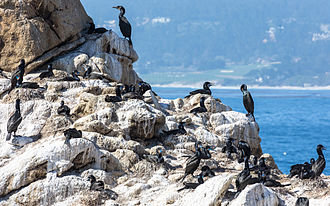
Reefs are always at risk from algae. Overfishing and extra nutrients from the land can help algae outcompete and kill the coral. Sewage and chemical fertilizer runoff can raise nutrient levels, and this runoff can carry nitrogen and phosphorus, which make algae grow too much. The algae can smother the coral by taking away its oxygen, which can weaken the coral and leave it open to disease. Algae are found in many surveyed coral locations, including turf algae, coralline algae and macro algae. Some sea urchins, such as Diadema antillarum, eat these algae and can lower this risk. Other sea urchins, Dotidae and sea slugs also eat seaweed, and researchers are studying Tripneustes gratilla as a way to slow the spread of invasive algae. Sea sponges are also essential to reef communities, with 420 species in Indonesian reefs, 486 in Indian waters and 1500 in Australia's Great Barrier Reef. Sponges recycle food through the sponge loop, turning dissolved organic matter into food for other creatures, and some sponges with photosynthesizing endosymbionts produce up to three times more oxygen. Sponges also offer homes to small animals and some fish. Some nudibranchia and sea anemones eat sponges, and hawksbill sea turtles feed on them as well. Many small animals, called "cryptofauna," live in or on the coral itself. Some bore into it through bioerosion, including sponges, bivalve mollusks and sipunculans, while crustaceans and polychaete worms live on the reef. Coral reefs also provide homes for many seabirds, and Midway Atoll in Hawaii supports nearly three million, including about 1.5 million Laysan albatross and one-third of the world's black-footed albatross. The short-tailed albatross is the rarest, with fewer than 2,200 surviving. Other animals also depend on reefs. Sea snakes feed on fish and their eggs, marine birds such as herons, gannets, pelicans and boobies feed on reef fish, and some reptiles, including monitor lizards, the marine crocodile and Laticauda colubrina, visit reefs.
Ecosystem services
Coral reefs provide ecosystem services to tourism, fisheries, and coastline protection. Their global economic value has been estimated at between US$29.8 billion and $375 billion per year, and about 500 million people benefit from them. Destroying one square kilometre of coral reef over 25 years has been estimated to cost between $137,000 and $1,200,000. To help manage coastal reefs, the World Resources Institute (WRI) developed tools to calculate the value of reef tourism, shoreline protection, and fisheries, working with five Caribbean countries. Published working papers covered St. Lucia, Tobago, Belize, and the Dominican Republic. The Belize study estimated the value of reef and mangrove services at $395–559 million a year. Bermuda's coral reefs provide economic benefits worth, on average, $722 million per year, based on six key ecosystem services, according to Sarkis et al. (2010).
Coral reefs protect shorelines by absorbing wave energy, and many small islands would not exist without them. Reefs can reduce wave energy by 97%, which helps prevent loss of life and property damage. Coastlines protected by reefs are also more stable against erosion. Reefs can reduce waves as well as, or better than, artificial structures built for coastal defence, such as breakwaters. Restoring reefs is much cheaper than building artificial breakwaters in tropical areas. Reefs also support fishing. About six million tons of fish are taken from coral reefs each year, and well-managed reefs yield an average of 15 tons of seafood per square kilometre annually. Southeast Asia's coral reef fisheries alone yield about $2.4 billion in seafood each year.
Threats
See also: Environmental issues with coral reefs, Coral bleaching, and Environmental threats to the Great Barrier Reef
Coral reefs have faced many threats since they first appeared 485 million years ago. These include disease, predation, invasive species, bioerosion by grazing fish, algal blooms, and geologic hazards. Today, human activities bring new dangers. From 2009 to 2018, coral reefs around the world declined by 14%. Activities such as coral mining, bottom trawling, and digging canals into islands and bays can harm ocean life if they are not done carefully. Other problems include blast fishing, overfishing, and marine pollution, such as the banned anti-fouling biocide tributyltin. These activities are rare in wealthy countries but continue where there are few environmental protections. Some chemicals in sunscreens may also affect corals, and placing tourist activities on offshore platforms has been shown to limit the spread of coral disease.
Greenhouse gas emissions cause a wider threat by warming the sea and raising sea levels. This leads to widespread coral bleaching and the loss of coral cover. Climate change brings more frequent and severe storms and changes ocean currents, which can destroy reefs. Ocean acidification also makes it harder for corals to build their skeletons, although corals can adapt their calcifying fluids to changes in seawater pH and carbonate levels to reduce the harm. In 2011, two researchers suggested that marine animals today face the same combined stresses that occurred during the end-Permian extinction. They said corals were especially at risk because of their shells. When corals are stressed, they "bleach" by releasing their colorful zooxanthellate endosymbionts. Corals with Clade C zooxanthellae are usually harmed by heat, while those with the tougher Clade A or D are usually resistant, as are hardy genera like Porites and Montipora. An El Niño event happens every 4 to 7 years and causes some reefs with heat-sensitive corals to bleach, especially in 1998 and 2010. Reefs that survive a severe bleaching become resistant to future heat-related bleaching through rapid directional selection, and similar fast adaptation may help them survive global warming. A large study of the Jarvis Island coral community, which faced 10 El Niño-linked bleaching events from 1960 to 2016, found that the reef recovered from near-total death after severe events.
Protection
Marine protected areas (MPAs) are areas set aside to protect ocean and estuary areas. They aim to support responsible fishery management and habitat protection. A study of a few MPAs in Indonesia, the Philippines, and Papua New Guinea found no clear difference from unprotected sites, and MPAs can sometimes cause local conflict. In the Phoenix Islands Protected Area, MPAs bring income to local people, at about the same level as without controls. Overall, MPAs can protect local reefs, but they need clear management and enough funding. A report on Caribbean reefs says coral decline may be reduced or reversed if overfishing stops, especially of species key to coral reefs, such as parrotfish. People should also reduce their pressure on reefs and limit sewage flowing into the sea, perhaps by restricting coastal building and tourism. Healthier reefs have large parrotfish populations, and countries that protect parrotfish and sea urchins often ban fish trapping and spearfishing. Together these steps create "resilient reefs." Protecting networks of diverse reefs, not only climate refugia, helps keep genetic diversity, which corals need to adapt to new climates.
Reefs can be protected by being named a biosphere reserve, marine park, national monument, or world heritage site. Belize's barrier reef, Sian Ka'an, the Galapagos islands, the Great Barrier Reef, Henderson Island, Palau, and Papahānaumokuākea Marine National Monument are all world heritage sites. In Australia, the Great Barrier Reef is protected by the Great Barrier Reef Marine Park Authority and many laws, and a Coral Reef Resilience Action Plan uses adaptive management strategies. On Ahus Island in Manus Province, Papua New Guinea, people have long restricted fishing in six areas of their reef lagoon. They allow line fishing but not net or spear fishing, and both biomass and fish sizes are much larger than where fishing is unrestricted. Since rising CO2 in the air causes ocean acidification, which harms coral reefs, many countries have laws to reduce greenhouse gases, and many land laws limit deforestation. In the United States, the Clean Water Act pushes state governments to monitor and limit polluted run-off.
Restoration
See also: Aquaculture of coral, Artificial reef, and Restoration ecology
Coral reefs have been dying in many places around the world, so coral reef restoration has grown in importance over the past several decades. Pollution, warmer oceans, extreme weather, and overfishing can all harm corals. Researchers started developing coral restoration as a new field in the 1970s and 1980s. One popular method is coral aquaculture, also called coral farming or coral gardening. Coral seeds are grown in nurseries and then replanted on the reef, which skips the early stages when corals are most likely to die. Coral farmers work for conservation and also for income. Coral nurseries have become the most common restoration method. Older methods moved whole sections of coral to new places, but this still meant taking corals from existing reefs. Technology is also being used. The Reef Restoration and Adaptation Program tested a robotic camera that uses computer vision to count and track young corals. The project is led by QUT and is meant for use during yearly spawning events.
Restoration also involves adding materials, called substrates, where corals can settle. These include discarded tires, sunken ships, subway cars, and concrete shapes such as reef balls. Reefs even grow on oil rigs. Corals can be attached to these materials with metal pins, superglue, or milliput. The Biorock process runs low-voltage electrical currents through seawater so that minerals build up on steel structures, forming aragonite, the same mineral found in natural reefs. Corals grow quickly on these structures. Near the anode and cathode, the water has a high pH, which slows the growth of competing algae. In Hawaii, the University of Hawaii moved corals from a crowded boat channel near Oahu to a nearby site, with help from United States Army divers. The channel led to the Hawaii Institute of Marine Biology on Coconut Island. The moved corals grew well. Scientists have also studied heat-tolerant corals. Ideas include using genetically modified bacteria or naturally heat-tolerant coral partners to help corals survive warmer water. In Jamaica, Hurricane Allen in 1980 and an unknown disease damaged reefs and sea urchins. Algae then took over, and sea urchins helped corals recover in some areas. Scientists at Mote Marine Laboratory developed a method that cuts corals into smaller pieces, which grow faster. They also found that these pieces can fuse together, which may help coral heads grow in just 2 years rather than the typical 25 to 75 years.

Quiz time!
5 questions about Coral reef
What is a coral reef?
Pictures
Keep exploring


This article is a child-friendly adaptation of the Wikipedia article on Coral reef, available under CC BY-SA 4.0.
Images from Wikimedia Commons. Tap any image to view credits and license.