 Safekipedia
Culture of Spain
Adapted from Wikipedia · Discoverer experience
The culture of Spain is shaped by its Western roots, its connections with other European cultures, its long-standing Catholic religious tradition, and the many different national and regional identities within the country. Spanish culture includes rich areas like literature, music, art, cuisine, and everyday traditions, beliefs, and ways of living.
Spanish culture has had a big effect beyond Spain. It is an important part of most Latin American cultures and also influences the culture of the Philippines. This makes Spanish culture not just important for Spain, but for many other places around the world as well.
History
The ancient peoples of Spain included Celts, Iberians, Celtiberians, Tartessians, Vascones, as well as Phoenician, Greek and Carthaginian colonies. Spain was later fully conquered by Rome, becoming a province of the Roman Empire (Hispania). The Romans left a strong influence on Spain’s culture, religion, politics, laws, and way of life, which still shapes modern Spain today.
After the Romans, the Visgoths brought together Hispania and kept many Latin and Christian traditions. During the Early Middle Ages, Muslim groups brought new ideas, but these were not fully part of Spanish culture. This led to long conflicts and finally to the Christian Reconquista, which helped shape Spain’s culture. In 1492, after the Reconquista ended, Spain became a unified Roman Catholic country. The land’s Mediterranean and Atlantic location also helped form its culture and influenced places like the culture of Latin America during the colonization of the Americas.
Today, about 85% of the words in the Spanish language come from Latin, similar to other languages of Spain except Basque. Ancient Greek also added many words, mostly through Latin. Spanish also includes many words from Arabic and other Romance languages, while the influence from Basque and Celtic languages is still being discussed.
Spain has one of the highest numbers of UNESCO World Heritage Sites in the world.
Literature
Main article: Spanish literature
Spanish literature is made up of stories and poems written in the Spanish language by writers from Spain and Latin America. It includes poetry, stories, and novels.
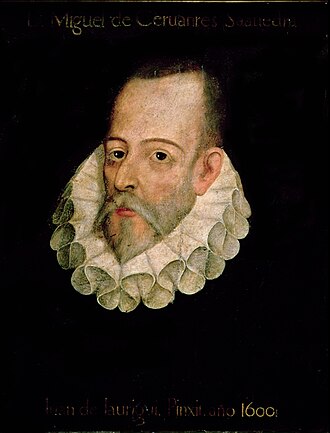
Some important works are the Cantar de Mio Cid, one of the oldest Spanish stories. Another famous book is La Celestina, published in 1499, which helped start a new way of writing. Lazarillo de Tormes began a special type of story called the picaresque novel, where a clever character shows the problems in society. The most famous book is probably Don Quixote by Miguel de Cervantes, which many think is one of the greatest books ever written.
Painting and sculpture
Main article: Spanish art
Spain has many famous painters from a special time called the Spanish Golden Age. Great artists from this time include El Greco, Bartolomé Esteban Murillo, Diego Velázquez, and Francisco Goya. In more recent times, Pablo Picasso became very well known for his unique paintings and sculptures. Other important artists from Spain are Salvador Dalí, Juan Gris, Joan Miró, and Antoni Tàpies.
Architecture
Main article: Spanish architecture
See also: Romanesque architecture in Spain, Spanish Gothic architecture, Spanish Renaissance architecture, and Spanish Baroque architecture
Spain's architecture has many styles from different times. Long ago, big stone buildings were built by ancient groups. Later, the Romans built wonderful cities and structures like bridges and water systems.
During the Middle Ages, many beautiful buildings were created, such as mosques and palaces. Over the years, new styles appeared, including designs from the Renaissance and Baroque periods. In more recent times, modern buildings like the famous La Sagrada Família by Gaudí have become important examples of Spain's rich building history.
Cinema
Main article: Cinema of Spain
Spanish cinema has gained great recognition for its creativity and skill. Famous directors like Luis Buñuel and Pedro Almodóvar have brought Spanish films to the world. Other successful directors include Segundo de Chomón, Florián Rey, Luis García Berlanga, Carlos Saura, Julio Medem, and Alejandro Amenábar.
Spain's film industry supports local movies with help from television stations. Big films like Alatriste, Pan's Labyrinth, and Volver have become very popular. Some Spanish films are made in English, such as The Machinist, The Others, and Goya's Ghosts.
| Year | Total number of spectators (millions) | Spectators of Spanish cinema (millions) | Percentage | Film | Spectators (millions) | Percentage over the total of Spanish cinema |
|---|---|---|---|---|---|---|
| 1996 | 96.1 | 10.4 | 10.8% | Two Much (Fernando Trueba) | 2.1 | 20.2% |
| 1997 | 107.1 | 13.9 | 14.9% | Airbag (Juanma Bajo Ulloa) | 2.1 | 14.1% |
| 1998 | 119.8 | 14.1 | 13.3% | Torrente, the stupid arm of the law (Santiago Segura) | 3 | 21.3% |
| 1999 | 131.3 | 18.1 | 16% | All About My Mother (Pedro Almodóvar) | 2.5 | 13.8% |
| 2000 | 135.3 | 13.4 | 11% | Commonwealth (Álex de la Iglesia) | 1.6 | 11.9% |
| 2001 | 146.8 | 26.2 | 17.9% | The Others (Alejandro Amenábar) | 6.2 | 23.8% |
| 2002 | 140.7 | 19.0 | 13.5% | The Other Side of the Bed (Emilio Martínez Lázaro) | 2.7 | 14.3% |
| 2003 | 137.5 | 21.7 | 15.8% | Mortadelo & Filemón: The Big Adventure (Javier Fesser) | 5.0 | 22.9% |
| 2004 | 143.9 | 19.3 | 13.4% | The Sea Inside (Alejandro Amenábar) | 4.0 | 20.7% |
| 2005 | 126.0 | 21.0 | 16.7% | Torrente 3: The Protector (Santiago Segura) | 3.6 | 16.9% |
| 2006 (provisional) | 67.8 | 6.3 | 9.3% | Volver (Pedro Almodóvar) | 1.8 | 28.6% |
Languages
Main article: Languages of Spain
Spain has many languages. The main language is Spanish, which is the official language of the whole country. Spanish is also widely spoken around the world, especially in Latin America, and it is one of the official languages of the United Nations.
Other languages are also official in some parts of Spain. Catalan is official in places like the Balearic Islands, Catalonia, and the Valencian Community. Galician is official in Galicia. Basque is official in the Basque autonomous community and part of Navarre. There are also smaller languages spoken in Spain, like Aranese in Val d'Aran, and Astur-Leonese in some areas.
Religion
Main article: Religion in Spain
Most people in Spain, about 56%, follow the Roman Catholic religion. A smaller group, around 3%, belong to other religions. The rest, about 39%, do not follow any particular religion.
Holidays
Main article: Public holidays in Spain
Spain has many special holidays and festivals. One important holiday is "Semana Santa" (Holy Week), celebrated the week before Easter. During this time, there are big parades and other events. People also have patronal festivals to honor their local saints. These festivals include decorating streets, building bonfires, fireworks, parades, bullfights, and beauty contests.
Another famous celebration is the "festival of San Fermin," held every July in Pamplona. During this festival, bulls are let loose in the streets, and people run ahead of them to the bullring.
Sports
Main article: Sport in Spain
Association football is the most popular sport in Spain. Famous teams include Real Madrid and Barcelona, which are known around the world. The top league, called La Liga, has had many great players like Lionel Messi and Cristiano Ronaldo. The Spain national football team has won big tournaments, including the FIFA World Cup in 2010.
Other popular sports in Spain are basketball, tennis, cycling, padel, and handball.
Cuisine
Main article: Spanish cuisine
Spanish food has many influences. It comes from old Roman traditions and also from people called the Moors who lived in part of Spain for a long time. Spain also brought new foods like potatoes, tomatoes, peppers, and beans from the Americas to Europe. These foods help make Spanish cooking special compared to other foods from around the Mediterranean Sea.
The most important ingredient in Spanish cooking is olive oil, because Spain grows a lot of olives. But butter or fat from animals is also used, especially in the north. In many places, people still cook meals by hand using fresh ingredients from local markets. This happens more in the countryside than in big cities like Barcelona or Madrid, but even in cities, you can buy food from small shops.
A fun custom in Spain is enjoying small dishes called tapas with a drink like sherry, wine, or beer. In some areas, tapas are given for free with a drink. Almost every bar offers something to eat when you buy a drink. Another popular treat is churro with hot chocolate to dip them in. There are many places called "churrerías" where you can find this, like the famous Chocolatería San Ginés in Madrid.
Spanish food varies a lot from one region to another, but there are some common ways of cooking, such as using olive oil, a mix called sofrito to start dishes, and lots of garlic and onions. People often drink wine with meals, serve bread at almost every meal, and eat salad in the summer. For dessert, they might have fruit or something from the dairy, with cakes and tarts saved for special events.
Education
Main article: Education in Spain
Education in Spain is organized in a way that gives local areas a lot of control. Each region helps decide how schools work and how money is spent on education.
In 2020, important rules for schools were set by a law called LOMCE. Compared to other European countries, Spain has fewer students in public schools, with many attending private schools that get money from the government.
Obligatory education
Optional education: Bachillerato
Bachillerato is a set of classes for students who want to go to college after finishing their basic education.
- Common Subjects are in red
- Optional Subjects are in pink
- Modality Subjects are in blue
- Technology Via are in yellow
- Natural Sciences Via are in green
- Humanities Via are in olive
- Social Sciences Via are in brown
- Arts Via are in beige
| Age | Name | |
|---|---|---|
| Primary Education | 5-6 | 1st grade |
| 6-7 | 2nd Grade | |
| 8-9 | 3rd Grade | |
| 9-10 | 4th Grade | |
| 10-11 | 5th Grade | |
| 11-12 | 6th Grade | |
| Secondary School | ||
| 12-13 | 1º ESO | |
| 13-14 | 2º ESO | |
| 14-15 | 3º ESO | |
| 15-16 | 4º ESO |
| Natural Sciences/Technology | Humanities and Social Sciences | Arts |
|---|---|---|
| Physics | History/Geography | |
| Chemistry | Economy | Technical drawing |
| Biology | Maths | Painting |
| Maths | Latin | Sculpture |
| Technology | Ancient Greek | Audiovisual |
| Technical drawing | Art History | |
| 2nd Foreign Language French, German, Italian | ||
| Communication and Information Technologies | ||
| Psychology | ||
| Spanish Language | ||
| Philosophy | ||
| First Foreign Language | ||
| Physical Education only the first year | ||
| Autonomical Languages (only in the autonomies where is spoken) Catalan, Valencian, Basque, Galician | ||
| Religion only the first year | ||
Cultural diplomacy
Spain works to build strong relationships with other countries, especially in Europe and Latin America, through its cultural diplomacy. It uses special strategies, like the "Marca España," to show its culture and values to the world.
Spain also joins groups like the Organization of Ibero-American States and the Ibero-American General Secretariat to work together on cultural projects. One important tool Spain uses is the Instituto Cervantes. This non-profit group helps share Spain's culture, language, and ideas with people all around the world.
Nationalisms and regionalisms
Main article: Nationalisms and regionalisms of Spain
Many parts of Spain have a strong sense of identity. Even areas that don't always feel strongly connected to Spain have added a lot to the country's culture.
The Basque Country and Catalonia are two places where many people feel a deep connection to their local identity. Some people in these areas wish to be separate from Spain, though most now work toward their goals without using force.
Other regions like Galicia, Andalusia, Asturias, Navarre, Aragon, Balearic Islands, and Valencia also have their own local pride, though fewer people there seek separation. There are also discussions in León about possibly separating from Castile and León.
Spain's government is organized into different areas called autonomous communities, designed to help balance these different identities.
Historical Spanish clothing
Historical Spanish clothing shows the rich traditions of Spain’s past. Beautiful dresses from the 18th century were made of silk, and some from 1802 included metal details. Artists like John Bagnold Burgess captured these styles in paintings, such as one from 1878 called La Señorita.
Images
Related articles



This article is a child-friendly adaptation of the Wikipedia article on Culture of Spain, available under CC BY-SA 4.0.
Images from Wikimedia Commons. Tap any image to view credits and license.