 Safekipedia
Democratic Party (United States)
Adapted from Wikipedia · Discoverer experience
The Democratic Party is one of the two major political parties in the United States. Founded in 1828, it is the world's oldest active political party. It sits on the center to center-left of the political spectrum and has played a key role in shaping American politics for nearly two centuries.
Throughout its history, the Democratic Party has gone through many changes. In the early days, it supported ideas like Jacksonian democracy and agrarianism. Over time, it became known for supporting many progressive reforms, especially during the Great Depression when Franklin D. Roosevelt led the country with his New Deal programs. In recent years, the party has focused on issues like abortion rights, gun control, LGBTQ rights, and taking action on climate change.
Today, the Democratic Party is most popular among groups such as urban voters, college graduates, African Americans, women, and younger voters. The party continues to work on important issues, including improving healthcare, supporting unions, and taking a strong stand in international affairs, like supporting aid to Ukraine.
History
Main article: History of the Democratic Party (United States)
The Democratic Party was first organized in the late 1820s with the election of Andrew Jackson of Tennessee, making it the world's oldest active political party. It was built by Martin Van Buren, who gathered politicians from every state to support Jackson.
Since 1896, the party has usually been to the left of the Republican Party on economic issues. Democrats have been more liberal on civil rights since 1948. On foreign policy, both parties have changed positions several times.
Background
The Democratic Party evolved from the group organized by Thomas Jefferson and James Madison. This earlier group favored a weak federal government, states' rights, and agrarian interests. After the War of 1812, the only national political party was this group, which split along regional lines. The era of one-party rule lasted from 1816 until 1828, when Andrew Jackson became president. Jackson and Martin Van Buren formed a new Democratic Party. In the 1830s, the Whig Party became the main rival to the Democrats.
19th century
Jacksonian Era
The earlier group split over choosing a successor to President James Monroe. The faction that supported Jeffersonian principles, led by Andrew Jackson and Martin Van Buren, became the modern Democratic Party. Jacksonians believed the people's will had prevailed. They became the nation's first well-organized national party.
U.S. Civil War
The Democrats split over slavery, with Northern and Southern candidates in the election of 1860. This led to a Republican victory and Abraham Lincoln becoming the 16th president. As the American Civil War broke out, Northern Democrats were divided. Most supported President Lincoln and the Republicans in the election of 1864.
Reconstruction and Redemption
The Democrats benefited from white Southerners' resentment after the war. After Reconstruction ended in the 1870s, the South became known as the "Solid South," voting Democratic. Although Republicans won most presidential elections, the Democrats remained competitive. The party was led by pro-business leaders who opposed imperialism and supported the gold standard.
20th century
Progressive era
Agrarian Democrats overthrew earlier leaders in 1896 and nominated William Jennings Bryan for president. Bryan lost to Republican William McKinley.
The Democrats took control of the House in 1910, and Woodrow Wilson won election as president in 1912 and 1916. Wilson led Congress to pass new progressive laws. The party was weakened by issues such as prohibition in the 1920s.
1930s–1960s and the rise of the New Deal coalition
The Great Depression began in 1929 under Republican president Herbert Hoover. Democrats controlled the House nearly uninterrupted from 1930 until 1994 and won most presidential elections until 1968. Franklin D. Roosevelt, elected in 1932, introduced federal programs called the New Deal. These programs regulated business, supported labor unions, and provided aid to the unemployed and farmers.
1960s–1980s and the collapse of the New Deal coalition
Issues after World War II included the Cold War and the civil rights movement. Republicans attracted conservatives and white Southerners from the Democratic coalition. John F. Kennedy, elected in 1960, introduced social programs and supported civil rights. His successor, Lyndon B. Johnson, passed the Civil Rights Act of 1964 and the Great Society programs.
The Vietnam War divided the Democrats. President Johnson committed troops to Vietnam, leading to widespread protests. Republican Richard Nixon won the 1968 election. Nixon resigned in 1974 due to the Watergate scandal. Democrat Jimmy Carter won the 1976 election but lost to Ronald Reagan in 1980.
1990s and Third Way centrism
With Republicans under Ronald Reagan, Democrats sought new ways to respond. Bill Clinton was elected president in 1992. The party adopted a synthesis of economic policies with cultural liberalism. Clinton was re-elected in 1996 but was impeached in 1998. His vice president, Al Gore, lost the 2000 election to George W. Bush.
21st century
In the 2006 elections, Democrats regained control of both the House and the Senate. In 2008, Barack Obama won the Democratic Party's nomination and was elected the first African-American president. Under Obama, the party moved forward with reforms including an economic stimulus package and healthcare changes.
In the 2010 midterm elections, the Democratic Party lost control of the House. In 2012, Obama was re-elected, but the party remained in the minority in the House and lost the Senate in 2014. After the 2016 election of Donald Trump, the Democratic Party became the opposition party.
In November 2020, Democratic candidate Joe Biden defeated Trump to win the presidential election. Biden's running mate, Kamala Harris, became the first female and first person of African and South Asian descent to become vice president. During Biden's presidency, the party adopted a more progressive economic agenda. In the 2022 midterm elections, Democrats outperformed expectations and expanded their Senate majority.
In July 2024, Biden withdrew from the presidential election. Vice President Kamala Harris became the first black woman to be nominated by a major party but was defeated in the 2024 election by Donald Trump.
As of 2026, Democrats hold many state governorships and legislatures, and three of the nine current U.S. Supreme Court justices were appointed by Democratic presidents. The Democratic Party is the largest party in the U.S. and the third largest in the world. Sixteen Democrats have served as president of the United States.
Name and symbols
The Democratic Party, one of the oldest political parties in the world, uses several symbols. The most famous is the donkey, which started as a nickname for Andrew Jackson by his opponents but was embraced by the party. Cartoons by Thomas Nast helped make the donkey a lasting symbol.
Since 2010, the party’s main logo has been a blue letter "D" inside a circle. Before that, other symbols like the rooster were used in some states. The colors red, white, and blue are common in U.S. politics, with blue often representing the Democratic Party since the year 2000. The party also has traditional songs and events, such as the Jefferson-Jackson Day dinner and the song "Happy Days Are Here Again".
Structure
National committee
Main article: Democratic National Committee
Further information: List of Democratic National Conventions and List of chairs of the Democratic National Committee
The Democratic National Committee (DNC) helps plan and support Democratic campaigns. It focuses more on organizing and strategy than on making laws. In presidential elections, it oversees the Democratic National Convention. Since February 1, 2025, the DNC has been led by Ken Martin.
State parties
Main article: List of state parties of the Democratic Party (United States)
Each state has its own committee that plans campaigns and helps choose candidates. These committees are made up of elected members and often include local leaders. They work with the DNC to support Democratic goals. There are also committees in U.S. territories like American Samoa, Guam, and Virgin Islands, as well as groups for Americans living outside the United States.
Major party committees and groups
Further information: Democratic Party (United States) organizations
The Democratic Congressional Campaign Committee (DCCC) helps Democrats running for the House, led by Suzan DelBene from Washington. The Democratic Senatorial Campaign Committee (DSCC), led by Senator Gary Peters from Michigan, supports Senate races. There are also groups for state legislatures, governors, and big-city mayors.
The DNC supports groups like the College Democrats of America (CDA), which works with students, and Democrats Abroad, for Americans living overseas. The Young Democrats of America (YDA) and the High School Democrats of America (HSDA) aim to get young people involved in supporting Democratic candidates.
Political positions
The Democratic Party is seen as a center to center-left political party in the United States. Many of its main ideas and groups would be considered more middle-of-the-road by international standards. The party includes both more middle-of-the-road groups and left-leaning groups.
The Democratic Party's ideas come from a mix of different groups in the United States, including racial minorities and well-educated white voters. The party's views are more varied than those of the Republican Party. This diversity comes partly from the unique regional characteristics of the United States.
The Democratic Party's modern ideas include support for equal rights, voting rights, and minority rights. The party has a history of supporting social equality and equal opportunity. Democratic presidents have signed important laws to end racial segregation and support equal rights.
The party also supports a strong social safety net, including programs like Social Security and universal health care. Democrats believe in a progressive tax system and support higher minimum wages, equal opportunity employment, and public education. They also support infrastructure development and clean energy investments.
Democrats believe in protecting the environment and addressing climate change. They support renewable energy and policies to reduce greenhouse gas emissions. The party also supports expansion of conservation lands and encourages open space and rail travel.
In foreign policy, the Democratic Party supports liberal internationalism and has taken tough stances against countries like China and Russia. The party has historically been a strong supporter of Israel but has also expressed concerns about the treatment of Palestinians.
Factions
Main article: Factions in the Democratic Party (United States)
The Democratic Party started by supporting farmers and rural areas. Over time, it began to support more liberal ideas, especially in Northern states. The party has historically stood for farmers, workers, and minority groups, opposing uncontrolled business practices and supporting fair taxes.
In the 1930s, the party started pushing for social programs to help poor people. Before this, it had more conservative financial views. The party was strong in the Southern United States until the Civil Rights Act of 1964. In foreign policy, internationalism was important from 1913 to the mid-1960s. Labor unions and African Americans were major influences for liberal ideas, and environmentalism became important in the 1970s.
Even after the New Deal, the party kept some conservative financial views until the 2010s. The Southern conservative part of the party shrank after the Civil Rights Act and mostly disappeared in the 2010s. The party still has support from African Americans and urban areas in the South.
Today, the Democratic Party is made up of centrists, liberals, and progressives. In 2019, a study found that among Democratic voters, 47% were liberal or very liberal, 38% were moderate, and 14% were conservative or very conservative. Political experts say the Democratic Party is less united than the Republican Party because it has many different groups.
The party has had less support from voters without college degrees in the 21st century. This change started with white voters in the South and Midwest, and later included all voters without college degrees, except for African Americans.
Democrats have consistently won voters with graduate degrees since the 1990s. Since the 2010s, the party has gained more support from white voters with college degrees. The party still has very strong support from African Americans but has lost some support among other minority groups, like Hispanics, Native Americans, and Asian Americans.
Liberals
See also: Modern liberalism in the United States
Modern liberals are a big part of the Democratic base. In 2018, 91% of American liberals supported the Democratic candidate. White-collar college-educated professionals used to be mostly Republican, but by the early 2000s, they became a key part of the Democratic Party.
As of 2026, 35% of American voters identify as "conservative" or "very conservative", 33% as "moderate", and 28% as "liberal" or "very liberal". For Democrats, 8% identified as conservative, 32% as moderate, and 59% as liberal.
Most liberals support moving toward universal health care. They also support diplomacy over military action, stem cell research, same-sex marriage, stricter gun control, environmental protection laws, and preserving abortion rights. They see immigration and cultural diversity as positive and support cultural pluralism. Most liberals oppose increasing military spending and mixing church and state. As of 2020, the three most significant labor groups in the Democratic coalition were the AFL–CIO and Change to Win labor federations and the National Education Association, a large teachers' union. Important issues for labor unions include supporting unionized manufacturing jobs, raising the minimum wage, and promoting social programs like Social Security and Medicare.
Liberals are strongly linked to high education levels. According to the Pew Research Center, 49% of liberals are college graduates, the highest of any group. This group has grown quickly since the late 1990s. Liberals include many academics and professionals.
Moderates
See also: New Democrats (United States), New Democrat Coalition, and Blue Dog Coalition
Moderate Democrats, or New Democrats, are a centrist group in the Democratic Party. They became important after Republican George H. W. Bush won the 1988 presidential election. Bill Clinton, who ran as a New Democrat, won the presidential elections in 1992 and 1996. They are economically liberal and "Third Way" supporters who were important for about 20 years until Obama's presidency. They are represented by groups like the New Democrat Network and the New Democrat Coalition.
The Blue Dog Coalition formed during the 104th Congress to give Democratic members from conservative districts a united voice after the Democrats lost Congress in the 1994 elections. By the late 2010s and early 2020s, the coalition focused more on centrism. The Democratic Leadership Council, a nonprofit that supported centrist ideas, disbanded in 2011.
Some Democratic leaders identify as centrists, including former president Bill Clinton, former vice president Al Gore, Senator Mark Warner, Kansas governor Laura Kelly, former senator Jim Webb, and President Joe Biden. The New Democrat Network supports socially liberal and fiscally moderate Democrats and is linked to the New Democrat Coalition in the House. Annie Kuster chairs the coalition, and former senator and president Barack Obama described himself as a New Democrat. In the 21st century, some former Republican moderates switched to the Democratic Party.
Progressives
See also: Congressional Progressive Caucus, Progressivism in the United States, Social democracy, and Democratic Socialists of America
Progressives are the most left-leaning group in the party. They support strong rules for businesses, social programs, and workers' rights. In 2014, Senator Elizabeth Warren outlined key progressive ideas: tougher rules for big companies, affordable education, scientific and environmental efforts, net neutrality, higher wages, equal pay for women, workers' bargaining rights, defending social programs, same-sex marriage, immigration reform, and access to reproductive healthcare. The Congressional Progressive Caucus is led by Greg Casar of Texas and includes many representatives and senators.
Senator Bernie Sanders is often seen as a leader of the progressive movement. He ran for president in 2016 and 2020. Other progressive members include the Squad.
Demographics
Main article: Demographics of the Democratic Party (United States)
In the 2024 presidential election, the Democratic Party performed best among voters who were upper income, lived in urban areas, were college graduates, identified as Atheist, Agnostic, or Jewish, were African Americans, LGBTQ+, or unmarried. In particular, Kamala Harris's two strongest demographic groups in the 2024 presidential election were African Americans (86–13%) and LGBTQ+ voters (86–12%).
Support for civil rights in the 1960s by Democratic leaders helped increase the party's support within the African-American community. African Americans have consistently voted between 85% and 95% Democratic since the 1960s, making African Americans one of the largest of the party's supporter groups.
According to research, 78.4% of Democrats in the United States Congress were Christian. However, most white evangelical and Latter-day Saint Christians support the Republican Party. The party also receives strong support from non-religious voters.
Younger Americans have tended to vote mainly for Democratic candidates in recent years, particularly those under the age of 30.
Geographically, the party is strongest in the Northeastern United States, parts of the Great Lakes region and Southwestern United States, and the West Coast. The party is also very strong in major cities, regardless of region.
The Democratic Party's support is strongly linked with increased population density. In the 2024 presidential election, the party received higher support as population density increased.
Income and wealth have changed in their effect on voting for the Democratic Party. In the 2024 presidential election, Democratic nominee Kamala Harris did better among higher-income voters than lower-income voters for the first time in modern American political history.
Higher educational attainment is strongly linked to higher support for the Democratic Party. In the 2024 presidential election, support for Kamala Harris increased as educational attainment increased among white voters.
Democratic presidents
Further information: List of presidents of the United States
See also: Republican Party (United States) § Republican presidents
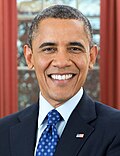
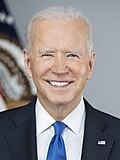
As of 2025, 16 presidents of the United States have been members of the Democratic Party.


Election results
See also: Party divisions of United States Congresses
See also: List of United States Democratic Party presidential tickets
| House of Representatives | President | Senate | ||||||
|---|---|---|---|---|---|---|---|---|
| Election year | No. of seats won | +/– | No. of seats won | +/– | Election year | |||
| 1950 | 235 / 435 |  28 28 | Harry S. Truman | 49 / 96 | 5 | 1950 | ||
| 1952 | 213 / 435 | 22 | Dwight D. Eisenhower | 47 / 96 | 2 | 1952 | ||
| 1954 | 232 / 435 |  19 19 | 49 / 96 | 2 | 1954 | |||
| 1956 | 234 / 435 | 2 | 49 / 96 |  0 0 | 1956 | |||
| 1958 | 283 / 437 | 49 | 64 / 98 | 15 | 1958 | |||
| 1960 | 262 / 437 | 21 | John F. Kennedy | 64 / 100 | 1 | 1960 | ||
| 1962 | 258 / 435 | 4 | 66 / 100 | 3 | 1962 | |||
| 1964 | 295 / 435 | 37 | Lyndon B. Johnson | 68 / 100 | 2 | 1964 | ||
| 1966 | 248 / 435 | 47 | 64 / 100 | 3 | 1966 | |||
| 1968 | 243 / 435 | 5 | Richard Nixon | 57 / 100 | 5 | 1968 | ||
| 1970 | 255 / 435 | 12 | 54 / 100 | 3 | 1970 | |||
| 1972 | 242 / 435 | 13 | 56 / 100 | 2 | 1972 | |||
| 1974 | 291 / 435 | 49 | Gerald Ford | 60 / 100 | 4 | 1974 | ||
| 1976 | 292 / 435 | 1 | Jimmy Carter | 61 / 100 | 0 | 1976 | ||
| 1978 | 277 / 435 | 15 | 58 / 100 | 3 | 1978 | |||
| 1980 | 243 / 435 | 34 | Ronald Reagan | 46 / 100 | 12 | 1980 | ||
| 1982 | 269 / 435 | 26 | 46 / 100 | 1 | 1982 | |||
| 1984 | 253 / 435 | 16 | 47 / 100 | 2 | 1984 | |||
| 1986 | 258 / 435 | 5 | 55 / 100 | 8 | 1986 | |||
| 1988 | 260 / 435 | 2 | George H. W. Bush | 55 / 100 | 1 | 1988 | ||
| 1990 | 267 / 435 | 7 | 56 / 100 | 1 | 1990 | |||
| 1992 | 258 / 435 | 9 | Bill Clinton | 57 / 100 | 1 | 1992 | ||
| 1994 | 204 / 435 | 54 | 47 / 100 | 10 | 1994 | |||
| 1996 | 207 / 435 | 3 | 45 / 100 | 2 | 1996 | |||
| 1998 | 211 / 435 | 4 | 45 / 100 | 0 | 1998 | |||
| 2000 | 212 / 435 | 1 | George W. Bush | 50 / 100 | 5 | 2000 | ||
| 2002 | 204 / 435 | 7 | 49 / 100 | 2 | 2002 | |||
| 2004 | 202 / 435 | 2 | 45 / 100 | 4 | 2004 | |||
| 2006 | 233 / 435 | 31 | 51 / 100 | 6 | 2006 | |||
| 2008 | 257 / 435 | 21 | Barack Obama | 59 / 100 | 8 | 2008 | ||
| 2010 | 193 / 435 | 63 | 53 / 100 | 6 | 2010 | |||
| 2012 | 201 / 435 | 8 | 55 / 100 | 2 | 2012 | |||
| 2014 | 188 / 435 | 13 | 46 / 100 | 9 | 2014 | |||
| 2016 | 194 / 435 | 6 | Donald Trump | 48 / 100 | 2 | 2016 | ||
| 2018 | 235 / 435 | 41 | 47 / 100 | 1 | 2018 | |||
| 2020 | 222 / 435 | 13 | Joe Biden | 50 / 100 | 3 | 2020 | ||
| 2022 | 213 / 435 | 9 | 51 / 100 | 1 | 2022 | |||
| 2024 | 215 / 435 | 2 | Donald Trump | 47 / 100 | 4 | 2024 | ||
| Election year | Presidential ticket | Votes | Vote % | Electoral votes | +/– | Result | |
|---|---|---|---|---|---|---|---|
| Presidential nominee | Running mate | ||||||
| 1828 | Andrew Jackson | John C. Calhoun | 642,553 | 56.0 | 178 / 261 | 178 | Won |
| 1832 | Martin Van Buren | 701,780 | 54.2 | 219 / 286 | 41 | Won | |
| 1836 | Martin Van Buren | Richard Mentor Johnson | 764,176 | 50.8 | 170 / 294 | 49 | Won |
| 1840 | None | 1,128,854 | 46.8 | 60 / 294 | 110 | Lost | |
| 1844 | James K. Polk | George M. Dallas | 1,339,494 | 49.5 | 170 / 275 | 110 | Won |
| 1848 | Lewis Cass | William O. Butler | 1,223,460 | 42.5 | 127 / 290 | 43 | Lost |
| 1852 | Franklin Pierce | William R. King | 1,607,510 | 50.8 | 254 / 296 | 127 | Won |
| 1856 | James Buchanan | John C. Breckinridge | 1,836,072 | 45.3 | 174 / 296 | 80 | Won |
| 1860 | Stephen A. Douglas | Herschel V. Johnson | 1,380,202 | 29.5 | 12 / 303 | 162 | Lost |
| 1864 | George B. McClellan | George H. Pendleton | 1,812,807 | 45.0 | 21 / 233 | 9 | Lost |
| 1868 | Horatio Seymour | Francis Preston Blair Jr. | 2,706,829 | 47.3 | 80 / 294 | 59 | Lost |
| 1872 | Horace Greeley | Benjamin G. Brown | 2,834,761 | 43.8 | 69 / 352 | 11 | Lost |
| 1876 | Samuel J. Tilden | Thomas A. Hendricks | 4,288,546 | 50.9 | 184 / 369 | 115 | Lost |
| 1880 | Winfield Scott Hancock | William H. English | 4,444,260 | 48.2 | 155 / 369 | 29 | Lost |
| 1884 | Grover Cleveland | Thomas A. Hendricks | 4,914,482 | 48.9 | 219 / 401 | 64 | Won |
| 1888 | Allen G. Thurman | 5,534,488 | 48.6 | 168 / 401 | 51 | Lost | |
| 1892 | Adlai Stevenson I | 5,556,918 | 46.0 | 277 / 444 | 109 | Won | |
| 1896 | William Jennings Bryan | Arthur Sewall | 6,509,052 | 46.7 | 176 / 447 | 101 | Lost |
| 1900 | Adlai Stevenson I | 6,370,932 | 45.5 | 155 / 447 | 21 | Lost | |
| 1904 | Alton B. Parker | Henry G. Davis | 5,083,880 | 37.6 | 140 / 476 | 15 | Lost |
| 1908 | William Jennings Bryan | John W. Kern | 6,408,984 | 43.0 | 162 / 483 | 22 | Lost |
| 1912 | Woodrow Wilson | Thomas R. Marshall | 6,296,284 | 41.8 | 435 / 531 | 273 | Won |
| 1916 | 9,126,868 | 49.2 | 277 / 531 | 158 | Won | ||
| 1920 | James M. Cox | Franklin D. Roosevelt | 9,139,661 | 34.2 | 127 / 531 | 150 | Lost |
| 1924 | John W. Davis | Charles W. Bryan | 8,386,242 | 28.8 | 136 / 531 | 9 | Lost |
| 1928 | Al Smith | Joseph T. Robinson | 15,015,464 | 40.8 | 87 / 531 | 49 | Lost |
| 1932 | Franklin D. Roosevelt | John Nance Garner | 22,821,277 | 57.4 | 472 / 531 | 385 | Won |
| 1936 | 27,747,636 | 60.8 | 523 / 531 | 51 | Won | ||
| 1940 | Henry A. Wallace | 27,313,945 | 54.7 | 449 / 531 | 74 | Won | |
| 1944 | Harry S. Truman | 25,612,916 | 53.4 | 432 / 531 | 17 | Won | |
| 1948 | Harry S. Truman | Alben W. Barkley | 24,179,347 | 49.6 | 303 / 531 | 129 | Won |
| 1952 | Adlai Stevenson II | John Sparkman | 27,375,090 | 44.3 | 89 / 531 | 214 | Lost |
| 1956 | Estes Kefauver | 26,028,028 | 42.0 | 73 / 531 | 16 | Lost | |
| 1960 | John F. Kennedy | Lyndon B. Johnson | 34,220,984 | 49.7 | 303 / 537 | 230 | Won |
| 1964 | Lyndon B. Johnson | Hubert Humphrey | 43,127,041 | 61.1 | 486 / 538 | 183 | Won |
| 1968 | Hubert Humphrey | Edmund Muskie | 31,271,839 | 42.7 | 191 / 538 | 295 | Lost |
| 1972 | George McGovern | Sargent Shriver | 29,173,222 | 37.5 | 17 / 538 | 174 | Lost |
| 1976 | Jimmy Carter | Walter Mondale | 40,831,881 | 50.1 | 297 / 538 | 280 | Won |
| 1980 | 35,480,115 | 41.0 | 49 / 538 | 248 | Lost | ||
| 1984 | Walter Mondale | Geraldine Ferraro | 37,577,352 | 40.6 | 13 / 538 | 36 | Lost |
| 1988 | Michael Dukakis | Lloyd Bentsen | 41,809,074 | 45.6 | 111 / 538 | 98 | Lost |
| 1992 | Bill Clinton | Al Gore | 44,909,806 | 43.0 | 370 / 538 | 259 | Won |
| 1996 | 47,401,185 | 49.2 | 379 / 538 | 9 | Won | ||
| 2000 | Al Gore | Joe Lieberman | 50,999,897 | 48.4 | 266 / 538 | 113 | Lost |
| 2004 | John Kerry | John Edwards | 59,028,444 | 48.3 | 251 / 538 | 15 | Lost |
| 2008 | Barack Obama | Joe Biden | 69,498,516 | 52.9 | 365 / 538 | 114 | Won |
| 2012 | 65,915,795 | 51.1 | 332 / 538 | 33 | Won | ||
| 2016 | Hillary Clinton | Tim Kaine | 65,853,514 | 48.2 | 227 / 538 | 105 | Lost |
| 2020 | Joe Biden | Kamala Harris | 81,283,501 | 51.3 | 306 / 538 | 79 | Won |
| 2024 | Kamala Harris | Tim Walz | 75,017,613 | 48.3 | 226 / 538 | 80 | Lost |
Images
Related articles



This article is a child-friendly adaptation of the Wikipedia article on Democratic Party (United States), available under CC BY-SA 4.0.
Images from Wikimedia Commons. Tap any image to view credits and license.