 Safekipedia
Freedom of the City
Adapted from Wikipedia · Discoverer experience
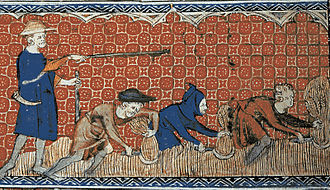
The Freedom of the City (or Borough in some parts of the UK) is linked to old ideas from medieval times about "free status". Back then, special documents called charters helped separate freemen from people who served a feudal lord. This idea of being free existed even before modern towns were created. In those early days, ceremonies to give someone freedom of the town were very important. They showed that the person had special rights, like being allowed to trade and own land, and to be safe within the town walls.
Today, giving someone the honorary freedom of a city or town is mostly a symbolic gesture. Local governments in many places give this honour to people who have done something amazing for the community, or to visitors who are very important or respected. This tradition comes from the old practice of freeing people from serfdom, but it still continues in countries like the United Kingdom, United States, Ireland, Australia, Canada, and New Zealand. Now, being called a "freeman" doesn’t give any special rights.
Sometimes, this honour is also given to military groups that have earned the trust of a city. In this case, it is called the Freedom of Entry. This lets the military march through the city and shows the strong connection between the soldiers and the people living there. In the past, a small gold box called a "freedom box" might be given to remember the occasion, but this is rare today. In some countries, like the United States, important people might instead receive the Key to the City, which is a similar symbolic award. Other US cities may give an Honorary Citizenship with just a certificate.
Entitlement to civil privileges
United Kingdom
Before changes in laws in 1832, having the freedom of a city or town let people vote for representatives in Parliament. Later laws in 1835 changed this so that all property owners could vote, not just freemen. Even after these changes, freemen kept their shared private property. Today, cities and towns can give an honorary freedom to people who have done great service for the area.
Different places have different rules for who can become a freeman. Some allow family members of current freemen, while others require completing an apprenticeship. In some cities, freemen have special rights, like grazing animals on certain lands.
Freedom of the City of Belfast
People who have received this honor include athlete Mary Peters, actor Kenneth Branagh, and Prime Minister Winston Churchill.
Freedom of the City of London
The Freedom of the City of London has a long history, first recorded in 1237. Today, people can become freemen through family ties, apprenticeships, or special nominations. New freemen join in a ceremony where they receive a guide for living honorably and a certificate. Their children often get preference when applying to certain schools.
While freemen once had special rights like driving animals over bridges, these are now mostly symbolic. However, these events still happen sometimes to raise money for charities. For example, people have led sheep across bridges to support various good causes over the years.
Republic of Ireland
In Ireland, the freedom of a city is usually given to important visitors or national leaders. Freemen in places like Dublin have old privileges, such as voting in certain elections or bringing goods to sell without extra taxes.
Canada
In Canada, freedom of the city is a special honor given to military units. For example, The Calgary Highlanders (10th Canadians) hold parades to remember important battles.
See also: York § Freedom of the City
For Freedom awarded specifically in Dublin, see Freedom of the City of Dublin
Key to the city
See also: List of Keys to the City in the United States and List of Keys to the City in Canada
For other uses, see Key to the City (disambiguation).
In some countries, such as the United States, a special ornamental key called the "key to the city" is given to important visitors, residents, or others the city wants to honor. This tradition is similar to an older practice and carries a special meaning. It reminds us of medieval cities with walls that were guarded during the day and locked at night. The key shows that the person is welcome to come and go as a trusted friend of the city's people.
In cities in the Netherlands, Belgium, and Germany, the key to the city is given to the leader of the carnival celebrations. During this time, the mayor steps aside, and the carnival leader takes over until the end of the celebration. Today, this passing of the key is mostly a symbolic way to mark the start and end of the carnival.
Similar traditions exist in some festivals in Latin America (like in the Rio Carnival), where the festival's leader receives the key to the city at the start of the festivities.
As part of the yearly Gasparilla Pirate Festival in Tampa, Florida, a fun event is held where costumed pirates ask the mayor to give up the key to the city in a playful ceremony.
In Canada, big cities such as Toronto, Vancouver, and Montreal may give a key to the city to important business leaders, musicians, and political leaders. In 2016, the Canadian artist Drake received a key to the city of Toronto from the mayor John Tory. In Calgary, instead of a key, important visitors are given a special cowboy hat and asked to say one of two oaths to become honorary Calgarians.
Military privilege
Freedom of the City is an ancient honour given to military groups. It allows them to march into the city with drums beating, flags flying, and fixed bayonets.
This tradition started in ancient Rome, where the city's edge, called the "pomerium", was considered sacred. Important leaders and generals were not allowed to enter it. However, they could enter once a year to celebrate a big victory, called a triumph. During these celebrations, soldiers would wear regular clothes and leave their weapons outside for safety reasons.
Similar rules were made in many European cities during the Middle Ages to keep people safe. Soldiers had to camp outside the city walls in winter. The Freedom of the City was a special honour given only to troops trusted by the local people, either for brave actions or because they were well-known.
Today, this freedom is just a ceremony. It is usually given to military units with a long history in the area to thank them for their service. The ceremony often includes a happy parade through the city.
Images
Related articles




This article is a child-friendly adaptation of the Wikipedia article on Freedom of the City, available under CC BY-SA 4.0.
Images from Wikimedia Commons. Tap any image to view credits and license.