
NASA Astronaut Group 3
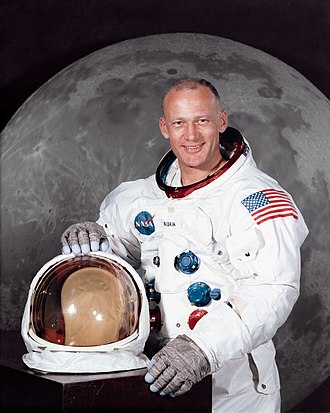
NASA Astronaut Group 3, also called "The Fourteen," was a team of fourteen astronauts chosen by NASA to help with the Gemini and Apollo programs. The Apollo spacecraft needed three people, so more astronauts were needed. NASA announced their choice in October 1963. Sadly, four of them died in training before they could go to space: Theodore Freeman, Charles Bassett, and C. C. Williams in airplane crashes, and Roger Chaffee in the Apollo 1 fire. The ten who survived all flew on Apollo missions. Five of them also flew on Gemini missions: David Scott, Gene Cernan, Michael Collins, Richard Gordon, and Buzz Aldrin.
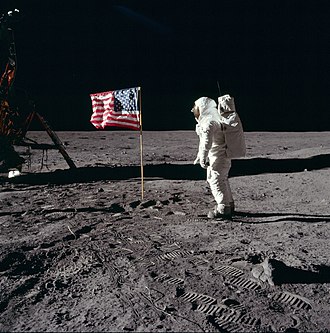
Aldrin, Alan Bean, Cernan, and Scott walked on the Moon, while Bill Anders, Collins, and Gordon flew around the Moon but did not land. Seven of the astronauts came from the United States Air Force, four from the United States Navy, one from the United States Marine Corps, and two were civilians who had military experience: Walter Cunningham and Rusty Schweickart. All of them were men, and all were married except Williams, who was the first astronaut who was not married.
This group was special because they did not all need to be test pilots. Instead, they could have 1,000 hours of flying a jet aircraft. The astronauts learned a lot about science and technology to get ready for possible trips to the Moon. They also went on trips to learn about geology and how to survive in different places.
Background
The launch of the Sputnik 1 satellite by the Soviet Union on October 4, 1957, began a big competition called the Space Race. This race pushed the United States to create a new agency called NASA. NASA started Project Mercury to send people into space. The first group of astronauts, called the "Mercury Seven", was announced in 1959.
When Yuri Gagarin from the Soviet Union became the first person to orbit Earth in 1961, the United States set an even bigger goal: to send someone to the Moon by the end of the decade, called Project Apollo. In 1962, NASA announced they were looking for a second group of astronauts for Project Gemini. By 1963, NASA realized they would need even more astronauts for all the planned Apollo missions, so they began looking for a third group.
Selection criteria
Most of the rules for choosing astronauts stayed the same as before. Candidates needed to be U.S. citizens, no taller than 6 feet, and have a degree in engineering or science. They also had to be recommended by their employer.
There were two small changes this time. While being a test-pilot was still a good thing, it wasn’t required anymore. Instead, having 1,000 hours flying jet-aircraft was okay. Also, the maximum age for candidates was lowered so they had to be less than 34 years old by June 30, 1963.
Selection process
NASA needed more astronauts for its space missions, so they formed a panel to choose new ones. The panel included famous astronauts and a test pilot. Hundreds of people applied, and many went through tests to see if they could handle the job. These tests included checking their hearts, running, and other challenges to see how they would do in space.
Finally, the panel interviewed the best candidates. Thirteen people were chosen, but one more was added to make it a lucky number. On October 18, 1963, NASA announced the new astronauts, who were nicknamed "The Fourteen."
Demographics
NASA selected fourteen astronauts for the Gemini and Apollo programs in October 1963, known as "The Fourteen." Seven were from the United States Air Force, including Edwin "Buzz" Aldrin and Michael Collins. Four were from the United States Navy, such as Alan Bean and Gene Cernan. One was from the United States Marine Corps, and two were civilians.
At the time they were chosen, all were married except for Clifton Williams, who was the first bachelor astronaut. Most had children, with the number ranging from one to six. They were slightly taller and heavier on average than earlier astronaut groups, and their flying experience was a bit less. Educationally, many had advanced degrees, with some working on doctorates. All the astronauts in this group were male and white. Although some women and an African-American pilot, Ed Dwight, applied, they were not selected at this time.
Group members
The NASA Astronaut Group 3, also called "The Fourteen," was a team of fourteen astronauts chosen by NASA. They were selected to help with the Gemini and Apollo missions. Because the Apollo spacecraft needed three people, NASA needed more astronauts. NASA announced this group in October 1963.
Training and activities
The fourteen astronauts, known as "The Fourteen," learned many important skills to prepare for space travel. They studied topics like astronomy, aerodynamics, computers, and space medicine in class for 240 hours. They also went on trips to places like the Grand Canyon to learn about rocks and earth science.
Each astronaut was given a special area to study, like mission planning or spacecraft controls, to help the team. They were split into two groups: one for the Apollo project, led by astronaut Gordon Cooper, and another for the Gemini project, led by Neil Armstrong.
Pictures
Keep exploring




This article is a child-friendly adaptation of the Wikipedia article on NASA Astronaut Group 3, available under CC BY-SA 4.0.
Images from Wikimedia Commons. Tap any image to view credits and license.