 Safekipedia
Vinča culture
Adapted from Wikipedia · Discoverer experience
The Vinča culture, also called the Turdaș culture or Vinča-Turdaș culture, was a Neolithic archaeological culture in Southeast Europe that lived between 5400 and 4500 BC. It got its name from the place where it was first found, called Vinča-Belo Brdo, a big old settlement in what is now Serbia. This place was discovered by a scientist named Miloje Vasić in 1908.
What makes the Vinča culture special is the way people lived and the things they made, like dark, shiny pots. They were very good at farming, which helped many people live in big towns—some of the biggest in Europe at that time! Even though these towns were far apart, they shared special items and ideas.
The Vinča people also made many small statues of animals and people, and they created special signs called Vinča symbols. Some think these symbols might be one of the first ways people tried to write things down. Even though they are not usually called part of the Copper Age, the Vinča culture had the first known example of changing copper ore into metal.
Geography and demographics
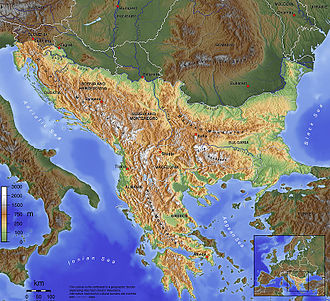
The Vinča culture lived in a region of Southeastern Europe, mainly in modern-day Serbia and Kosovo, but also in parts of Hungary, Romania, Bulgaria, Croatia, Bosnia, Montenegro and North Macedonia.
During this time, farming communities grew larger. Vinča settlements were much bigger than those of other cultures from the same period. One of the largest settlements was Vinča-Belo Brdo, near Belgrade in Serbia, covering a large area and possibly home to up to 2,500 people. Other big settlements included Divostin and Crkvine-Stubline. These settlements did not have special buildings for leaders or religious ceremonies, but they did have ways to defend themselves.
Origin
See also: Old Europe (archaeology)
The origins of the Vinča culture are still being discussed, and there are two main ideas about where it came from. The first idea is that the Vinča culture grew from the earlier Starčevo culture. This idea was suggested by Colin Renfrew and Ruth Tringham. However, the evidence is not complete, and recent studies show that the earliest Vinča sites in the south may be just as old as those in the north.
The second idea, proposed by V. Gordon Childe and Milutin Garašanin, suggests that the Vinča culture developed from people moving into the Balkans from Anatolia after a big change in population. Recent studies suggest that both local growth and movement of people might have played a role.
Chronology
The Vinča culture lasted from about 5400 to 4500 BC. Experts split this time into different phases, with changes in pottery, settlements, and special objects made from fire. Some special figures appeared more often during certain times.
Decline
Later on, the main area of the Vinča culture moved from Vinča-Belo Brdo to Vršac. Trading items like obsidian and Spondylus from places like modern Hungary and the Aegean became more common. Over time, the culture began to weaken. After many years of heavy farming, the soil may have become less fertile, adding to the problems. Some believe that the culture was later affected by new groups of people from far away.
| Vinča culture | Vinča-Belo Brdo | Years BC |
|---|---|---|
| Early Vinča period | Vinča A | 5400/5300–5200 |
| Vinča B | 5200–5000/4950 | |
| Vinča C | 5000/4950–4850/4800 | |
| Late Vinča period | Vinča D | 4850/4800–4600/4500 |
Economy
Most people in Vinča settlements worked to get food. They grew crops, raised animals, and also hunted and gathered food from nature. They grew crops like wheat, oats, and flax, and raised animals for milk, leather, and work, not just for meat. They also used tools made from copper for decorations, but most tools were still made from stone, bone, and antler.
Vinča people made beautiful pottery with special designs using materials like cinnabar and limonite. They also made clothes from flax and wool, and used buttons made from shell or stone. Their homes were places where they made many things by hand, without many special workers for just one job.
Major Vinča sites
Here are some important places where people from the Vinča culture lived long ago:
Images
Related articles



This article is a child-friendly adaptation of the Wikipedia article on Vinča culture, available under CC BY-SA 4.0.
Images from Wikimedia Commons. Tap any image to view credits and license.