 Safekipedia
Vinča culture
Adapted from Wikipedia · Explorer experience
The Vinča Culture
The Vinča culture was a very old group of people who lived a long time ago, between 5400 and 4500 BC, in Southeast Europe. They got their name from a big old village called Vinča-Belo Brdo in what is now Serbia. A smart scientist named Miloje Vasić found this place in 1908.
These people were very good at farming, and many lived together in big towns. Some of these towns were the largest in Europe at that time! Even though the towns were far apart, they shared special things and ideas.
The Vinča people made beautiful dark, shiny pots and small statues of animals and people. They also made special signs called Vinča symbols. Some think these signs might be one of the first ways people tried to write things down. They were also the first to change copper ore into metal, even though this was not the main time for using copper.
Where They Lived
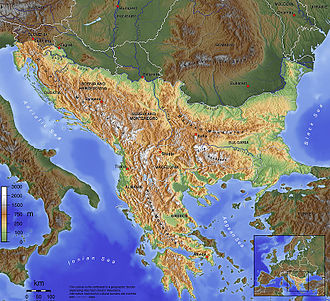
The Vinča culture lived in many places in Southeastern Europe. Mostly, they were in modern-day Serbia and Kosovo, but also in parts of Hungary, Romania, Bulgaria, Croatia, Bosnia, Montenegro and North Macedonia.
One of the biggest villages was Vinča-Belo Brdo, near Belgrade in Serbia. It covered a lot of land and may have had up to 2,500 people! Other large villages were Divostin and Crkvine-Stubline.
Images
Related articles



This article is a child-friendly adaptation of the Wikipedia article on Vinča culture, available under CC BY-SA 4.0.
Images from Wikimedia Commons. Tap any image to view credits and license.