 Safekipedia
Galactic bulge
Adapted from Wikipedia · Adventurer experience
In astronomy, a galactic bulge (or simply bulge) is a dense group of stars inside a bigger star formation. It is close to the center of most spiral galaxies. For a long time, people thought bulges were like tiny elliptical galaxies with a disk of stars around them. But thanks to the Hubble Space Telescope, we now know many bulges sit right in the center of spiral galaxies. Scientists think there are at least two types of bulges: ones that look like elliptical galaxies and ones that look more like spiral galaxies.
Classical bulges
Classical bulges are groups of stars that look like elliptical galaxies. These stars are old and make the bulge look reddish. The stars move in random paths, giving the bulge a round shape. There is little dust or gas, so new stars rarely form in bulges.
Scientists believe classical bulges form when smaller galaxies crash into each other. This mixing causes the stars to move in random paths. In busy places like the Virgo Cluster, many galaxies have classical bulges, showing how being near other galaxies can change a galaxy.
Disk-like bulges
Many bulges look more like the centers of spiral galaxies than elliptical galaxies. These are called pseudobulges or disky-bulges. The stars in these bulges move in order, like the stars in the outer parts of a spiral galaxy, instead of moving randomly as in elliptical galaxies.
Studies using the Hubble Space Telescope have shown that bulges often contain dust and have complex shapes. These shapes can look like small spiral galaxies. In large spiral galaxies, these central spirals are much smaller but still very bright.
Features like spiral patterns and young stars suggest that some bulges formed differently from elliptical galaxies and classic bulges. One idea is that pseudobulges might come from galaxies changing their own stars and gas over time due to natural processes. This slow change can create structures like spiral arms and galactic bars, and can also move material to the center of the galaxy, forming a bulge.
Boxy/peanut bulge for edge-on galaxies
Some galaxies seen from the side can have a special bulge shaped like a box or peanut, sometimes showing an X-shape. Scientists first saw this shape in our galaxy, the Milky Way, using the COBE satellite and later confirmed it with the VVV survey. They found two groups of stars and the X-shape of the bulge. The WISE satellite also confirmed this X-shape. These boxy or peanut-shaped bulges are parts of a galaxy's bar when seen from the side. Other galaxies seen edge-on can also show this shape.
!The X-shape of the bulge of the Milky Way.
The prominent X-shape of the bulge of NGC 1175 as seen by Hubble.
Central compact mass
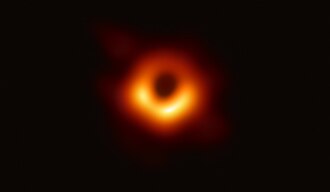
Most bulges and similar structures are thought to have a very dense, heavy object in the middle. Scientists believe this is a special kind of black hole called a supermassive black hole. We can't see these black holes because light cannot escape from them, but there is strong evidence that they exist in the centers of many galaxies.
The size of these black holes seems to be related to the stars around them. For example, there is a link between the mass of the black hole and how fast the stars are moving. Other links also exist with the total number of stars, how close together the stars are, and other features of the galaxy.
Images
Related articles


This article is a child-friendly adaptation of the Wikipedia article on Galactic bulge, available under CC BY-SA 4.0.
Images from Wikimedia Commons. Tap any image to view credits and license.