 Safekipedia
Slavery
Adapted from Wikipedia · Adventurer experience
Slavery is when one person is owned by another person and forced to work. This has happened in many places throughout history. People were enslaved for different reasons, such as losing a battle, owing money, or being treated unfairly because they were poor or from a certain group.
Slaves were made to work without pay and lived where their owners chose. They could be slaves for their whole lives or for a set time before being allowed to be free. While most slavery was forced, some people agreed to become slaves to pay off debts or earn money when they had no other options.
Today, slavery is against the law almost everywhere, but some forms still exist. Many people around the world, including children, are still trapped in situations where they are forced to work or live without their consent. This can happen in factories, as domestic servants, or in other ways such as forced marriages or being used as soldiers. ownershipracesexgranted freedomvoluntarily enter into slaverypovertyhuman historycivilizationoutlawedpunishment for a crimeAfghanistanpersonal propertyunfree labourforced laboursweatshopsprivate sectorhuman traffickingdebt bondagedomestic servantsforced marriageschild soldiers
Etymology
The word slave came into Middle English from the Old French word esclave. This word has roots in Byzantine Greek, where it meant prisoners of war who were forced to work.
There are different ideas about where the word came from. One idea is that it came from the name of a Slavic tribe, the Slověne, who were often captured and made slaves. Another idea is that it comes from a Greek word meaning to take things from an enemy after a battle. Historians have debated both of these ideas.
Terminology
Historians do not all agree on the best words to describe people who were treated as property. Some think we should use words that remind us these were people, not just things. Others think the word "slave" is okay because it is short and shows how unfair slavery was.
Chattel slavery
Chattel slavery treated people as property that could be bought and sold, just like animals. This kind of slavery was common in many places long ago, including ancient Greece and the Roman Empire. It was also part of life in places such as Sub-Saharan Africa, Brazil, and the Antebellum United States.
Starting in the 1700s, many people began to speak out against slavery, saying it was wrong because everyone should be treated equally. This led to movements to end slavery, which faced a lot of resistance but eventually succeeded. Different countries ended slavery at different times. For example, France ended it in 1794, but it was brought back until finally ending for good in 1848. The British Empire ended slavery in 1833, and the United States ended it in 1865 after a big war. Brazil ended slavery in 1888.
Bonded labour
Main article: Debt bondage
See also: Money marriage and Chukri system
Bonded labour happens when someone works to pay off a debt, sometimes for their whole lives. This can even pass from one generation to the next, where children must work to pay for their parents’ debts. This type of unfree labour is most common in South Asia today.
Dependents
The word slavery has also described situations where a person’s life was tied to someone else in a dependent way. In some places, like Persia, the lives of these dependents could be better than those of regular citizens.
Forced labour
Main article: Forced labour
See also: Human trafficking
Forced labour is when someone is made to work against their will, often under threat of harm. Even though slavery is illegal everywhere, forced labour still happens today. This includes situations where people are trapped and controlled.
Other uses of the term
Sometimes the word slavery is used to describe any situation where someone feels they have no choice but to do something they do not want to do. Some people have even used the word to talk about having to work for very low pay or being forced to take medicines they do not want. Others have compared the way animals are treated to how slaves were treated long ago.
Characteristics
Economics
Economists have studied why slavery happens and why it ends. One idea is that slavery becomes more common when there is lots of land but not many workers. This makes it cheaper for landowners to use slaves than to pay workers. As populations grew in Europe, slavery and similar systems like serfdom slowly disappeared. However, slavery returned in places like the Americas and Russia when new lands with few people became available.
Slavery was often used for big jobs like growing crops such as sugarcane and cotton. On large farms, groups of slaves worked together in a system called the gang system. Each person had a specific job, and everyone’s work depended on the others, similar to an assembly line.
Some critics argued that slavery stopped progress because it focused on using more slaves for simple tasks instead of finding better ways to work. Famous economist Adam Smith believed that free labour was better than slave labour. He thought it was hard to end slavery in governments where many leaders owned slaves, as they would not make laws against themselves.
Identification
Slaves were sometimes marked to show they were property. This could be done through branding, tattooing, or forcing them to wear shackles like cuffs, chains, or collars. These marks made it clear who owned them.
Legal aspects
Slaves could be owned by private individuals or by the government. In old Korea, some women were owned by the government and had to entertain important people. In modern times, some groups of people are required to work for leaders.
Sometimes, slaves had a few legal rights. In one American colony, hurting a slave on purpose was against the law. Giving slaves some rights was sometimes done because it was the right thing to do. In ancient Athens, protecting slaves also protected others who might be mistaken for slaves. Allowing slaves to own a little property encouraged them to work harder.
History
Main article: History of slavery
See also: Slavery in antiquity
Slavery existed long before written records and appeared in many cultures. It was rare among hunter-gatherer groups because it needed resources and many people. However, it did happen in some places with plenty of resources, like among some American Indian tribes along the rich rivers of the Pacific Northwest coast. Slavery became more common with the start of farming during the Neolithic Revolution about 11,000 years ago. Almost every ancient civilization practiced some form of slavery. This included situations like owing money, punishment for crimes, being captured in war, being left alone as a child, or being born to a slave parent.
Africa
See also: Slavery in Africa
Slavery was common in Africa, with both internal and trade across borders. In the Senegambia region, about one-third of people were enslaved between 1300 and 1900. Early Islamic states in western Sahel, like Ghana, Mali, Segou, and Songhai, also had about a third of their people enslaved.
In Europe, black African slaves became more visible in the late 1300s and 1400s. They appeared in court settings starting with Frederick II, Holy Roman Emperor. By the 1470s, they were painted as attendants in places like Mantua and Ferrara. In the 1490s, they appeared on the emblem of the Duke of Milan.
During the trans-Saharan slave trade, slaves from West Africa were taken across the Sahara desert to North Africa. The Red Sea slave trade moved slaves from Africa across the Red Sea to the Arabian Peninsula. The Indian Ocean slave trade sent Africans to many places, including the Arabian Peninsula, Indian Ocean islands like Madagascar, the Indian subcontinent, and later the Americas. Traders captured Bantu peoples from areas now known as Kenya, Mozambique, and Tanzania, bringing them to the coast where they often mixed into local communities.
By the 1890s, the Sokoto Caliphate had the world’s largest slave population, around 2 million. Slave labor was used widely, especially in farming. Ethiopia had about 2 million slaves in the early 1930s.
In East Africa, slave labor came from the Zanj and Bantu peoples. There were slave revolts.
In Algiers, captured Christians and Europeans were forced into slavery.
Under Omani Arabs, Zanzibar became a major slave port in East Africa.
Systems of servitude existed in Africa similarly to other parts of the ancient world. In many African societies, slaves were not treated as property but had certain rights. However, there was often still separation between slave and master families.
When the Atlantic slave trade began, many African systems supplied captives for markets outside Africa. The Atlantic slave trade was the largest in volume.
Mauritania was the last country to officially end slavery, in 1981.
Middle East
See also: Islamic views on slavery, History of slavery in the Muslim world, Slavery in the Umayyad Caliphate, Slavery in the Abbasid Caliphate, Slavery in the Mamluk Sultanate, and Slavery in the Ottoman Empire
In early records, slavery was already an established practice. The Code of Hammurabi, around 1760 BC, for example, stated that helping a slave escape was punishable by death. The Bible also mentions slavery. Slavery existed in Pharaonic Egypt, though it is hard to study due to how the Egyptians described different types of servitude.
After the Islamic conquests in the 7th and 8th centuries, slavery was governed by Islamic law across the Middle East. This continued through various Islamic empires from the 7th to the 20th century.
Slaves in the Arab world came from many regions, including Sub-Saharan Africa (mainly Zanj), the Caucasus (mainly Circassians), Central Asia (mainly Tartars), and Central and Eastern Europe (mainly Slavs).
Between 1517 and 1917, the Ottoman Empire controlled most of the Middle East. In the Ottoman capital of Constantinople, about one-fifth of the population were slaves.
Eastern European slaves were supplied to the Ottoman Empire through the Crimean slave trade.
A major slave trade center in Central Asia was Bukhara, supplying slaves to the Middle East for thousands of years until the 1870s. The Khivan slave trade in Central Asia also sold Russian and Persian slaves.
By 1870, chattel slavery had been banned in most of the world except in Muslim areas of the Caucasus, Africa, and the Persian Gulf.
Ottoman laws against slavery were not enforced in the late 19th century.
Chattel slavery continued in most of the Middle East until the 20th century. The Red Sea slave trade still sent enslaved people from Africa to the Arabian Peninsula after World War II. Saudi Arabia had an estimated slave population of 300,000 in the 1960s and abolished slavery in 1962, along with Yemen.
Americas
Enslavement in the Americas existed before Europeans arrived. It was used for many reasons. Slavery in Mexico dates back to the Aztecs. Other groups like the Inca in the Andes, the Tupinambá in Brazil, the Creek in Georgia, and the Comanche in Texas also practiced slavery.
Slavery in Canada was practiced by First Nations and European settlers. Some Indigenous groups along the Pacific coast, like the Yurok, Haida, and Tlingit, were known as warriors and traders, capturing slaves from raids as far as California. Slavery was passed down through generations.
Slavery in America played a big role in history, leading to revolutions, civil wars, and rebellions.
The countries that shipped the most slaves across the Atlantic were the UK, Portugal, and France.
To build its empire, Spain fought powerful civilizations in the New World. The Spanish used Native people as forced labor. The Spanish colonies were the first in the New World to use African slaves, starting on islands like Cuba and Hispaniola.
Spain did not trade slaves much until 1810, after losing many of its American territories. The African slave trade to Cuba grew large from 1810 onward.
In 1789, Spain tried to improve conditions for slaves in Cuba with the Código Negro Español, which set rules for food, clothing, work hours, punishments, religious teaching, and marriage. However, planters often ignored these laws.
Asia-Pacific
See also: History of slavery in Asia
East Asia
See also: Slavery in China
Slavery existed in ancient China as early as the Shang dynasty. Governments used slavery to provide labor. By the Han dynasty, slaves had some legal rights. However, after the Southern and Northern Dynasties, the number of slaves grew huge due to wars and poor harvests.
Many Han Chinese were enslaved during the Mongol invasion of China. Mongolian slaves were owned by Han Chinese during the Yuan dynasty.
Slavery in Korea existed since before the Three Kingdoms period. By the 16th century, it was less important due to population growth. Slavery declined around the 10th century but returned in the late Goryeo period with slave rebellions. In the Joseon period, slaves were called nobi.
After the Portuguese arrived in Japan in 1543, they began trading Japanese as slaves, selling them overseas. Japanese slaves were among the first from their country to reach Europe. Portuguese bought Japanese slave girls for sexual purposes. Some Korean slaves were also bought by the Portuguese from Japan.
The Portuguese preferred Asian slaves for their rarity and assumed qualities like intelligence. King Sebastian of Portugal banned the slave trade in 1571. Japanese leader Hideyoshi was angry about Japanese people being sold into slavery and demanded the Portuguese stop, banning Christian missionary work as a result. In 1595, Portugal passed a law banning the sale of Chinese and Japanese slaves.
South Asia
Slavery in India was common by the 6th century BC, maybe even earlier. Slavery grew during Muslim rule after the 11th century. The Dutch and others traded slaves from places like Arakan-Bengal and Coromandel.
The total Dutch slave trade in the Indian Ocean was about 15–30% of the Atlantic slave trade. Slavery was abolished in East India Company holdings by the Indian Slavery Act of 1843.
South East Asia
People in Indochina were often captured as slaves by the Siamese, Anamites, and Cambodians. In 1876, a Siamese campaign in Laos was described as slave-hunting. In 1879, 6% of the population in Perak were slaves. Enslaved people made up two-thirds of the population in parts of North Borneo in the 1880s.
Oceania
Slavery had a role in traditional Māori society in New Zealand. “Blackbirding” happened in the Pacific and Australia, mainly in the 19th century.
Europe
Ancient Greece and Rome
Records of slavery in Ancient Greece go back to Mycenaean times. Classical Athens had up to 80,000 slaves in the 6th and 5th centuries BC. As the Roman Republic grew, whole populations were enslaved across Europe and the Mediterranean. Slaves were used for labor and entertainment, like gladiators. This led to slave revolts, like the Third Servile War led by Spartacus.
By the late Republic, slavery was key to Rome’s wealth and society. About 25% or more of Italy’s population was enslaved, mostly war captives from Gaul and Epirus. Enslaved people in Italy were mostly local Italians. Slaves had higher death rates and lower birth rates.
Medieval and early modern Europe
Slavery was common in early medieval Europe, with the Catholic Church trying to stop it. Serfdom was more accepted. In 1452, Pope Nicholas V allowed slavery of non-Christians through the papal bull Dum Diversas, which was expanded in Romanus Pontifex in 1455. Slave trading was mostly in the South and East of Europe, with the Byzantine Empire and Muslim world as destinations. Pagan Central and Eastern Europe, the Caucasus, and Tartary were sources. Viking, Arab, Greek, and Radhanite Jewish merchants were involved.
In Britain, slavery existed after Rome’s fall. Laws by Æthelstan and Hywel the Good dealt with slaves in medieval England and Wales. The slave trade grew after Viking invasions, with markets in Chester and Bristol. By the Domesday Book, nearly 10% of England’s population were slaves. William the Conqueror made a law against selling slaves overseas. By 1200, slavery in the British Isles had ended. Slavery was not authorised by English law, and in 1772, Lord Mansfield said it had no support in common law. The Slave Trade Act 1807 ended the trade, and the Slavery Abolition Act 1833 ended slavery in British colonies outside Europe, along with the Indian Slavery Act of 1843. However, African slaves appeared in England from the 1640s until the 18th century. In Scotland, slaves were sold until the late 18th century.
The Byzantine-Ottoman wars and Ottoman wars in Europe brought many slaves into the Islamic world. The Ottoman Empire used a devşirme system to take Christian boys as government-owned slaves, giving them roles in administration and the military. This began around 1365 and ended in 1826.
Medieval Spain and Portugal had constant Muslim invasions, with raids bringing back captives.
Lagos in Portugal was the first slave market for African slaves, opened in 1444. The first slaves came from northern Mauritania in 1441. By 1552, black African slaves were 10% of Lisbon’s population. In the late 16th century, the Crown stopped its slave trade monopoly, shifting focus to direct transports to colonies like Brazil. In the 15th century, one-third of slaves were sold to Africa in exchange for gold.
The Crimean Khanate had a large slave trade with the Ottoman Empire and Middle East until it was destroyed by Russia in 1783. Slaves were captured in southern Russia, Poland-Lithuania, Moldavia, Wallachia, and Circassia by Tatar horsemen and sold in Kaffa.
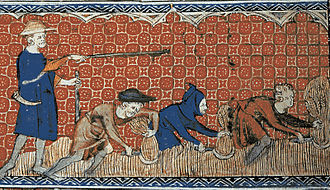
In Kievan Rus and Muscovy, slaves were called kholops. By 1649, up to three-quarters of Muscovy’s peasants were serfs similar to slaves.
In Scandinavia, thralldom ended in the mid-14th century.
During the Age of Enlightenment, views on race and slavery varied. Slavery was not ended but expanded.
Nazi Germany
Main article: Forced labour under German rule during World War II
During World War II, Nazi Germany enslaved about 12 million people, intending to treat them as an inferior class to be worked until death.
Communist states
Main article: Gulag
Between 1930 and 1960, the Soviet Union created the Gulag system of forced labor camps. Prisoners were worked to death through harsh conditions.
Romania
Romani people were enslaved in Romania, the longest chattel slavery in Europe.
Contemporary slavery
See also: Slavery in contemporary Africa, Child slavery, Trafficking of children, Illegal immigration § Slavery, and Slavery in the 21st century
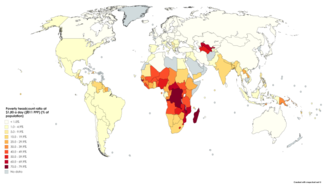
Even though slavery is now outlawed in nearly every country, except for Afghanistan, many people around the world are still forced to work against their will.
According to a report, many children in debt bondage in India work in very hard conditions to help pay off their families' debts.
Slavoj Žižek says that new forms of forced work have appeared in recent times, especially with global business. This includes workers who do not have basic rights, such as those on the Arabian Peninsula, workers in crowded factories in Asia, and people forced to work to get resources in Central Africa.
Distribution
In 2013, the U.S. State Department shared a report about places where forced work is common. It named Russia, China, and Uzbekistan as places with serious problems.
In Kuwait, many workers from other countries are often treated unfairly. In 2019, illegal trade of people was found on apps like Instagram.
During preparations for the 2022 World Cup in Qatar, workers faced very bad conditions. The United Nations asked Qatar to improve conditions for workers.
The Walk Free Foundation reported that forced work exists in many wealthy countries, including the United States and Great Britain.
China
See also: Xinjiang internment camps
Reports showed that the Chinese government made members of the Uyghur minority work against their will in factories.
Libya
During a war in Libya, people from Africa trying to reach Europe were captured and sold or held for money. Many suffered terrible harm during this time.
Mauritania
Mauritania was the last country to officially end slavery, but even today, many people are still forced to work for others.
North Korea
See also: Human rights in North Korea
North Korea has very poor human rights records, with many people being forced to work and treated very badly.
Taiwan
Taiwan has many workers from other countries who have been treated unfairly, including being forced to work in homes or on fishing boats.
Yemen
See also: Slavery in Yemen
Even though slavery was ended in the 1960s, it still exists in Yemen today because of ongoing conflicts. Thousands of people are forced to work for others. The situation is made worse by ongoing war and weak laws.
Economics
Today, a person can be forced into work for much less money than in the past.
Trafficking
People are tricked or forced into situations where they cannot leave. Many are women and girls who are forced into work they cannot escape. Others include men, women, and children made to work in very hard jobs against their will. The full number of people affected is hard to know because this activity is hidden and illegal.
Abolitionism
Main article: Abolitionism
For a chronological guide, see Timeline of abolition of slavery and serfdom.
Slavery has existed in many forms throughout history, and there have always been efforts to free enslaved people.
In antiquity
Emperor Ashoka, who ruled the Maurya Empire in the Indian subcontinent, stopped the slave trade but did not end slavery. The Qin dynasty ended slavery in China, but laws changed later. Slavery was stopped again by Wang Mang but started again after he died.
Americas
The Spanish colonization of the Americas led to discussions about enslaving Native Americans. Bartolomé de las Casas spoke out against this.
In the United States, northern states ended slavery by 1804. After the Act Prohibiting Importation of Slaves in 1808, it became illegal to bring slaves into the country. The American Civil War led to the end of slavery in the United States with the 13th Amendment to the U.S. Constitution in 1865. Many freed slaves faced challenges.
Europe
France ended slavery in 1794, but it returned in 1802. In 1772, a British judge decided slavery was not allowed in England. The Sons of Africa and the Society for Effecting the Abolition of the Slave Trade worked to end slavery. William Wilberforce helped end the slave trade in 1807 and slavery in 1833.
After 1807, activists worked to stop the slave trade in other countries. The British navy helped free many Africans.
Worldwide
In 1839, Anti-Slavery International was formed to end slavery worldwide. In 1948, the United Nations General Assembly adopted the Universal Declaration of Human Rights, saying everyone should be free from slavery. Today, groups continue to work to end slavery.
UNESCO works to remember the history of slavery through The Slave Route Project.
Apologies
In 2001, the National Assembly of France said slavery was very wrong. Many African countries also said sorry for their part in the slave trade. Some African groups helped catch and sell people to Europeans.
Leaders from places like Benin and Ghana have said sorry for what their countries did. In 2007, the U.S. state of Virginia said sorry for slavery. In 2008, the U.S. Congress said sorry for American slavery. These apologies are about finding ways to help the people who were hurt by slavery and their families.
Reparations
Main article: Reparations for slavery
Some people want help for the families of enslaved people. This is called reparations. It is hard to do because it costs a lot of money and takes a long time.
Media
Further information: List of films featuring slavery
Movies have helped people learn about slavery around the world. For a long time, movies didn’t talk about slavery much or sometimes showed it in a bad way. Some older movies like The Birth of a Nation (1915) and Gone with the Wind (1939) were not fair to slaves.
Later, during the Civil Rights Movement in the 1950s, movies began to show slaves as brave heroes. Most of these films were set in America, but some, like Spartacus (1960), told the story of a real fight for freedom in the Roman Empire called the Third Servile War.
Other films, like The Last Supper (1976), showed slaves in Cuba and their hope for freedom. People discuss how well these movies show history and if they are good for teaching about the past.
Images
Related articles




This article is a child-friendly adaptation of the Wikipedia article on Slavery, available under CC BY-SA 4.0.
Images from Wikimedia Commons. Tap any image to view credits and license.