Habsburg Spain
Spain Long Ago
Habsburg Spain, also known as the Catholic Monarchy, was a time in Spanish history that lasted from 1516 to 1700. Kings from the House of Habsburg ruled the country. This time is also called the "Age of Expansion."
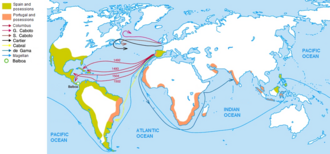
During this time, the Spanish Empire was very large. Spain had lands in the West Indies, the Philippines, and Southeast Asia. It also had lands in Europe, such as the Low Countries, Italian territories, Portugal, and parts of France.
Kings and Queens
In 1469, Isabella I of Castile and Ferdinand II of Aragon were married. Their marriage joined two important kingdoms. In 1494, the Pope gave them the special title "Catholic Monarchs of Spain."
Later, Charles became Holy Roman Emperor. His son, Philip II of Spain, also ruled. In 1700, the last Habsburg king, Charles II, passed away. After that, Philip V of the Bourbon dynasty became the new king.
Art and Stories
The Spanish Golden Age was a time when art and stories were very special in Spain. It lasted from about 1550 to 1650. Painters like El Greco and Diego Velázquez made beautiful pictures.
Writers such as Miguel de Cervantes and Pedro Calderón de la Barca also shared their ideas. Cervantes wrote Don Quixote de la Mancha, which is one of the most famous books of that time. Juana Inés de la Cruz was another great writer from this golden age.

Quiz time!
3 questions about Habsburg Spain
What is Habsburg Spain also called?
Pictures
Keep exploring




This article is a child-friendly adaptation of the Wikipedia article on Habsburg Spain, available under CC BY-SA 4.0.
Images from Wikimedia Commons. Tap any image to view credits and license.